It is in spaces that heal, that we hope…for a new lease of life, for the wealth of wellbeing, and for a brighter future. For, it is in healing spaces that we can find the power to heal, and the promise of good health.
But, are today's hospitals, the supposed 'healing spaces' built with the kind of ambience that truly fosters healing? Yes, no doubt, they are technologically advanced, and equipped with state-of-the-art facilities. They have the finest human capital, expertise and experience. But then again, is the healing space, by itself, a place that heals?
Within the confines of a healing space, what are the elements that have a bearing on one's recuperation? It is, when all the below-mentioned factors play out in tandem, that a healing space can be so called. To ensure that these constituents are in place in the built environment, the right building materials need to be used.
Let’s examine the role glass plays in this:

Safety and security are paramount to a hospital, where patients need to be provided with the best care possible, allowing them to regain their strength and health. The last thing required is mishaps and accidents that undo all the progress made by the patients.
By installing windows and mirrors made of tempered glass or toughened glass, hospitals can ensure that they are doing everything possible to prevent unfortunate accidents. Toughened glass does not shatter on impact.
Also read Tempered Glass Windows: A Guide To Strength, Safety And Easy Installation
In the rare event of breakage, toughened glass does not shatter into several sharp shards, but rather, becomes rounded, pebble-like pieces that are harmless to people.
When it comes to bathroom mirrors, SGG Mirasafe mirror is the best bet.
It goes without saying that hygiene is critical in a hospital. Any laxity in this could endanger the health of the patients and slow down their recovery, or even undo any progress they have made. Hospitals maintain the highest hygiene standards to mitigate infections.
Glass plays a huge role here, as it is easy to clean and maintain, with minimal effort. Glass is not porous, and resistant to germs and bacteria. It does not rot or rust, and can be easily cleaned with minimal effort.
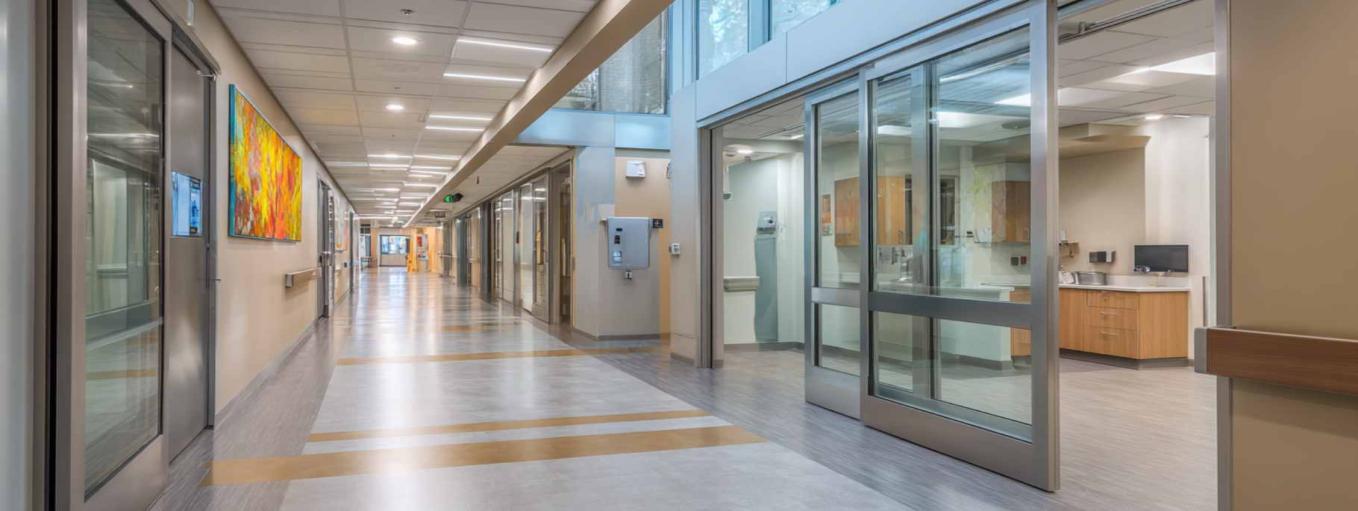
Glass in hospitals can be used in the lobby, reception area, building facade, waiting rooms, and other common areas.
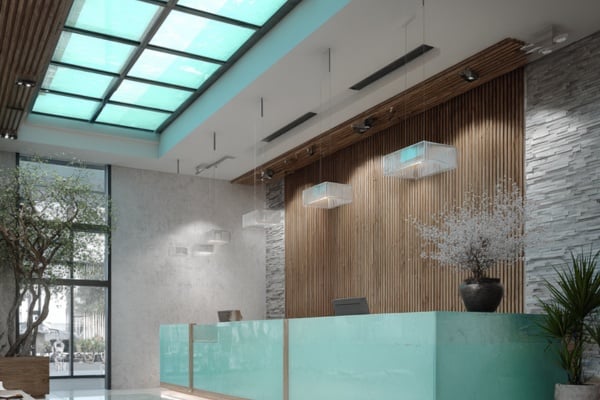
Glass has the ability to provide optimum thermal comfort. Solar control glass can block 70% of the sun’s heat, cooling the indoors substantially while allowing in natural daylight. Brightness and transparency are important in hospitals.
SGG Sun Ban has been proven to be the best option for limiting the entry of the sun’s heat without blocking light. Tinted glass on windows can reduce glare and block the entry of harmful UV rays and protect patients from skin damage.
The SGG Infinity series of facade glass provides excellent thermal control, minimizing heat gain or loss, regulating indoor temperature, and reducing dependence on artificial cooling or lighting.
Also read The Ultimate Guide To Colour Psychology And Glass In Hospital Design
Laminated glass and double-glazed glass can act as a shield against external sounds, reducing the noise coming in from the outside that can disturb patients. By choosing the right glass, one can ensure that the patients are comfortable and can sleep better.
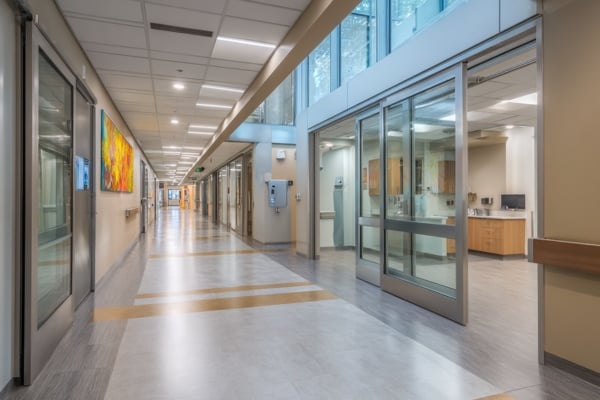
Natural light has been found to promote faster recovery and improve emotional wellness. It can also decrease dependence on medication, according to studies on the benefits of nature in healthcare environments.
Due to its transparent nature, glass improves aesthetics, and offers visual delight and unhindered views of the outside that can have a soothing and calming effect on patients’ minds, aiding the process of recovery.
Facade glass from Saint-Gobain is available in a range of gorgeous hues of blue, grey, green, bronze, and gold. SGG Rosa NXT, SGG Kopper, SGG Midas Gold, and SGG Nano Silver are some of the innovative products available.
In the indoor spaces, the level of Volatile Organic Compounds (VOC) is influenced by the materials used in the interiors. These volatile compounds are harmful to human health when they’re above a certain limit.
Glass from Saint-Gobain is low-VOC, and the accessories used are free of lead, copper, arsenic and formaldehyde, and other harmful chemicals.
This helps ensure better air quality and safety for patients. Glass with low-VOC emissions is also sustainable, helping to reduce the building’s carbon footprint.
Also Read Top 5 Ways Sustainable Construction Boosts Air Quality & Well-Being
When the healing space is energy-efficient, it is bound to have a positive impact on one's health and wellbeing. Using solar control and thermal control glass can help reduce the energy bills of a hospital, in terms of HVAC and lighting expenditure.
SGG Infinity facade glass from Saint-Gobain is the best option, as it prevents heat loss or gain, helping air-conditioners function more efficiently while blocking hot air from entering.
In effect, there is a lot more to a hospital than its infrastructure and the quality of healthcare professionals. In fact, if a hospital needs to make the shift from being a 'healing space' to 'a place of hope and promise', the constituents of indoor comfort need to be chosen carefully.
Glass is one of the best materials to achieve this, and Saint-Gobain’s range of best-in-class glass can aid patients on their way to health and healing.
How can glass support sustainable hospital design?
Hospitals can promote sustainability by increasing the use of glass in the design as it is recyclable, energy-efficient, and low-VOC. It can help reduce their carbon footprint, and to get green building ratings and certifications like LEED.
Is it possible to maintain patient privacy while using glass?
Yes, by using acid-etched, patterned, tinted, or frosted glass, patient privacy can be effectively maintained in hospitals, in wards and ICUs.
Where can glass be used in hospitals?
Doors, windows, facades, partitions, ceilings (in rooms), ceilings (in common areas), signage, and writable surfaces in meeting rooms.
How durable is glass in high-traffic hospital zones?
Saint-Gobain manufactures superior clear, solar control, laminated, and toughened glass that is scratch-proof, shatter-resistant, and impact-resistant, making it suitable for elevators, corridors, and other areas that are high-traffic.
Can glass really improve hygiene in a hospital setting?
Yes, as glass is not porous, easy to disinfect, and resistant to mould, bacteria, and rust, it helps in maintaining hygiene. This is particularly helpful in high-traffic areas like lobbies, waiting rooms, reception areas, corridors, etc.
Sunila Goray is a technical content researcher with a passion for crafting compelling stories for a wide range of industries like real estate, interior design, technology, finance, digital marketing, and travel. Read More