

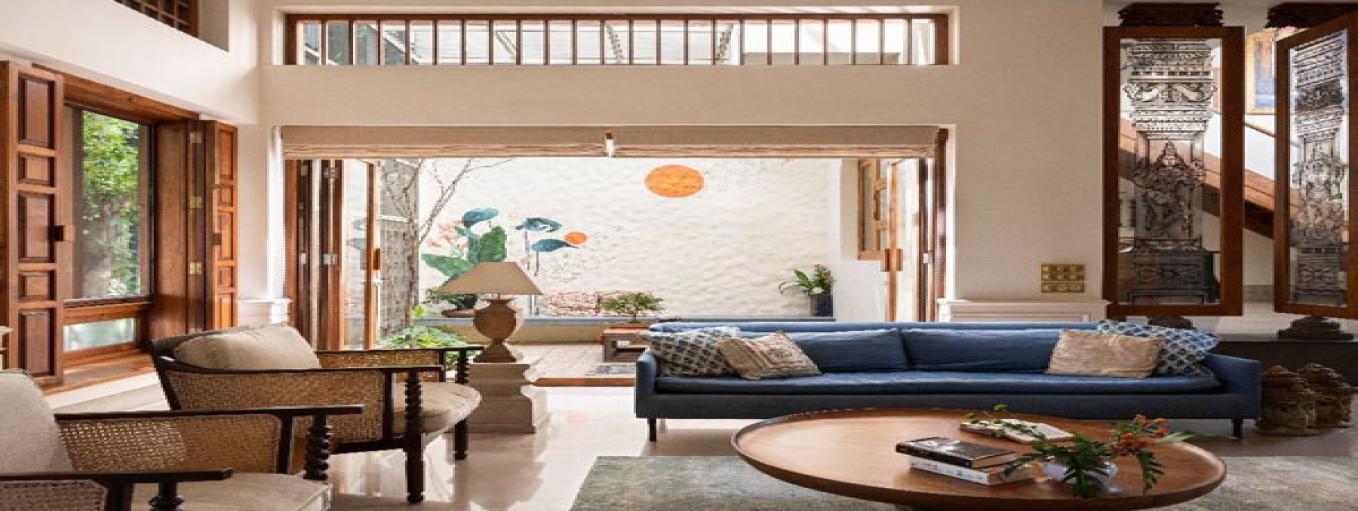
Kolam house, situated in the heart of Coimbatore, is an amalgamation of two very different architectural typologies. The architect has designed her residence with childhood memories of her ancestral home layered over a functional adaptable home that encourages the memories to be special in more ways than one!
T
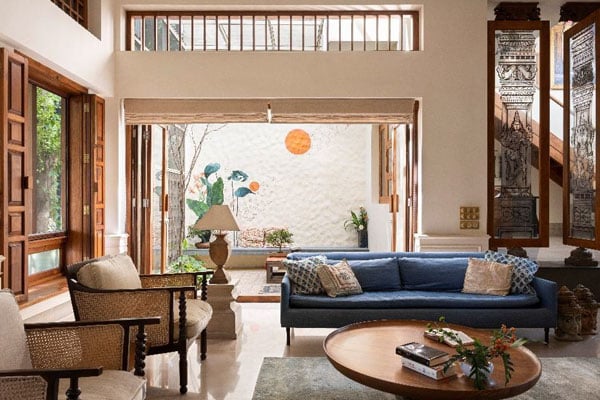
The Kolam House (Source: OWM Architecture)
Designed by OWM architects, this home radiates an old-world charm while maintaining practicality at every step reflecting the design values of the firm. As the architect says, it is an example of tropical pragmatic architecture, where the planning of the home weighs the site and the design approach equally.
In gated communities, where villas are situated 6 feet away from each other, Kolam house stands out by balancing privacy and still allowing people to interact with the exteriors. The Garden and courtyards on the north and east sides of the house, recall the tropical architecture in a contemporary way.
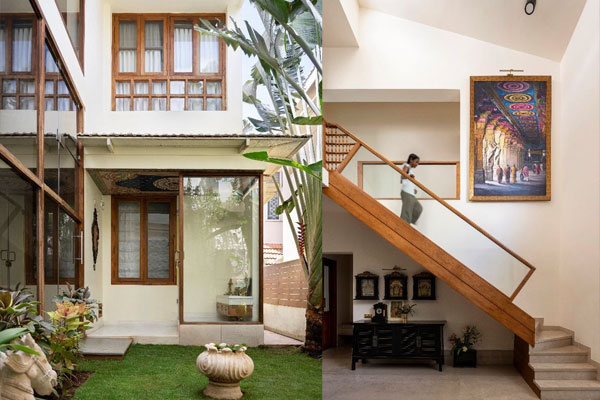
View of Garden and Staircase with glass balustrade (Source: OWM Architecture)
The design deliberately eliminates elaborately carved interiors, and large hallways leading to small rooms. It combines elements from traditional design with new-age materials like glass. The material palette primarily holds the essence of old wooden carvings, and colours while blending with glass that balances out the conventional idea of an unconventional home.
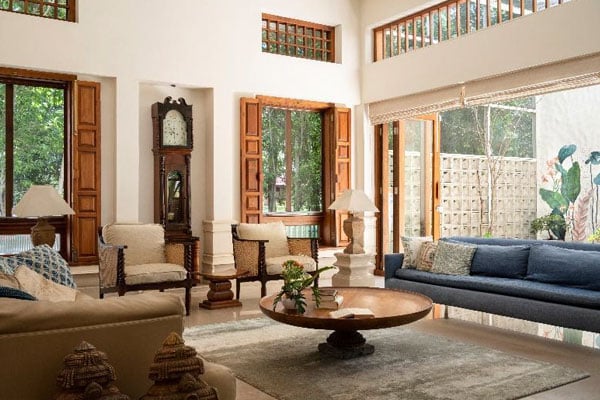
Use of glass in large, lenient openings (Source: OWM Architecture)
In material form, the house brings history back to the present. Chettinad architecture used colored glass in entry archways and fenestrations. Traditionally glass was used in design as an aesthetic element but now it has evolved and adapted through various compositions, textures, and finishes. In the context of the Kolam house, it becomes a protagonist and is used both as a structural as well as aesthetic element.
Large solar control glass windows adorn the eastern façade of the house. They face the courtyard allowing one to interact with their surroundings. The collapsible doors open the living area into a garden seamlessly. Here glass plays a significant role in defining the elevation and skin of the home.
As glass connects one to the outdoors, it is also used very creatively in the interiors. The home has a beautiful wooden staircase with the balustrades replaced with glass fitting into the picturesque contemporary and minimalistic palette of the home. The furniture also follows this blended language. The centre table combined an old stone column base with a minimal wooden table top.
Glass opens up the limited site space and contributes to the open plan of the home. The open layout welcomes different activity spaces separated with toughened glass partitions. The living area is separated from the dining with antique refurbished teakwood columns and hand-painted glass louvers. As a canvas, the hand-painted glass partition reminds us of the original tinted glass used in Chettinad architecture.
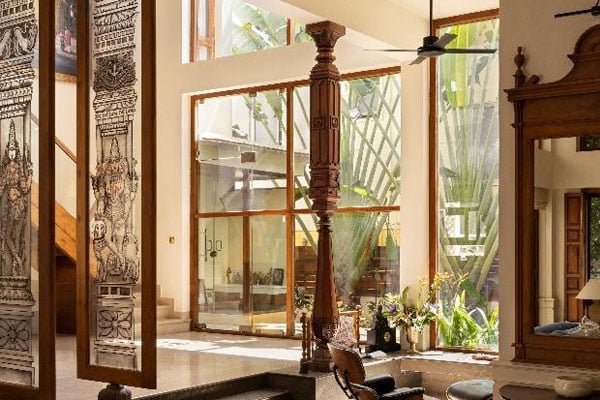
Dining and living area separated by toughened glass partitions (Source: OWM Architecture)
The home accommodates cosy living spaces for the family with designated workspaces. On the first floor, Ar Soumya Kumar’s home office imitates an Uparegai – Chettinad balconette, a window that maintains interconnectivity between the kitchen, children’s study area, and the workspace.
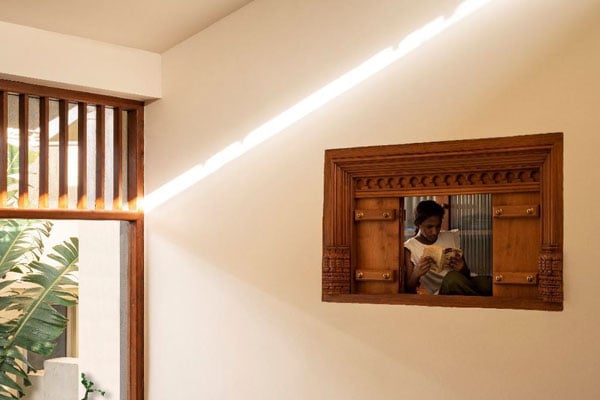
Uparegai - Chettinad balconette (Source: OWM Architecture)
The home adapts to its surroundings, responding to the climate it sits in. The double-height space helps to channel hot air upwards while the lower portion of the home stays cooler. The natural advantage of having trees on the west helps to keep the temperature down. Fresh mud plaster on the walls complement the green from the courtyards, and limestone flooring completes the picture.
Together with a sense of purpose, these elements weave a narrative of the past, present, and future. The home is a union of the architect's beautiful memories, interwoven with the materials, spaces, and people to make it her own!
What architectural style does Kolam House in Coimbatore represent?
Kolam House blends traditional Chettinad architecture with contemporary tropical design, incorporating elements from the architect's childhood memories. The home features a mix of old-world charm and modern materials like glass, creating a unique and functional living space that reflects the architect's personal history.
How does Kolam House balance privacy and openness in a gated community?
Kolam House balances privacy and openness by using gardens and courtyards on the north and east sides, which provide a buffer while allowing interaction with the exteriors. Large glass openings also connect the interiors to the outdoor environment, enhancing the sense of openness without compromising privacy.
What role does glass play in the design of Kolam House?
Glass plays a significant role in both the functional and aesthetic aspects of Kolam House. It is used in large windows, glass balustrades, and toughened glass partitions, helping to create an open layout that maximizes natural light and connects the home with its tropical surroundings.
How does Kolam House incorporate traditional elements with modern materials?
The house combines traditional elements such as wooden carvings and Chettinad architecture with modern materials like glass. Features like hand-painted glass partitions and refurbished antique columns blend the old with the new, creating a harmonious and unique living space.
What features help Kolam House adapt to its tropical climate?
Kolam House is designed to adapt to its tropical climate with features like a double-height space that channels hot air upwards, and trees on the west side that help keep temperatures down. Natural materials like mud plaster and limestone flooring also contribute to thermal comfort, making the home comfortable and energy-efficient.


