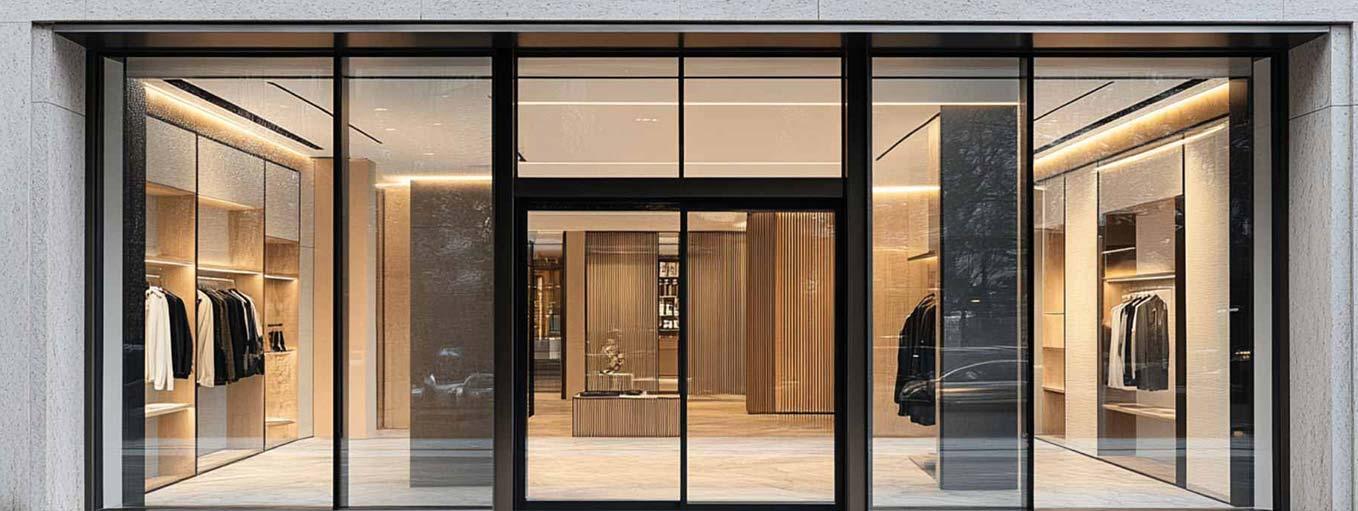
When designing or upgrading a residential or commercial space, selecting the right type of safety glass is essential as it directly impacts both functionality and aesthetics.
In today's modern architecture, tempered glass and laminated glass have emerged as the two leading choices, each offering enhanced performance and protection. While they may seem similar at first glance, these materials differ significantly in their composition, strength and properties.
So, what sets them apart? And how do you decide which one is right for your needs?
Let's break it down.
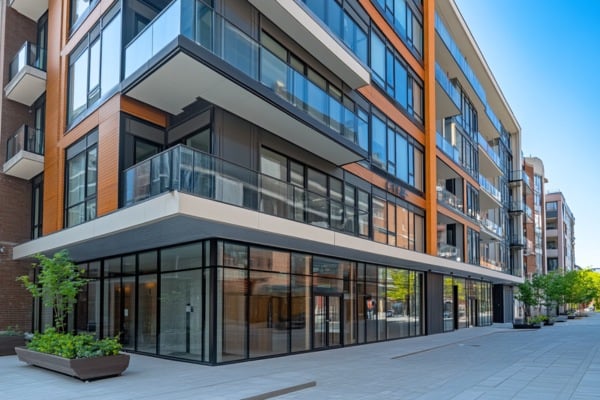
Built to withstand impact, safety glass is a durable choice for modern architecture.
Safety glass refers to any type of glass that is engineered to reduce the likelihood of injury upon breakage. Unlike standard annealed glass, safety glass is designed either to have high resistance to impact and, in the unlikely event of breakage, the pieces remain intact or break into smaller, less hazardous pieces. This type of glass is often used in high-traffic areas, such as doors, windows, railings, balustrades and facades.
Two of the most common types of safety glass used today are:
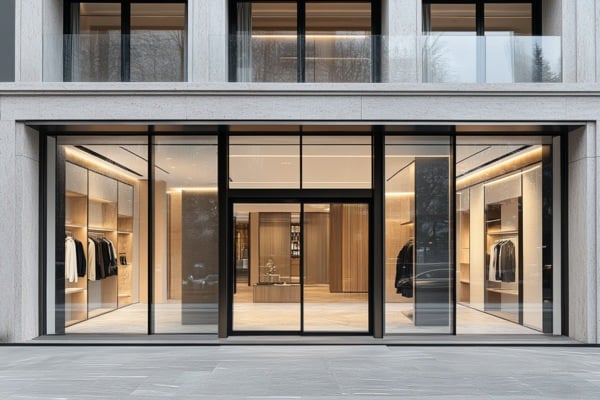
Laminated Glass Combines Strength, Sound insulation, and UV protection.
Laminated glass is created by fusing two or more layers of glass with a resilient interlayer known as polyvinyl butyral (PVB). This interlayer holds the glass layers together even when shattered, from breaking into sharp, dangerous shards, significantly reducing the risk of injury.
Beyond its exceptional safety features, laminated glass offers additional benefits such as excellent sound insulation—thanks to the multiple layers of glass and PVB interlayer that dampens external noise—and effective UV filtering, which helps block harmful solar radiation and reduces heat gain.
Laminated glass benefits include enhancing the structural integrity of a building's envelope and offering robust protection against forced entry and break-ins.
These advanced properties make laminated glass a safer and smarter choice for enhancing comfort, security, and energy efficiency for multi-storey buildings or large window facades.
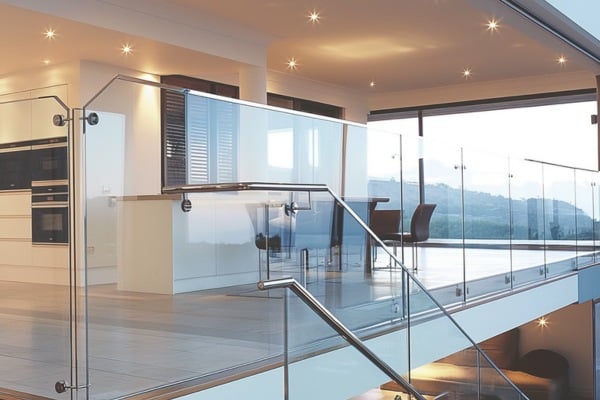
Laminated Glass Railings Offer Elevated Elegance and Enhanced Security.
Moreover, laminated glass can be composed of layers of toughened glass for greater resilience in demanding environments, such as structural glazing and balcony balustrades, where impact resistance and load-bearing capability are essential.
Also Read Toughened Laminated Glass Shopfronts: The Perfect Blend of Style and Function
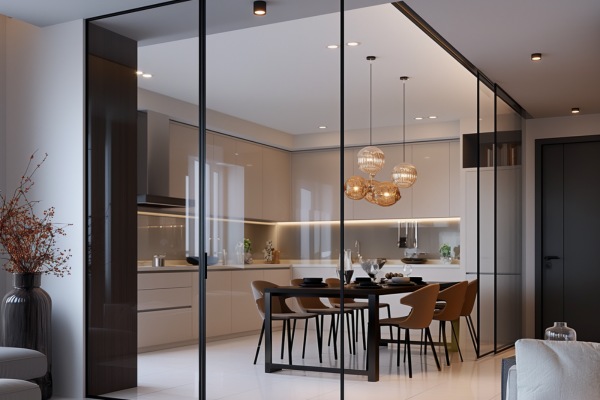
Streamlined Glass Partitions with Tempered Glass
Tempered or toughened glass undergoes a controlled heat treatment process, enhancing its strength and durability. During this tempering process, the glass is heated to high temperatures followed by rapid cooling, making it remarkably more resistant to impact and thermal stress than standard glass.
Besides the high degree of impact resistance, a notable safety feature of tempered glass is how it disintegrates in the unlikely event of breakage—when subjected to extreme force, it shatters into small, rounded granules rather than sharp shards, reducing the risk of injury.
Its lightweight nature, combined with exceptional thermal resistance (up to 250°C), makes tempered glass a popular choice for everything from shower enclosures and kitchen backsplashes to office partitions and modern facades.
Additionally, different types of glass—like lacquered, etched, or tinted—are available in toughened variants today to help boost their sturdiness.
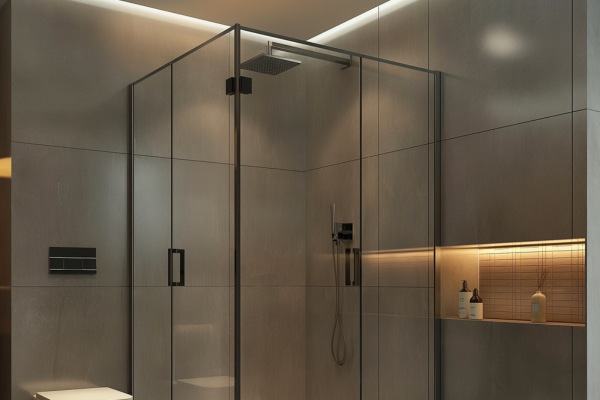
Toughened Glass Shower Cubicles offer a Minimalist Look with Safety.
Tempered glass offers a harmonious balance between safety, aesthetics, and practicality, making it a staple in both residential and commercial architecture as well as interiors.
Also Read Tempered Glass - A Modern Solution for Strength and Safety
Below is the comprehensive difference between types of safety glass that can help you make an informed choice for your next project.
| Features | Laminated Glass | Tempered Glass |
|---|---|---|
| Structure | Multiple glass panes bonded with a PVB interlayer | Single pane, heat-strengthened through tempering |
| Impact Resistance | High | High |
| Breakage Behaviour | Cracks but remains intact due to interlayer | Disintegrates into small, round granules rather than sharp shards |
| Thermal Resistance | Moderate | High (ideal for heat-prone zones) |
| Acoustic Insulation | Excellent | Regular |
| UV Protection | Strong (can be treated to add thermal performance) | Limited (can be treated to add thermal performance) |
| Security | Superior (remains a barrier even after breakage) | Moderate to high (High impact resistance) |
| Customisation | Any type of glass can be laminated | Any kind of glass can be tempered |
Tempered and laminated glass are both integral to modern architectural design, each offering unique advantages tailored to specific needs. For enhanced security in high-risk areas, laminated glass stands out, while toughened glass excels in interior settings and environments exposed to thermal stress.
In advanced applications, architects often opt for tempered laminated glass to achieve a perfect balance of safety, structural integrity, and visual appeal.
Discover Saint-Gobain glass solutions, providing the right fit to meet your design and performance goals.
Also Read Understanding Toughened Glass: A Comprehensive Comparison Guide
How strong is laminated glass compared to annealed glass?
Laminated glass offers high-impact resistance, and the PVB interlayer ensures that even if it breaks, the glass shards remain bonded together, minimising the risk of injury and enhancing safety.
Can laminated glass be toughened?
No, toughened glass can be laminated, offering enhanced durability, shatter resistance, and structural performance for architectural applications.
What are the advantages of toughened glass?
Toughened glass has high withstanding capacity and is, therefore, suitable for interior applications where strength and thermal resistance are crucial. Read our blog to learn more.
Jahanavi Arora is an architect by profession and a writer by choice, with over 7 years of experience in architecture and design writing. She graduated from Chandigarh and believes that writing and architecture are similar as both are forms of art. Read More