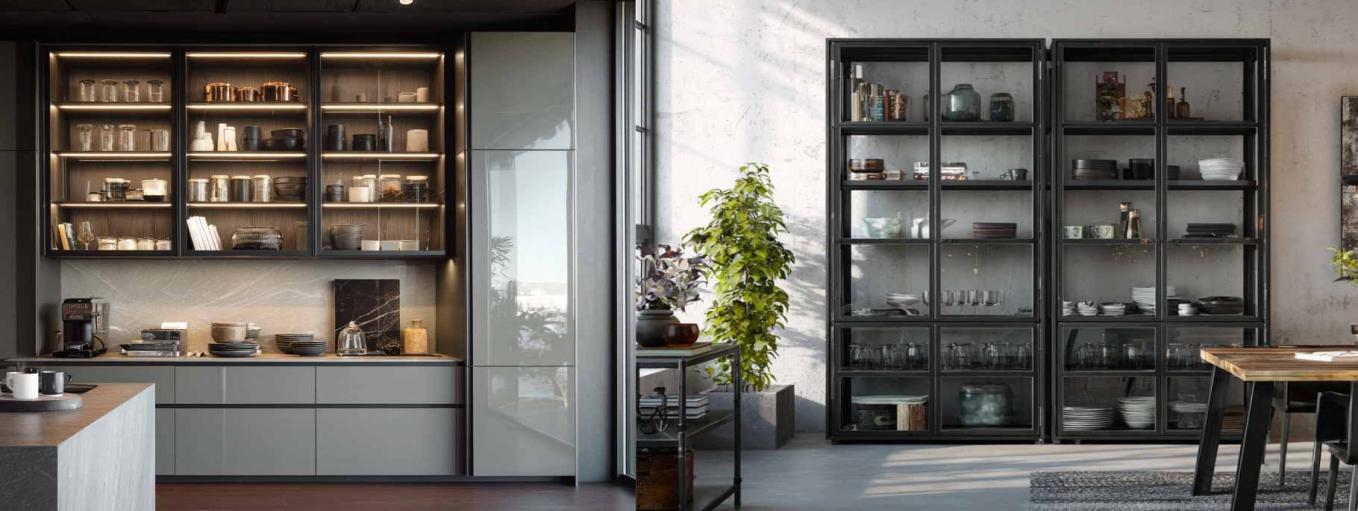
In recent times, the crockery unit has evolved far beyond a closed storage cabinet tucked away in a corner. It has become a visual anchor: one that bridges the kitchen and dining space while reflecting the home’s overall design language.
A well-designed crockery unit does three things simultaneously:
organises everyday essentials
showcases cherished tableware
contributes to the spatial character of a room
As interior layouts become more compact and multi-functional, crockery unit design plays a critical role in defining zones, enhancing light, and adding personality. Whether minimalist or ornate, modern crockery units are as much about display and ambience as about utility, making them an essential element of contemporary homes.
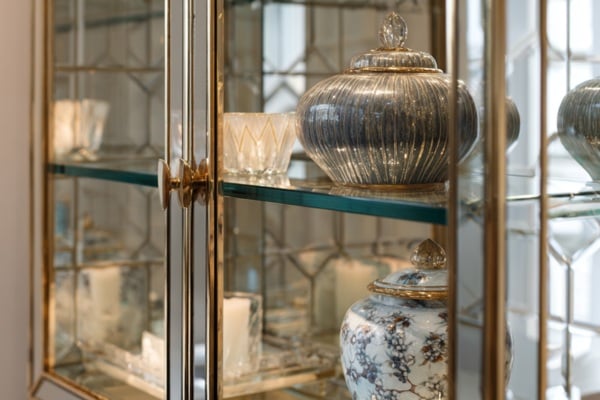
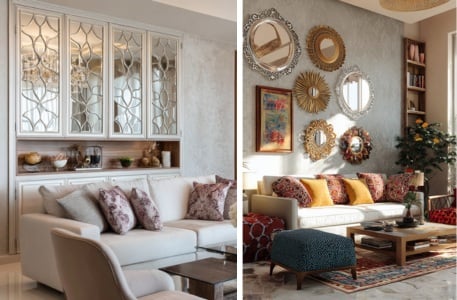
Bevelled mirrors and glass shelving create a sense of depth and timeless glamour.
Art Deco-inspired crockery units celebrate symmetry, reflection, and refined detailing. Bevelled mirror panels amplify light and depth, while toughened glass shelving maintains transparency, strength and elegance. This crockery display unit brings a sense of glamour and drama to the items on display.
Also read Glass Crockery Unit Designs for Modern Homes
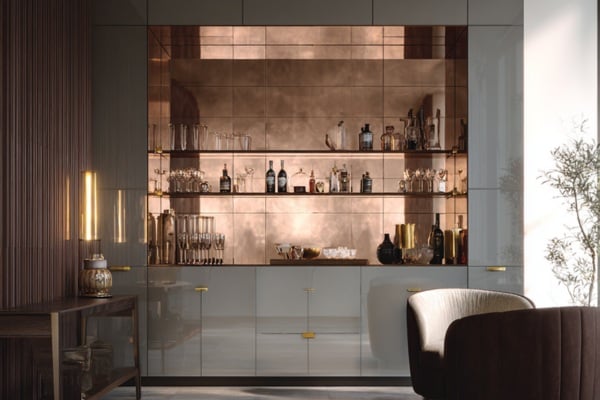
Tinted mirrors add warmth and layered depth, elevating the unit.
Mirrored back walls are exquisite and add visual depth to glass crockery units.
Tinted mirror finishes, such as grey or bronze, add warmth and complement interiors that favour muted palettes, metallic accents, and layered lighting.
SGG Miralite Revolution offers an exclusive range of tinted mirror options, allowing designers to align the crockery unit with a range of interior moods: from understated luxury to soft, modern elegance.
Also read 7 Ideas to Accentuate Furniture with Glass and Tinted Mirrors
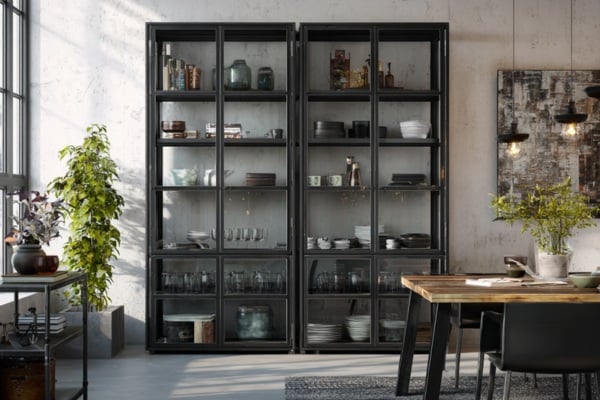
Metal frames and clear glass combine to create a bold, structured look.
Industrial crockery units are defined by contrast and structure. Black metal frames paired with clear toughened glass panels emphasise form and function, creating a bold yet subdued presence. These crockery cabinet designs are particularly effective in urban apartments and loft-style interiors, where exposed materials and strong lines complement open dining layouts and living room needs.
Also read Riverfront Bliss: A Home Designed Around Breathtaking Vistas with Toughened Glass
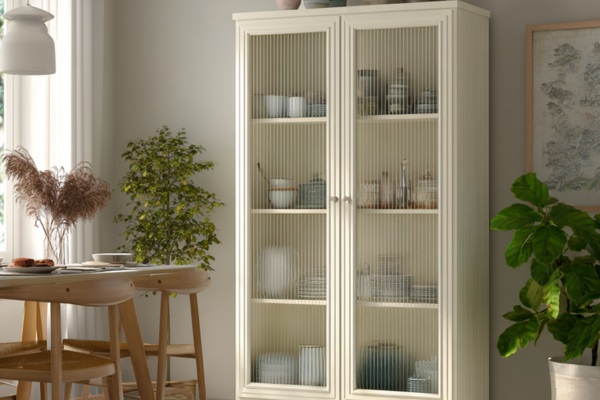
Fluted glass softens light and adds subtle texture in the crockery unit.
Scandinavian-inspired crockery units prioritise simplicity, lightness, and proportion. Off-white finishes keep the unit visually unobtrusive, while fluted glass introduces subtle texture without heaviness.
This crockery cabinet design is perfect for compact dining areas as reflective surfaces enhance brightness and maintain a calm, uncluttered atmosphere. Any type of glass - clear, frosted, fluted or textured - can be toughened to enhance strength and durability.
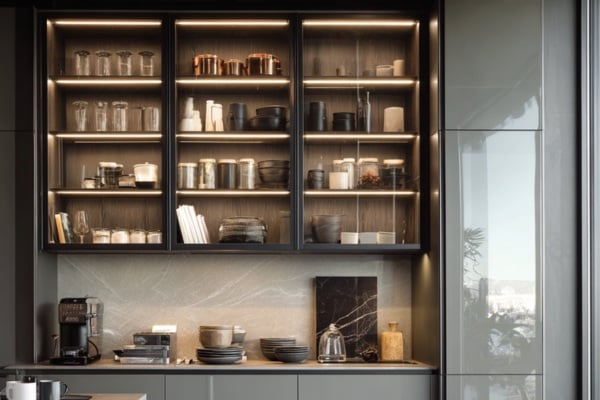
Glass shelving paired with integrated lighting creates a clean, well-lit display.
Glass-fronted crockery units are a staple in contemporary interiors, balancing visibility with order. The clear, toughened glass shelving adds a subtle distinction to the frame, creating a statement, while integrated LED lighting ensures even illumination across the shelves, lending a visually cohesive look.
Below, the use of lacquered glass cabinets introduces a contrasting layer of refinement. The smooth, reflective surface adds depth and subtle sheen to the crockery unit design while effectively concealing storage. SGG Colormaxx Dura, lacquered glass in toughened variant, is available in 216 RAL shades to match any interior decor style.
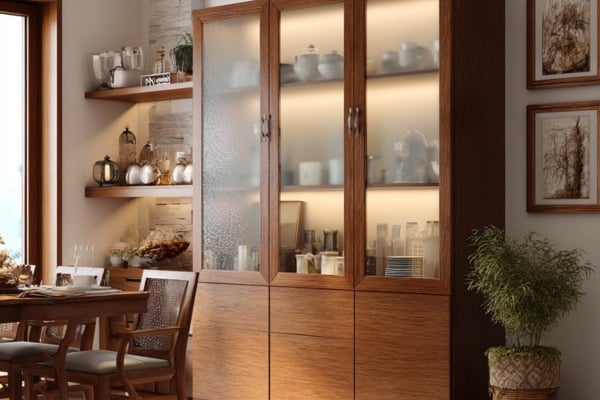
Frosted glass gently diffuses light while maintaining privacy, lending a warm and grounded character.
Frosted glass crockery units strike a balance between concealment and display. By softening visibility, frosted glass finishes reduce visual clutter while still allowing light to pass through, making them ideal for homes that favour warmth and restraint. When paired with rustic textures like wood grains or matte finishes, these units feel grounded and timeless, especially in dining spaces that lean towards earthy, lived-in aesthetics.
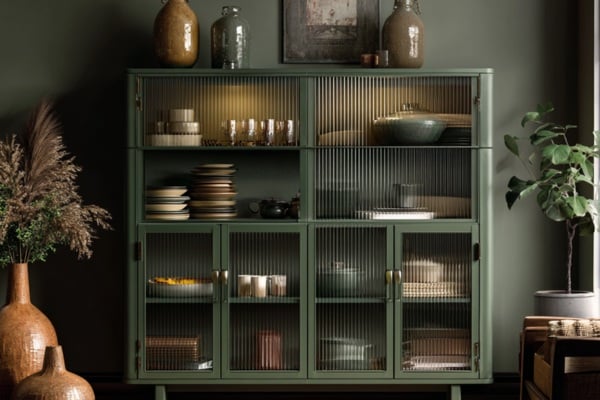
Rich tones and glass detailing bring depth and nostalgia to crockery unit design.
Rich tones and glass detailing bring depth and nostalgia to crockery unit design.
Rooted in classic cabinetry, this crockery unit is defined by deep green finishes that feel both grounded and expressive. Clean lines and subdued detailing blend well with modern layouts, while the interplay of earthy tones, glass elements, and natural materials create a quiet sense of nostalgia. These designer crockery units pair beautifully with contemporary furniture, adding depth, character, and a layered richness.
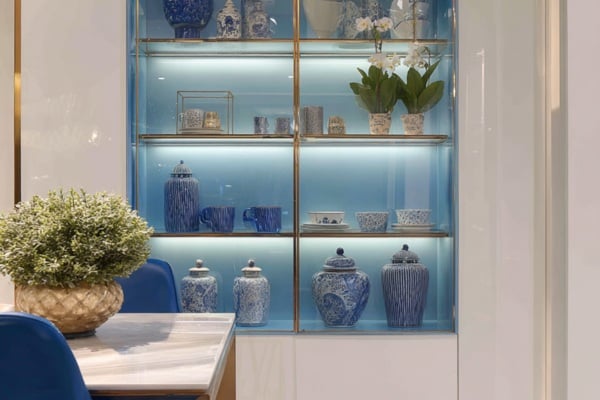
Coloured interiors paired with glass shelves create a layered, curated display full of personality
Colour-blocking is trending in interiors, so why should the insides of the crockery unit be left behind? This crockery cabinet design with blue interiors and a muted exterior brings freshness and personality to dining spaces. Glass shelves add depth and visual interest while reducing transparency, making the display feel curated rather than exposed.
Also read Beautiful Glass Shelves and Bookcase Designs for Your Home
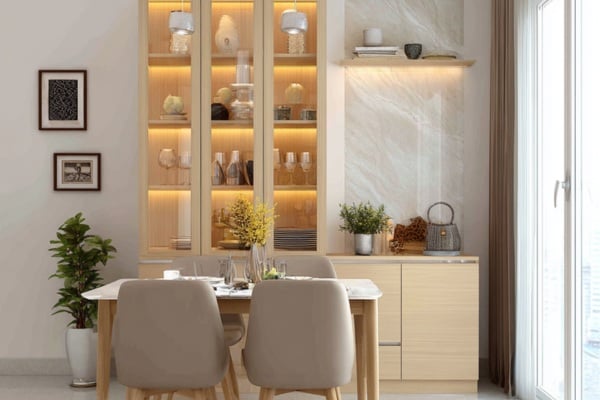
Slim glass displays keep the unit visually light, offering function and elegance.
If you favour clean surfaces and walls, a minimalist crockery unit might be the desirable choice for the dining room. Narrow glass display sections allow homeowners to showcase select pieces, keeping the unit visually light without overpowering the space. In contemporary homes, such glass crockery units often act as a quiet backdrop, supporting the space rather than drawing attention.
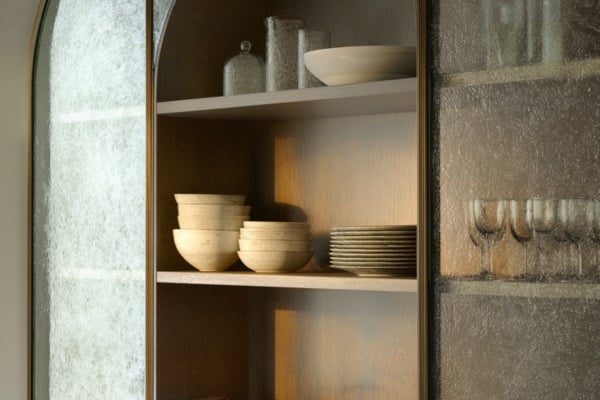
Textured glass softens visibility while diffusing light, adding a style statement.
Niches are increasingly being used to soften the visual mass of storage in interior spaces.
Instead of projecting into the room like a cabinet, these crockery units are integrated into the wall, allowing storage to feel architectural rather than added on. Textured glass diffuses light and partially obscures contents, merging utility and beauty.
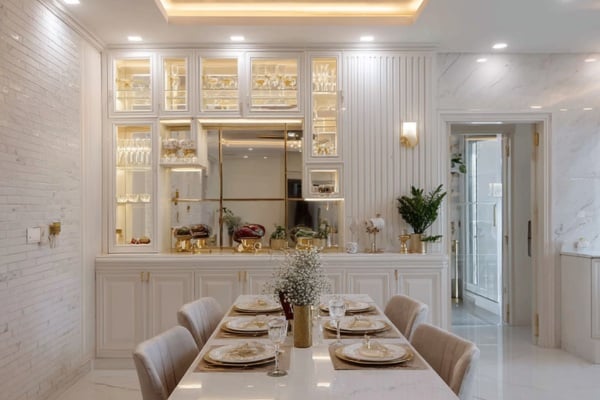
Glass and mirrored panels reflect light to create a bright, spacious, and timeless display
Classic white crockery units are timeless for their adaptability across different decor styles. White finishes reflect light and make the space feel brighter and expansive.
The glass-fronted upper cabinets introduce rhythm and transparency, while mirrored back panels add depth and reflection, subtly amplifying both natural and artificial light. Brass-toned accents and warm lighting further elevate the unit design, adding a layer of understated luxury.
A well-designed crockery unit brings clarity and character to kitchen and dining spaces. It organises the essentials and shapes how a room is experienced while enhancing display and contributing to the overall spatial narrative.
Whether it's minimalist glass cabinets, mirrored back panels, or luxe tinted finishes, the desired crockery cabinet design adapts to the needs of contemporary living and timeless interiors.
What is the need for a well-designed crockery unit in a home?
A crockery unit plays a key role in organising, displaying, and enhancing dining spaces. A well-designed crockery unit protects fragile tableware, improves accessibility, and helps maintain order while elevating the overall interior aesthetic of the space. Through the use of glass, mirrors, lighting, and finishes, it can add depth, reflect light, and act as a visual focal point.
What is the ideal material for a modern crockery unit?
Modern crockery units work best with a combination of materials, such as glass-front cabinets, mirror back panels, and lacquered glass surfaces, which are used for their durability and ease of maintenance. These materials also help create visually lighter units suitable for contemporary homes.
Which crockery unit design works best for small dining spaces?
For smaller dining areas, crockery units with light colours, clear or frosted glass fronts and mirrored backs are ideal. These elements enhance light and visual depth, preventing the unit from feeling bulky. Vertical storage and built-in designs also help maximise space efficiently.
Which one to choose: a freestanding or a wall-mounted crockery cabinet?
The choice between a freestanding and a wall-mounted crockery cabinet depends largely on space availability, layout, and design preference. Freestanding crockery units offer flexibility and a furniture-like presence but they require adequate floor space and careful placement to avoid bulkiness. Wall-mounted crockery units, on the other hand, are ideal for contemporary homes and compact layouts, saving space and creating a more streamlined look.
Jahanavi Arora is an architect by profession and a writer by choice, with over 7 years of experience in architecture and design writing. She graduated from Chandigarh and believes that writing and architecture are similar as both are forms of art. Read More