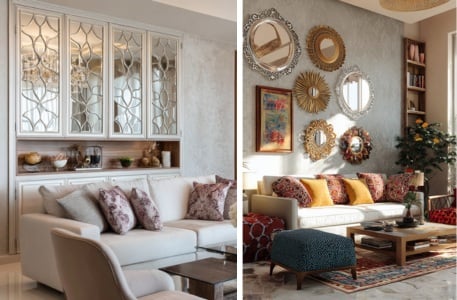
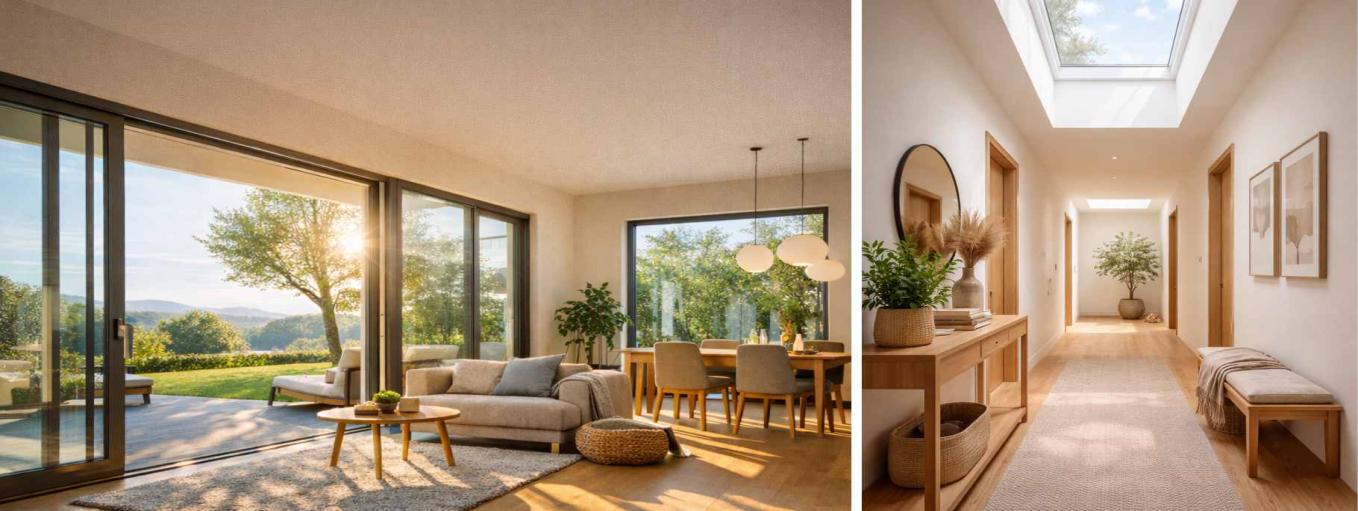
Light symbolises clarity, direction, and life, dispelling darkness and revealing possibilities. In interior design, this symbolism translates into both functionality and emotion. A poorly lit space lacks visual appeal and also feels dull and uninspiring. Light influences our mood, perception, and well-being. The right lighting transforms interiors, making them calming, energising, or intimate. It’s no surprise that designers treat light as a powerful tool for shaping experiences in a home.
However, lighting design goes beyond simply installing fixtures. It is the thoughtful orchestration of natural and artificial light to create a desired ambience. Among all materials used in architecture and interiors, glass plays a pivotal role in shaping how light enters, travels, and interacts with space.
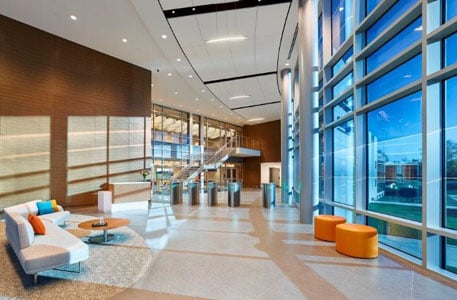
From large windows and skylights to glass staircases and partitions, glass solutions allow light to flow seamlessly, creating interiors that feel brighter, more open, and visually connected.
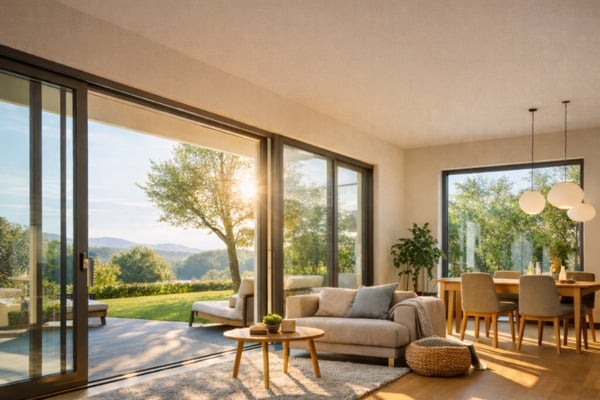
Glass windows and doors transform natural light into a defining element of space, openness, and comfort
Large window fronts and expansive glass doors invite natural light into the indoors. They allow daylight to penetrate deep into interiors, reducing the reliance on artificial lighting while creating a seamless visual connection with the outdoors, blurring boundaries and enhancing well-being.
The transparency and reflective qualities of glass allow light to travel freely across a space, illuminating even deeper corners and making interiors feel larger and more continuous.
Designers and architects often opt for high-performance glass solutions, such as solar-control glass or double-glazed glass units (DGUs), as they allow ample daylight to enter while minimising heat gain and glare.
Also read How to Choose the Right Glass for Your Home Windows
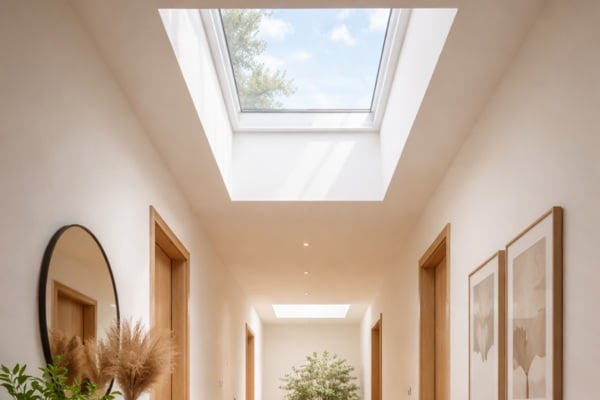
Glass skylights for homes enhance natural lighting, improve ventilation, and brighten enclosed spaces.
Skylights or lightwells can be introduced as architectural elements designed to bring abundant natural light into interiors, often brightening spaces that otherwise receive limited daylight. They flood the space with brightness, creating a more uplifting environment.
They’re especially useful in:
Stairwells
Bathrooms
Hallways
Compact or enclosed spaces
And if you opt for ventilated skylights, they even improve airflow, letting hot air escape and keeping interiors comfortable.
Also read Expert Tips to Choose The Perfect Glass for Skylights
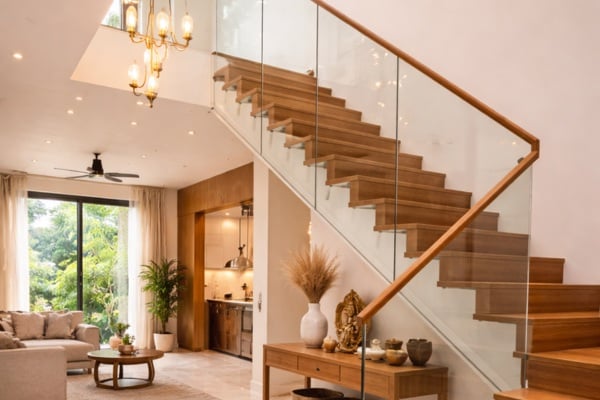
Glass staircases enhance light flow, turning vertical movement into a luminous design feature.
Traditional stair railings often block light, creating dark zones between floors. But glass stair railings do the opposite, allowing light to pass through freely while creating brighter and more visually open interiors.
Glass staircase railings enhance light penetration and maintain visual continuity across levels, offering a minimalist aesthetic with uninterrupted views. This is quite popular in contemporary interiors where openness and transparency define the architectural language.
Modern glass staircases often use toughened or laminated safety glass to ensure strength, durability, and impact resistance.
Also read How to Keep Glass Railings Clean in Coastal Homes: 9 Expert Tips You Need to Know
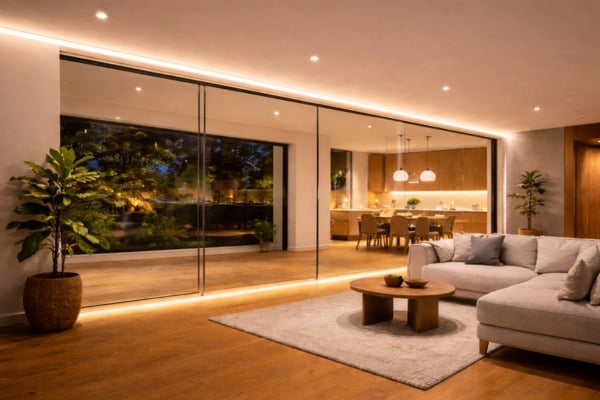
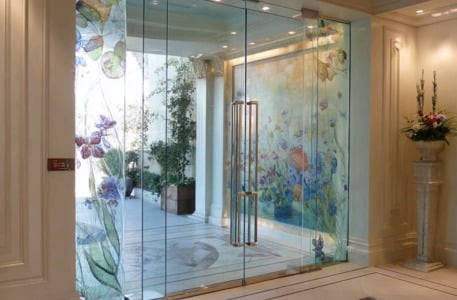
Glass doors with integrated lighting enhance spatial flow, brightness, and openness in modern interiors.
Clear glass doors divide spaces and also maintain spatial coherence. They create a sense of depth and fluidity by allowing uninterrupted views across rooms. Lighting can further enhance this effect.
Continuous LED light strips installed along floors, ceilings, or walls, extending across glass surfaces, create a seamless flow of illumination. The glass door visually disappears, giving the impression of an expansive space.
Alternatively, aligning pendant lights spanning adjacent rooms creates a rhythmic sense of openness. This approach works across a range of interior styles, from minimalist to contemporary.
Also read Are Toughened Glass Doors Safe? Benefits Every Homeowner Should Know
Glass solutions are designed to balance privacy with light, allowing you to enjoy brightness without compromising on comfort.
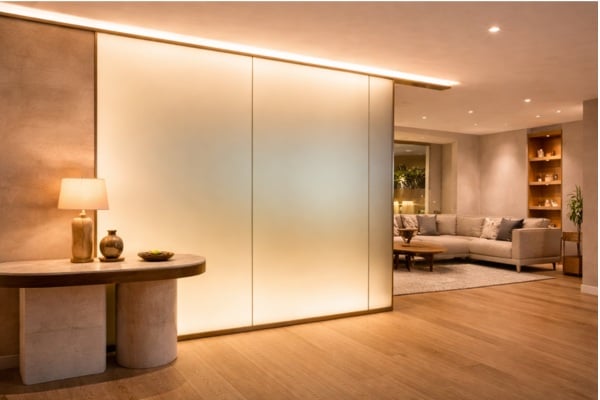
Frosted glass diffuses light softly, offering privacy without compromising on brightness.
Frosted glass is one of the simplest and most effective ways to achieve this. It diffuses light beautifully, softening glare while maintaining privacy.
When backlit, frosted glass panels or doors transform into softly glowing surfaces, almost like built-in light fixtures, providing a gentle, even ambient glow.
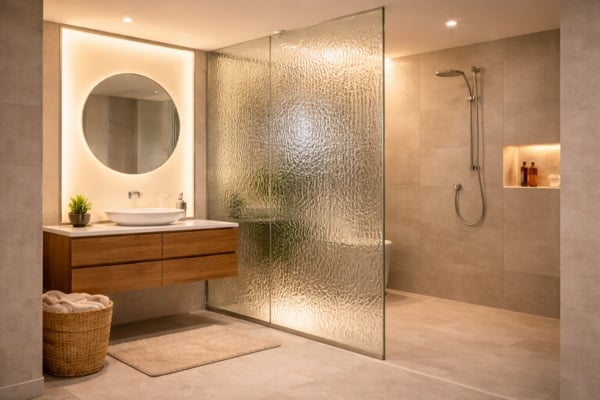
Textured glass transforms light into patterns, adding depth, privacy, and visual interest.
If you want something more expressive, textured glass introduces pattern and privacy into the equation.
When paired with spotlights or wall lighting, it comes alive, creating shadow patterns, subtle reflections and a sense of depth, turning a functional element into a dynamic design feature.
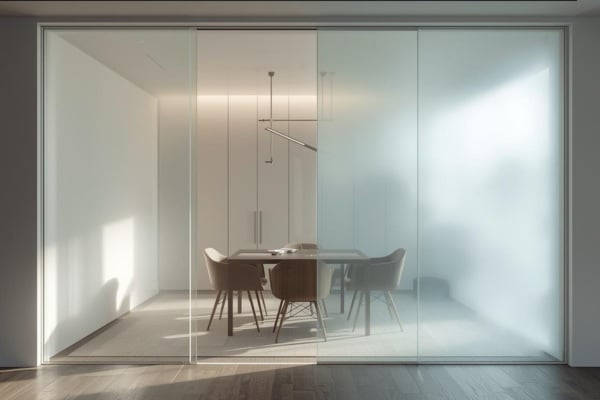
Switchable glass adapts instantly, offering privacy on demand while maintaining a soft, luminous glow.
Another brilliant option is switchable privacy glass, a high-tech solution that can shift from clear to opaque at the touch of a button.
Even in its opaque state, switchable glass allows light to pass through as a soft glow, maintaining brightness while ensuring privacy. It’s a functional, futuristic, and incredibly smart choice for homes.
Also read Vibrant Tinted Glass for Office Partition
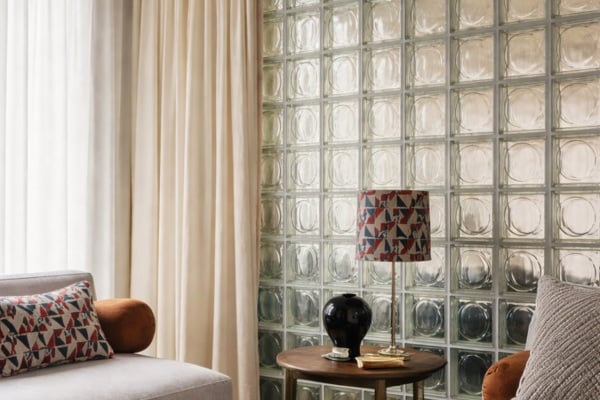
Glass blocks scatter and soften light, creating spaces that glow with depth and character.
Glass blocks have a way of making light feel alive. Throughout the day, they interact with natural light in constantly changing ways: softening it, scattering it, and adding a subtle glow to interiors. In daylight, they gently diffuse light across the space, while in the evening, when lit from within, they become luminous features.
What makes them even more versatile is their variety. From clear to frosted to tinted finishes, and from smooth to textured surfaces, glass blocks can be tailored to control privacy, light, and visual effect.
How does glass improve natural lighting in interiors?
Glass in interior design allows natural light to travel deeper into spaces, reducing the need for artificial lighting. Its transparent and reflective properties enhance brightness, making rooms feel larger, more open, and visually connected.
What are the benefits of glass skylights for homes?
Glass skylights for homes bring abundant daylight from above, brightening dark areas like hallways and bathrooms. They also improve ventilation, enhance energy-efficiency, and create a more open, comfortable indoor environment.
How do glass partitions enhance interior spaces?
Glass partitions offer a chic and modern way to divide spaces without blocking light. They maintain spatial continuity, improve light distribution, and make interiors feel more expansive and cohesive.
Are glass blocks suitable for modern home interiors?
Yes, glass blocks in interior design are making a comeback due to their ability to add texture and subtle drama, while still providing privacy and reflecting light in interesting ways. When combined with lighting, they create glowing feature walls that enhance both aesthetics and functionality.
Jahanavi Arora is an architect by profession and a writer by choice, with over 7 years of experience in architecture and design writing. She graduated from Chandigarh and believes that writing and architecture are similar as both are forms of art. Read More