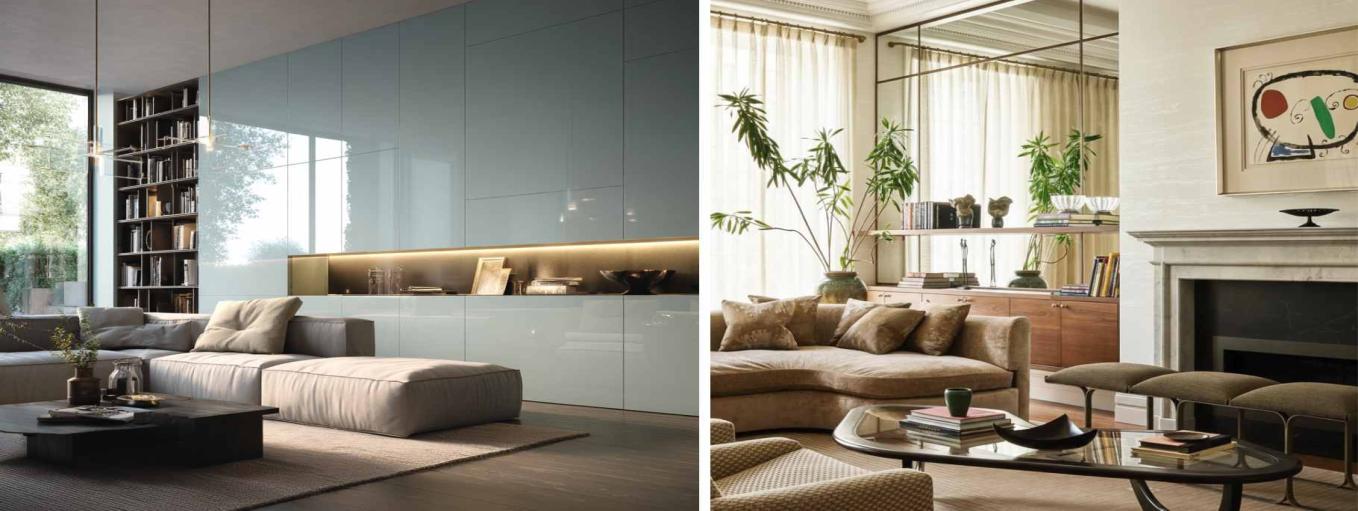
In 2026, living room design is undergoing a quiet but meaningful transformation. The focus is shifting away from showroom perfect interiors and short lived trends toward spaces that feel layered, intentional, and deeply personal. Today’s design trends are less about visual excess and more about material honesty, comfort, and long-term relevance.
The living room, often the most used space in a home, is expected to do more than just look good. It must adapt to daily routines, technology, social interaction, and moments of rest.
As a result, interior design trends for 2026 place strong emphasis on materials, how they feel, how they age, and how they interact with light and space. Alongside natural materials like wood and stone, glass is playing a more nuanced role, contributing subtle luxury, openness, and balance without dominating the room.
Here are the key living room design trends you need to know for 2026 and how thoughtful material choices can help you bring them into your home in a timeless way.
One of the most defining shifts in home design is the move toward authenticity. Homeowners are increasingly drawn to materials that feel real, tactile, and intentionally crafted, materials that tell a story through texture rather than ornamentation. This approach is often described as quiet luxury: an understated form of elegance rooted in quality, restraint, and longevity.
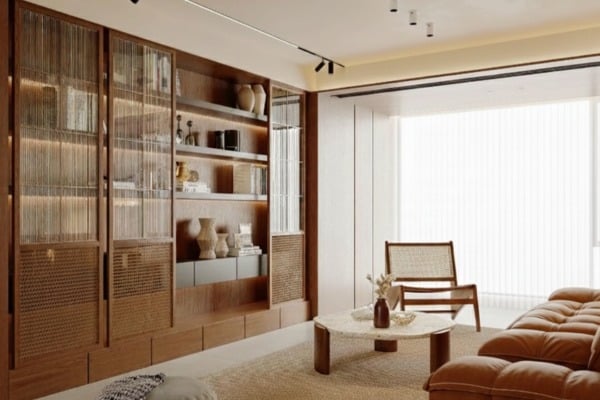
Textured glass sliding shutters add contrast in material-rich living spaces
In living rooms, this translates into hand-finished wood, natural stone with visible veining, limewashed or mineral-painted walls, and textiles that celebrate weave and irregularity. These surfaces do not aim for perfection; instead, they highlight subtle variations that make a space feel human and lived-in. Textured glass, specifically ribbed glass sliding shutters, act as a vital counterbalance in these spaces. As seen in the reference image, these shutters provide several design advantages:
Refined Privacy: The fluted finish adds depth while softening transparency, allowing light to pass through while blurring the contents of the cabinetry.
Visual Harmony: The vertical ribs create a rhythmic texture that complements the organic grain of natural wood and materials like rattan or cane.
Minimalist Flow: The sliding mechanism maintains a room's openness, replacing the physical "swing" of doors with streamlined functionality.
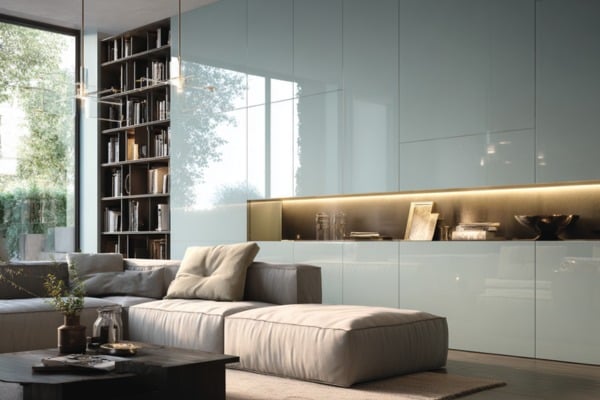
Lacquered Glass Wall Panelling for Seamless Surfaces
Smart homes are no longer a novelty, but in 2026, the emphasis is firmly on invisible technology. Homeowners want the benefits of modern convenience without the visual clutter of exposed screens, cables, and devices. Interior design trends are responding by integrating technology directly into architectural and material decisions.
Living rooms are increasingly designed with built-in solutions that support everyday use while maintaining visual calm. Wireless charging surfaces, concealed cable routes, integrated audio systems, and adaptable display solutions are becoming standard expectations. Screens are treated less as objects and more as elements that appear only when required.
Material choice plays a critical role here, and glass is particularly effective in supporting this trend. Lacquered glass panels, for instance, are used to create seamless surfaces that can conceal technology within cabinetry or wall units. Their smooth, reflective finish helps maintain continuity across large planes, reducing visual breaks that often make tech-heavy walls feel bulky. Beyond appearance, lacquered glass offers durability, ease of maintenance, and light-reflective properties, important qualities in a living room that sees frequent use.
Also read Professional Advice On Lacquered Glass & Mirror Wall Panelling For Cafe Interiors
Furniture design in 2026 is moving toward softer, more expressive forms like sculptural silhouettes, particularly those defined by curves and fluid lines. This is becoming central to modern decor. These pieces introduce a sense of movement and comfort, softening the rigidity often created by straight walls and linear layouts. Rather than dominating a space, sculptural furniture acts as a visual anchor. Rounded forms encourage a more relaxed flow through the living room and foster connection by creating intimate seating arrangements. This shift reflects a broader move in home design toward emotional comfort and ease.
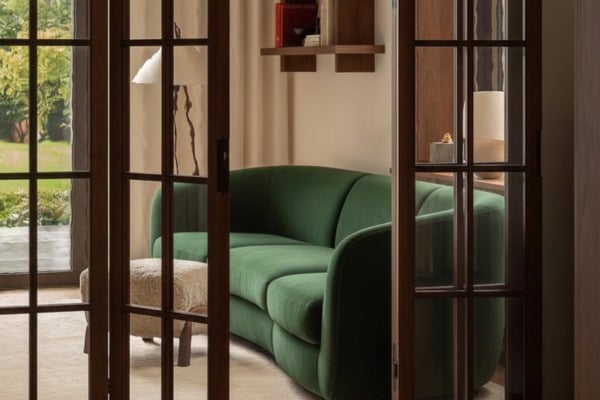
Glass partitions offer subtle separation without disrupting visual flow
Architectural elements are evolving alongside furniture to support this softness. Glass partitions, especially those made from toughened glass, are increasingly used to define zones without breaking visual continuity. Toughened glass provides essential durability and safety, as its high thermal and impact resistance allows for large, seamless spans that remain structurally sound. Unlike solid dividers, glass allows the living room to remain open and light-filled. This balance between structure and openness enhances the sense of modern luxury interiors without making the room feel compartmentalized.
Also read The Ultimate Guide To Toughened Glass Partitions For Workspaces
Patterns are returning to living room interiors, but in a far more restrained and material-driven way. Instead of bold contrasts, 2026 design trends favour tonal layering, patterns that stay within the same colour family and reveal themselves gradually.
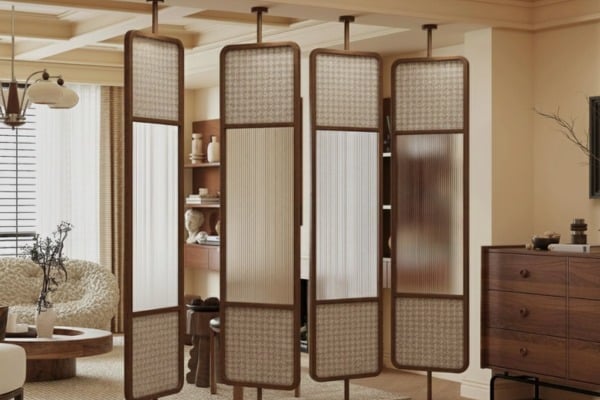
Textural partitions created through the pairing of jacquard textiles sandwiched in glass
This approach relies heavily on texture. Subtle jacquards and fine micro-motifs add depth without overwhelming the space. The goal is not to make patterns the focal point, but to let them enrich the overall composition of the room.
Storage furniture is experiencing a renewed importance in living room design, particularly as homes continue to support multiple functions. Instead of flat, uniform finishes, there is a growing appreciation for visible wood grain, natural movement, and expressive detailing. These elements give storage pieces a sculptural quality, allowing them to contribute to the aesthetic of the room rather than fade into the background.
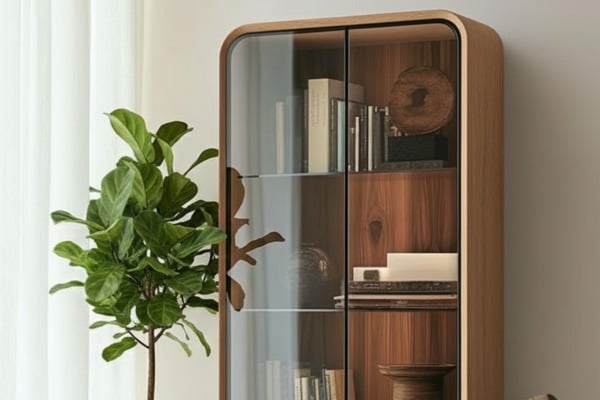
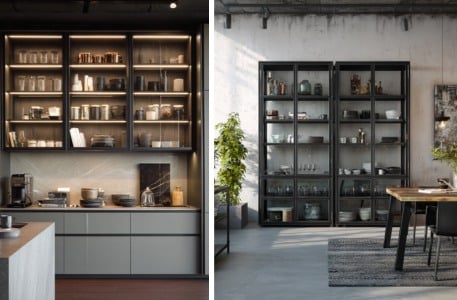
Glass shutter cabinets reinforce a lighter, more cohesive design language
Glass shutter cabinets work particularly well in living rooms because they help large storage units feel lighter and less visually heavy. When combined with warm wood finishes, glass shutters ensure that storage blends naturally into the space rather than dominating it. Glass also encourages more intentional organisation, showing how storage can be practical while still contributing to a refined, well-balanced interior.
Also read Clear the Clutter: Glass for your Wardrobes
The dominance of all-white living rooms is giving way to richer, more immersive colour palettes. Colour washing, where walls, ceilings, and sometimes trims share the same hue is gaining popularity for its ability to create warmth and intimacy.
Earthy greens, deep blues, warm browns, and muted plums are becoming key choices in modern living rooms. These tones create a cocooning effect that makes spaces feel comforting and grounded rather than stark or clinical.
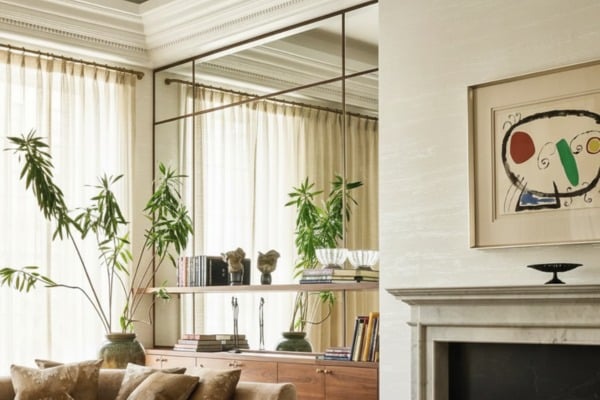
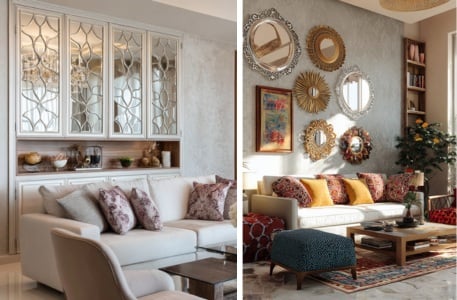
Adding mirror panels to balance the dark tones in the living space
Material balance is essential when working with deeper colours. Reflective elements help maintain openness, and this is where mirrors become particularly valuable. Mirrors with tinted or antiqued finishes add depth while softening reflections. It enhances the mood without introducing harsh contrast in the space. When used strategically, such as in a mirror wall panel, reflective surfaces help darker colour palettes feel layered and luminous rather than visually heavy.
Living room design trends for 2026 reflect a broader shift in how we think about our homes. The emphasis is no longer on perfection, but on personality, material integrity, and long-term comfort. Interior design is becoming more thoughtful, with greater attention paid to how materials age, how spaces are used, and how design supports everyday life. As you plan your living room, look beyond fleeting trends. Choose materials that feel authentic, layouts that encourage connection, and design decisions that align with how you truly live. After all, the most enduring home design is one that continues to feel like home, year after year.
Also read 7 Ideas to Accentuate Furniture with Glass and Tinted Mirrors
What are the living room design trends for 2026?
Living room design in 2026 focuses on comfort, material honesty, and timelessness. These design trends include quiet luxury, artisanal finishes, sculptural furniture forms, integrated technology, multi-functional storage, and layered textures.
What does “quiet luxury” mean in living room interiors?
Quiet luxury refers to understated elegance built through high-quality materials, thoughtful detailing, and restraint. In living rooms, the use of natural materials, textured walls, muted palettes, and subtle glass accents enhances light and openness without drawing attention to themselves.
Are open living rooms still popular in 2026?
Yes, open living rooms are still relevant and popular with integrated zoning. Glass partitions are increasingly used to define spaces without blocking light or breaking visual continuity. This allows homes to remain open while still promising privacy, acoustics, and multiple activities.
Shivanie Khanka is a passionate and versatile architect with a flair for writing, design, and photography. She is a curious soul and is always looking to learn from her experiences. Read More