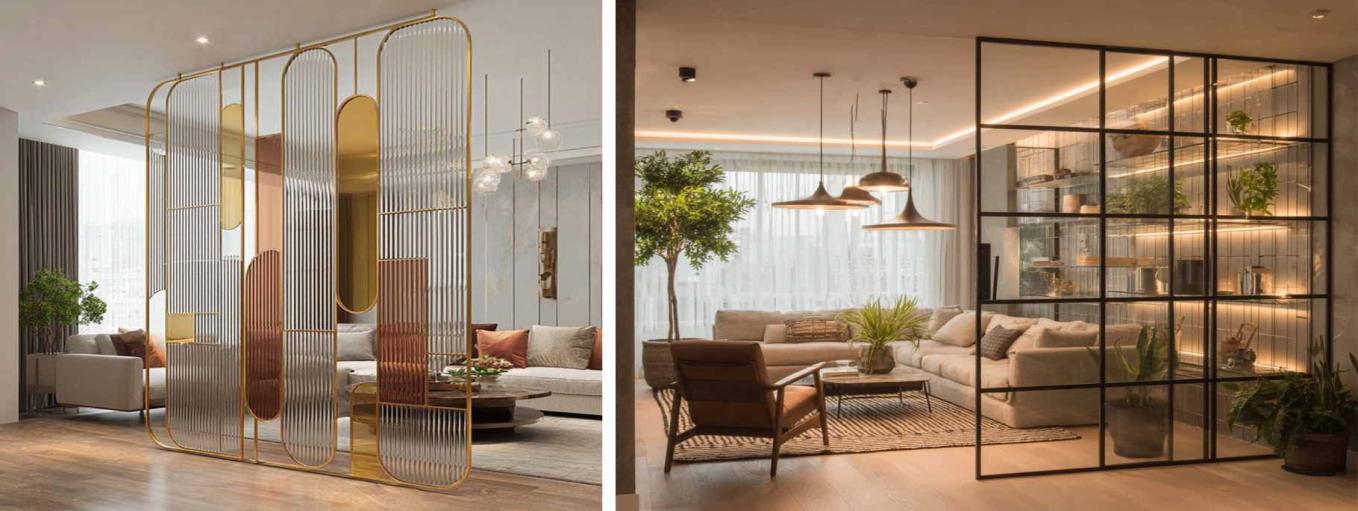
In most modern homes, the living and dining areas fall under the umbrella of public spaces: zones where conversations flow, guests drop in unannounced, deliveries arrive, and daily life unfolds in full view.
However, in the Indian context, dining is also a deeply personal ritual with elaborate meals, family conversations and children drifting in and out. This puts Indian dining in a semi-public zone.
In contemporary apartments and open-plan homes, living and dining areas frequently share a single large space. While this openness makes homes feel larger and brighter, it also blurs boundaries between entertaining guests and everyday family routines.
Picture this: guests chatting in the living room, a delivery agent ringing the bell, and your grandmother quietly finishing her meal at the dining table. In such moments, a little privacy goes a long way.
The goal is to design functional spaces that coexist comfortably. Thoughtful zoning enhances circulation, improves utility, and elevates overall modern interior design without making spaces feel cramped.
Here are some clever and stylish ways to separate living and dining spaces without compromising on openness.
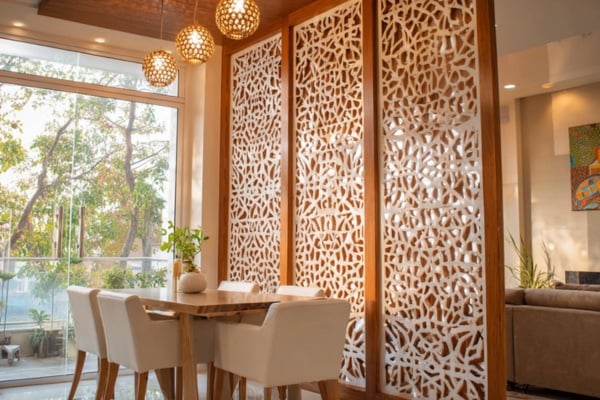
A Sculptural Screen that Filters Light, Frames Views, and Defines Space
A CNC-cut partition works beautifully when you want separation without bulkiness. Intricate patterns in MDF, metal, or composite panels allow light and sightlines to pass through while still marking a boundary between living and dining zones. These dividers are available in a range of designs inspired by Indian motifs or geometric patterns, adding personality while maintaining visual continuity and a timeless look.
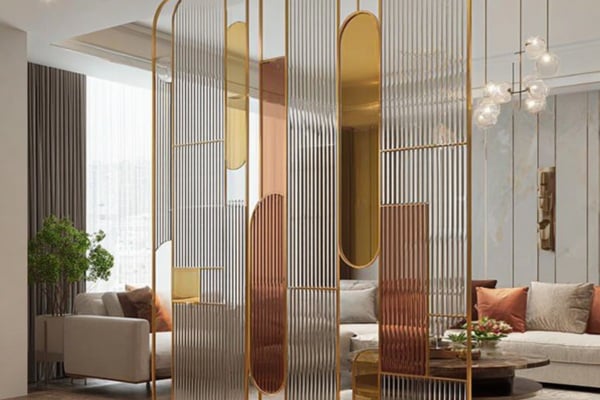
Textured Glass that Separates Gently While Elevating the Entire Room
When a divider doubles as a design highlight, it eliminates the need for additional décor. These sculptural dividers, crafted in fluted or frosted glass, add visual drama while creating privacy without isolation. Paired with tinted or coloured glass inserts, these space-saving room dividers bring warmth and personality.
The slim metallic framework in brushed brass or champagne finishes transforms the design into a statement feature.
Also read Creative Ways To Use Decorative Glass Partitions In Interior Design
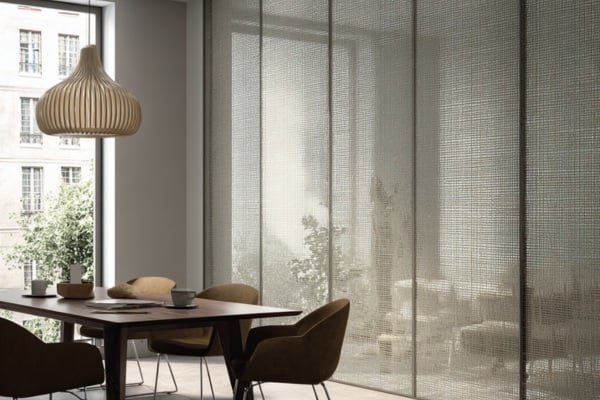
Fabric-Sandwiched Glass Blends Texture, Light, and Privacy
If you love the elegance of glass and the warmth of textures, fabric-laminated panels offer the perfect middle ground. Here, fabric layers such as mesh or cane are sealed between glass sheets, allowing light to pass while gently obscuring visibility.
The result is a glass partition for living and dining room spaces that feels warm, textured, and inviting. By embedding fabrics or woven textures between toughened glass layers, the partitions become visually striking and highly durable.
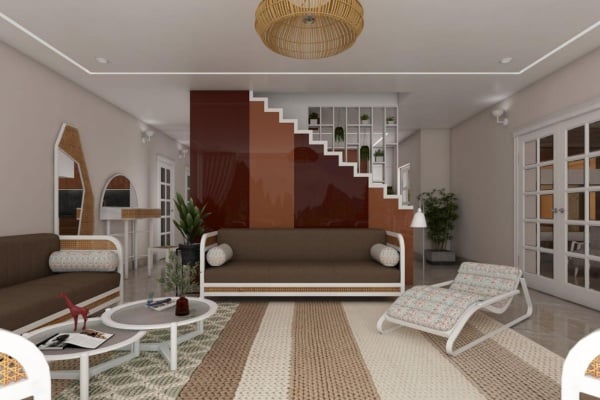
A Bold Colour Statement that Anchors Spaces While Adding Shine and Personality
When zoning also becomes an opportunity to bring vibrancy and colour, lacquered glass works like a visual anchor that gently defines the living and dining area. The warm, rich tones of lacquered glass become a striking backdrop, complementing the boho palette of cane, woven textures, earthy fabrics, and relaxed furniture forms.
Greenery is thoughtfully layered around the space, near the staircase and seating, allowing plants to soften the transition organically. The glass introduces a contemporary finish and complete privacy, while surrounding plants and natural materials keep the space grounded and inviting.
SGG Colormaxx, lacquered glass, comes in an assorted range of shades to bring liveliness and unified expression.
Also read Living Room Design Trends 2026 You Need to Know
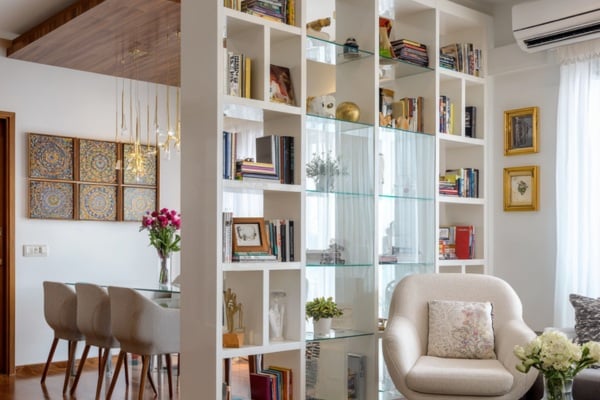
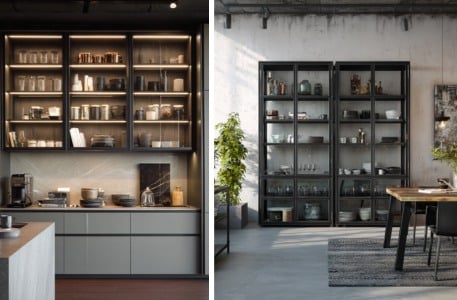
A Smart Divider with Toughened Glass Shelves that Separates Zones While Showcasing Decor
A bookcase or display unit works brilliantly as a divider between the living and dining room, creating separation while offering room for decor books, travel souvenirs, or collectables. Clear or tinted glass shelves keep the unit visually light, preventing it from overwhelming the space. This design solution is especially effective in small living-dining rooms where multi-functional furniture makes the space feel spacious and welcoming.
Clear or tinted glass shelves keep the unit visually light, making it ideal for small living-dining spaces.
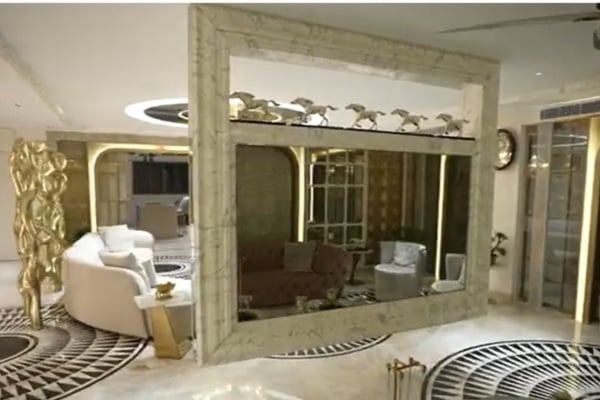
A Dual-Purpose Solution that Divides Intelligently and Expands Visually.
Credits- gopaalzaverii
Looking for an extraordinary divider between the living and dining room?
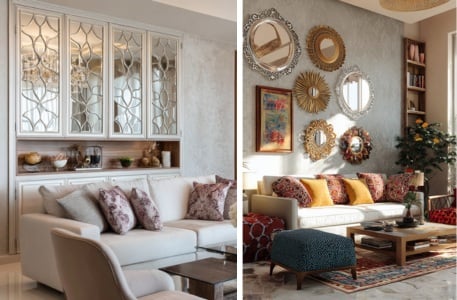
A dual-sided TV unit is one of the smartest living-dining room partition ideas, allowing the television to face the living room while the backside becomes a mirrored or decorative panel for the dining zone.
The unit anchors the living room, creating a focal point, and the mirrored dining-side surface reflects light, visually expanding the dining space.
Use tinted or antique mirror finishes to avoid harsh reflections while still enhancing depth.
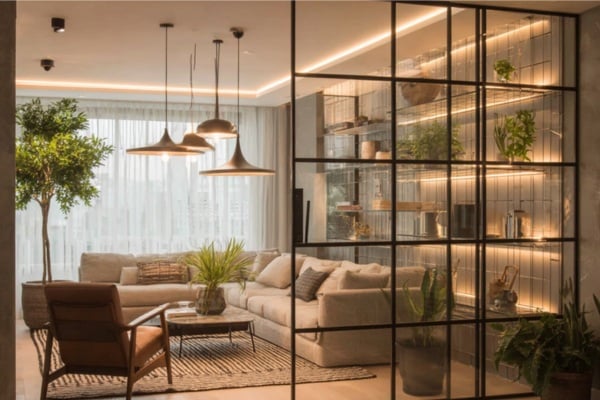
Glass and Metal Divider Brings Architectural Clarity without Visual Heaviness
Sometimes, all you need is a gentle pause between spaces rather than a full stop. A full-height divider like toughened clear glass framed in slim metal does exactly that, adding both structure and character. It marks territory between zones, helps contain the area for mechanical cooling, while keeping visual continuity intact.
In many open-plan living-dining room layouts, this type of glass and metal divider maintains openness while still offering transparency and light.
It works particularly well in homes seeking contemporary or industrial aesthetics, offering a clean, modern look.
Still wondering which option is right for your home?
Think about what kind of experience you want while dining - fully integrated with the living space, or gently tucked away?
Because at the end of the day, living and dining room layout ideas are all about allowing conversations, rituals, and routines to coexist beautifully. Whether through furniture, lighting, glass or flexible dividers, the best partition is the one that supports your lifestyle.
Also read The Ultimate Guide To Toughened Glass Partitions For Workspaces
What are the best room divider ideas for small apartments?
In small apartments, multifunctional solutions such as bookcase partitions, glass and metal dividers, and fluted glass screens are effective because they create separation without consuming much floor space or blocking natural light.
Are glass partitions good for living and dining room separation?
Yes, glass partitions allow natural light to travel across spaces while creating a visual continuity. Options like fluted, tinted, or fabric-laminated glass provide privacy without making the room feel closed.
How do I create privacy in an open-plan living and dining room?
Privacy in Indian living and dining spaces is essential, and it can be achieved through partial partitions, fluted or tinted glass dividers, curtains, furniture placement, or shelving units that subtly block direct views while keeping spaces connected.
Jahanavi Arora is an architect by profession and a writer by choice, with over 7 years of experience in architecture and design writing. She graduated from Chandigarh and believes that writing and architecture are similar as both are forms of art. Read More