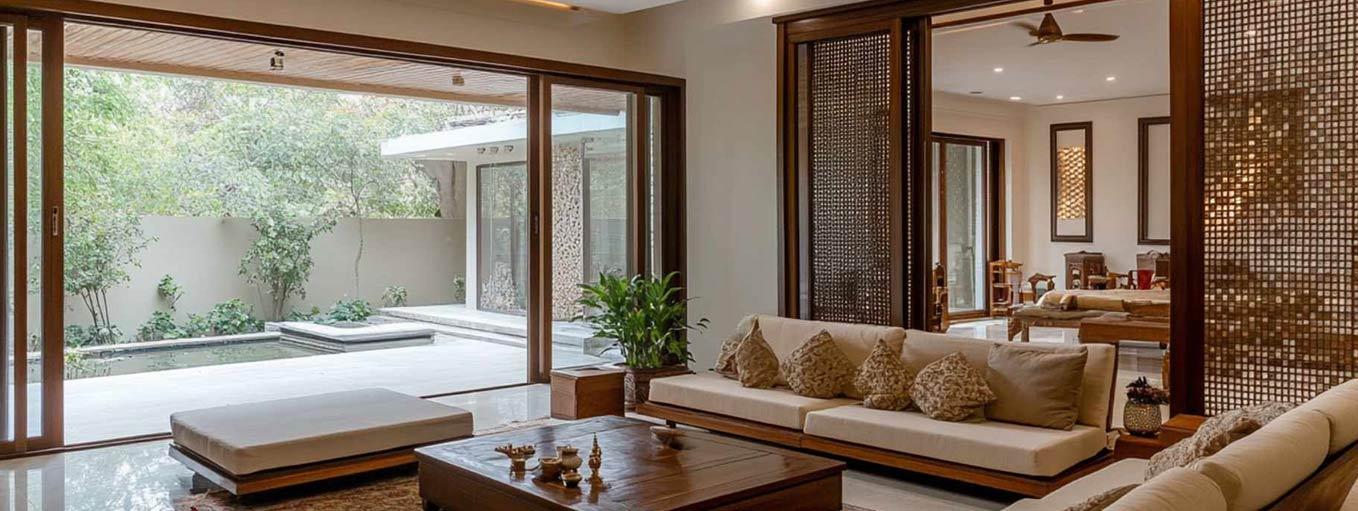
In the era of rapid change, the boundaries between work and life, public and private, are increasingly blurring. As family structures evolve and lifestyles shift, homes are no longer static environments. They need to be dynamic, adaptive, and inclusive so that diverse age groups can coexist under one roof.
The answer lies in fluid living spaces: open, light-filled, and flexible zones that grow and evolve with their inhabitants. And what better material to shape these spaces than glass that invites light, texture and privacy into interiors.
Modern multigenerational living isn't just about adding extra rooms—it's about redefining the spatial experience by integrating open layouts and transformable zones. These homes foster interaction without compromising on individual comfort. Spaces become multi-functional and modular, with an understanding of the occupants' needs.
Glass serves as an indispensable material in a fluid design vocabulary, adding a touch of elegance while maintaining visual continuity and maximising natural light.
Folding Sliding Walls: Think of a large room that opens into smaller units through wood or metal-framed folding glass walls. These partitions allow spaces like pooja rooms or guest lounges to be included or separated with ease, bringing in natural daylight while offering flexibility and privacy.
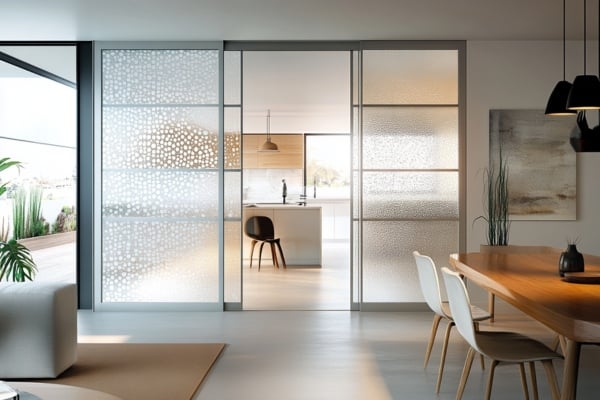
Etched Glass Partitions Seamlessly Dividing Zones
Etched or Frosted Glass Partitions: Perfect for open kitchen-living integrations, these allow functional zoning while sustaining openness. The frosted or textured glass finish provides visual separation without making the space feel closed off.
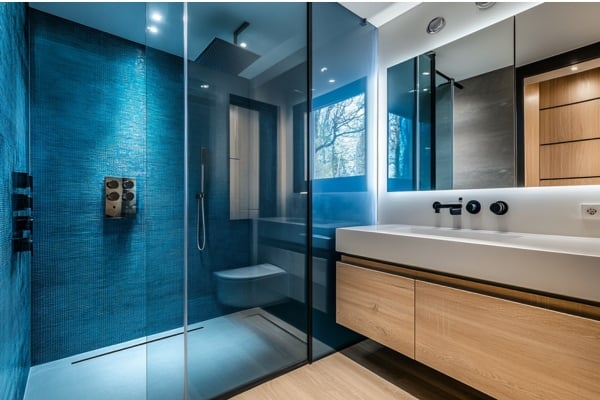
Tinted Glass Shower Cubicle Brings Elegance and Openness to Bathrooms.
Glass Showers and Sliding Doors in Bathrooms: Small bathrooms can be elevated using transparent or tinted glass shower cubicles and space-saving glass sliding doors, enhancing both style and perceived size.
Also Read Creative Ways To Use Decorative Glass Partitions In Interior Design
Shared zones such as kitchens, lounges, and terraces are the heartbeat of multigenerational homes. Designing these to be open and interconnected encourages family members to gather, communicate, and bond.
Kitchen + Dining Integration: An open-concept kitchen that flows into the dining and living area helps blur boundaries. Smart glass screens or dividers can provide separation when needed.
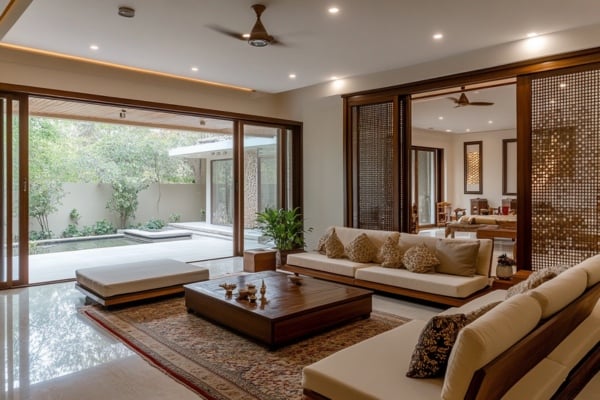
Sliding Glass Doors Blurring Indoor and Outdoor Spaces
Living Rooms with Multiple Access Points: When spaces open into courtyards or verandahs, they feel more inclusive. The transition between indoor and outdoor can be softened with large sliding doors with high-performance glass solutions, allowing for seamless social settings and thermal comfort.
Also Read 13 Innovative Sliding Glass Wardrobe Designs for a Modern Home
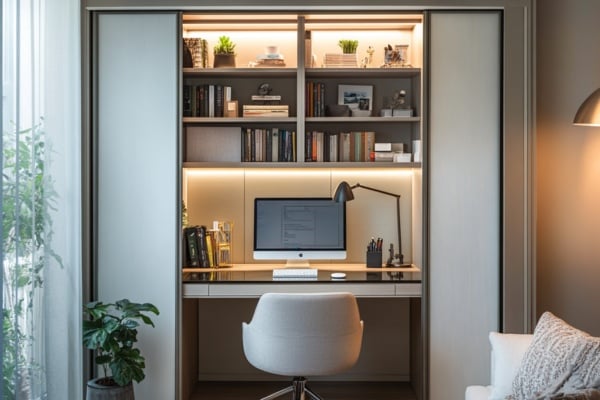
Concealed and Space-Saving Work Space with Toughened Glass-Topped Desk
With work-from-home becoming a staple, home offices must blend into living zones without feeling intrusive. A brilliant example is a desk tucked into a wardrobe or niche concealed behind rotating sliding glass doors. It allows users to focus during work hours and unplug by simply closing the panel.
Consider a toughened glass-topped desk complemented by lacquered glass panels on the backdrop to enhance the sense of space while delivering a clean, seamless look.
Also Read The Ultimate Guide To Toughened Glass Partitions For Workspaces
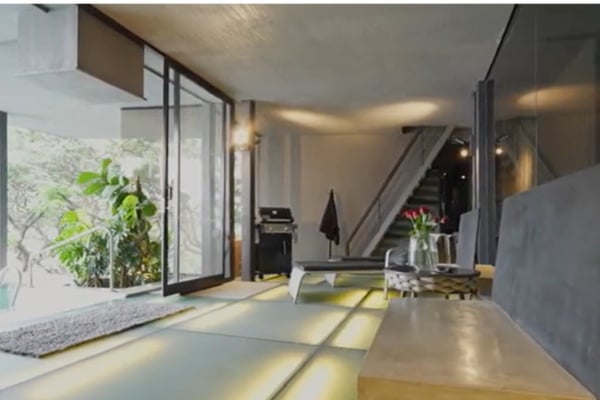
Underlit Glass Flooring for Drama and Luxury
Outdoor areas, be it a terrace garden, balcony sit-out, or backyard pavilion, act as peaceful retreats. These are the zones where all family members unwind, children play, and everyone breathes.
Sustainability and technology are at the core of fluid living spaces, adding value to multi-generational homes.
Whether it's home automation, from lighting and temperature control to smart glass that shifts clear to opaque, offering instant seclusion, these innovations ensure comfort, privacy, and ease for every age group.
In addition, energy-efficient materials play an equally vital role. High-performance glass solutions, such as solar control glass, mitigate indoor temperatures by reducing heat gain, thus providing thermal comfort. When combined with insulated building materials, they significantly lower energy costs.
Also Read Top 5 Ways Sustainable Construction Boosts Air Quality & Well-Being
Designing for fluid spaces and multigenerational homes is about creating a built environment that responds to cultural shifts with grace, intelligence, and inclusivity, respects privacy, and encourages shared memories. With the right combination of modular planning, smart technology, and glass solutions, homes can evolve seamlessly with comfort and connectivity.
What are fluid living spaces in modern home design?
Fluid living spaces are adaptable, multifunctional environments that respond to the changing needs of occupants. The concept supports adaptability, flexibility, movable partitions, and a seamless flow between private and communal areas. Glass is often used to maintain visual continuity and enhance spatial perception.
What role does glass play in creating flexible and open interiors?
Glass plays a pivotal role in fluid architecture. It allows natural light to permeate deep into the home, making spaces feel more open and connected. Various types of Glass—clear, frosted, lacquered, tinted, or switchable, can be used in partitions, sliding walls, and panelling to balance openness with privacy.
How do I maintain privacy in open-plan homes?
Privacy in open-plan designs can be achieved using:
Jahanavi Arora is an architect by profession and a writer by choice, with over 7 years of experience in architecture and design writing. She graduated from Chandigarh and believes that writing and architecture are similar as both are forms of art. Read More