When you think of glass in interiors, what comes to mind? Gleaming partitions, glossy backsplashes, sparkling wardrobes? While glass has long been synonymous with sheen and modernity, it's time we debunk the myth that glass is only a “bling” design element.
Many designers already embrace the versatility of glass. But for those drawn to rustic materials, earthy palettes, and fabric-rich interiors, glass might seem out of place. This blog is for you—to showcase how glass can go beyond its reflective, glossy reputation and seamlessly blend into more grounded, warm, and matte aesthetics. Let’s explore how.
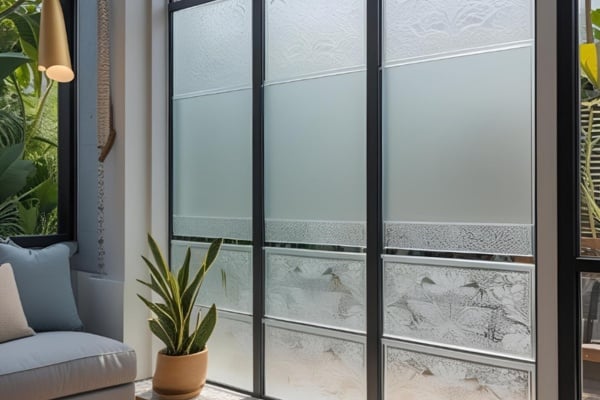
Etched Glass Designs Seeking Privacy and Light
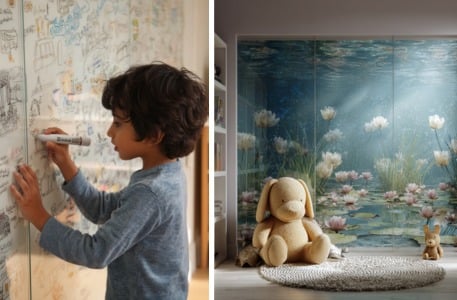
Glass, by default, is glossy. But it need not stay so. Surface treatments like acid etching transform the character of glass completely. Commonly known in its more popular form as frosted glass, etched glass involves treating the surface with acid or sandblasting to create a mildly rough, matte finish that diffuses light and eliminates glare.
Lacquered glass, often used in wardrobes, kitchen shutters, and wall panels, gets its vivid colour from a thick, factory-applied back paint layer. But when this coloured glass is etched on the front surface, it results in a matte coloured glass—easy to clean, beautiful to look at, and perfect for subtle luxury.
Take, for instance, Saint-Gobain’s Colormaxx range, which offers rich colours with impeccable consistency. With surface etching, this high-gloss product transforms into a soft, matte expression of colour, perfect for earthy palettes and minimal homes.
Also Read Why SGG Colormaxx is the Ultimate Choice for Interior Design
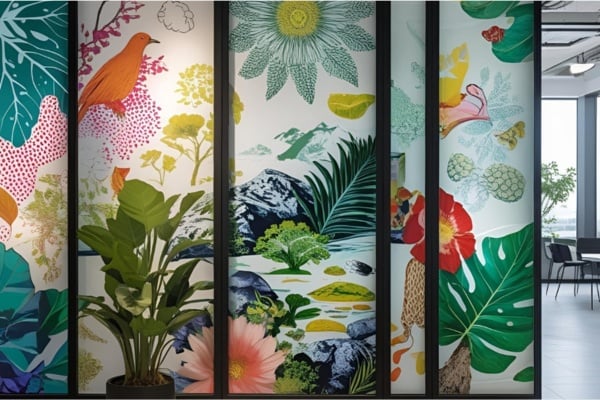
Digitally Printed Glass With Custom Pattern for an Enchanting Look
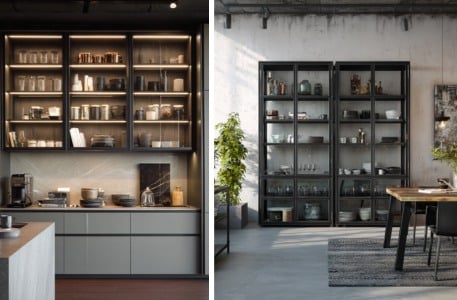
Want the beauty of natural stone without the weight? Digital printing on glass is your answer. From stone-like textures to geometrical or indigenous Indian motifs, digital prints make it possible to bring any surface inspiration to life, with durability and finesse.
Even better? Combine digital printing with etched surfaces for an unpolished, rustic look. Think sandstone textures, leaf motifs, block prints or even terracotta-inspired patterns.
Also Read Mind-blowing Digital Prints on Colored Glass for Beautiful Interior Designs
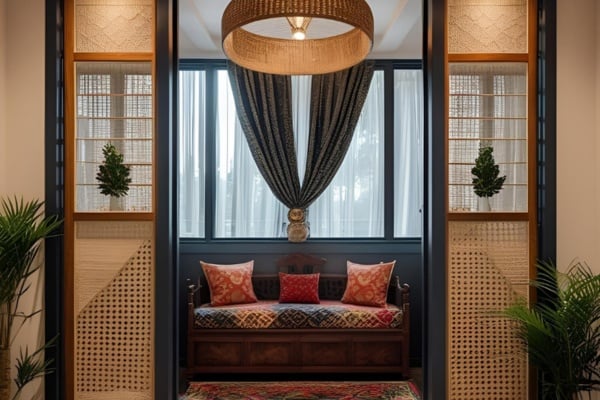
Fabric Sandwiched Glass Dividers creating an Earthy Vibe.
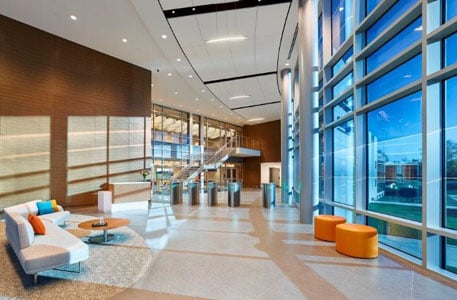
If you love the raw appeal of handloom fabrics, cane, or wire mesh, but worry about their durability in high-touch areas, glass comes to the rescue. With laminated glass sandwiching, you can encase natural materials between glass layers, making them resilient yet visually expressive.
This approach is perfect for:
This technique preserves the texture of the fabric while allowing the patterns to shine through, giving spaces a tactile yet airy vibe.
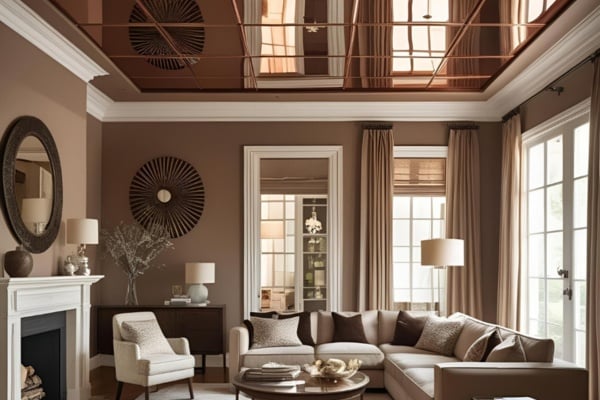
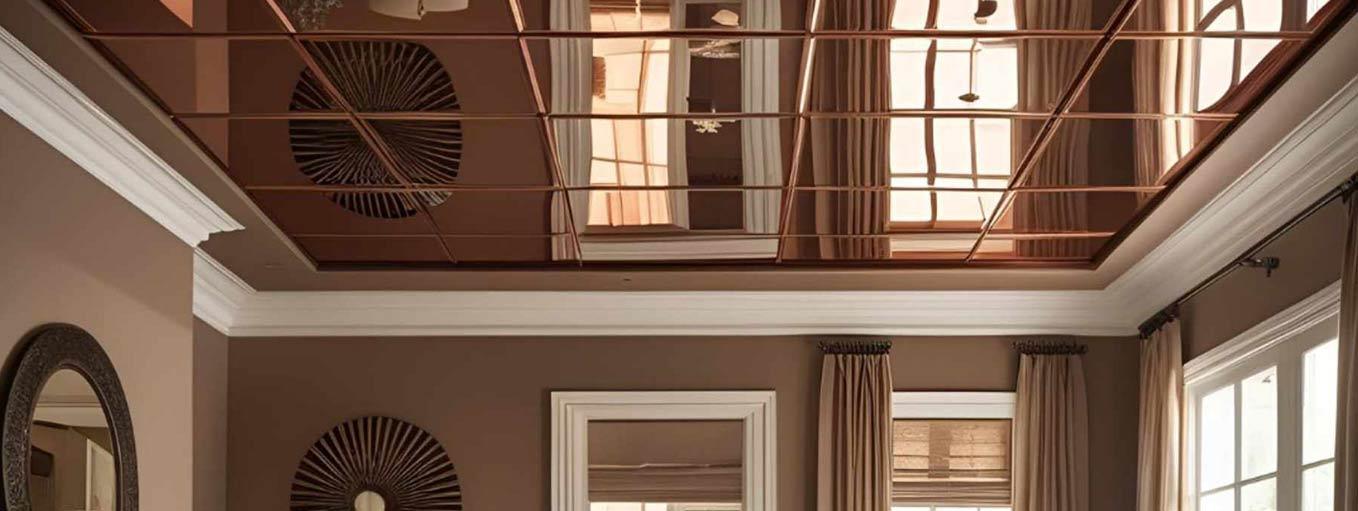
Add a Warm and Understated Ambience with Tinted Mirror Ceilings
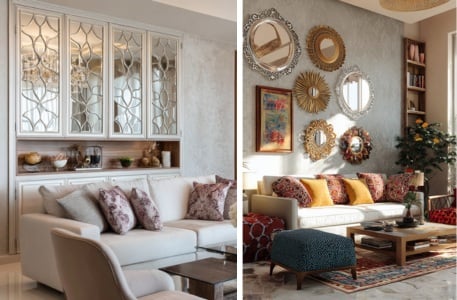
Not a fan of full-blown reflections? Try tinted mirrors in shades like grey and bronze. These offer a muted, warm reflection that adds depth without the glare, making them ideal for compact spaces, ceilings, or wall panels. They retain the functional benefit of a mirror while blending effortlessly into understated aesthetics.
Also Read 7 Ideas to Accentuate Furniture with Glass and Tinted Mirrors
Glass is not a one-trick material. Whether your interior vibe is muted or vibrant, minimal or maximal, glass has a place—etched, tinted, printed, lacquered or layered. The beauty lies in how you use it.
So the next time you think glass is too glossy for your design, remember—it’s only as shiny as you want it to be. The possibilities are endless.
Can glass be used in rustic and earthy interior design styles?
Yes, glass can be adapted to suit rustic and earthy spaces by using matte finishes, frosted textures, tinted mirrors, and digital printing, which harmonise beautifully with warm, grounded aesthetics.
What is the difference between frosted glass and etched glass?
Frosted and etched glass are often used interchangeably, but they refer to the same process, altering the surface texture using acid or sandblasting to create a non-glossy, diffused finish.
What is matte lacquered glass and where can it be used?
Matte lacquered glass is a coloured glass with a matte finish achieved by etching the front surface of back-painted (lacquered) glass. It retains the colour consistency of glossy lacquered glass but adds a soft, non-reflective texture.
Can fabric or natural materials be embedded in glass for interior use?
Yes, this is possible through laminated glass sandwiching, where materials like handloom fabric, jute, cane, or metallic mesh are encased between two glass sheets. This method preserves the tactile and visual character of the material while protecting it from wear and moisture, ideal for feature walls, dividers, and cabinetry.
Rasya is an architect and sustainability consultant based in Delhi. With over 10 years of experience in core architecture, and exposure to working in diverse contexts including India, Belgium and Ethiopia, she brings a multi-disciplinary approach to her work. Read More