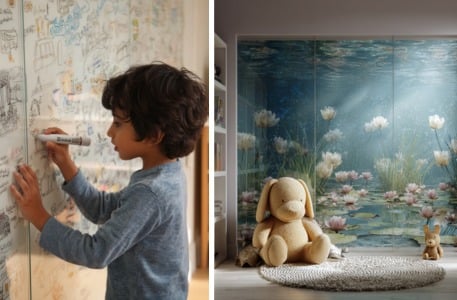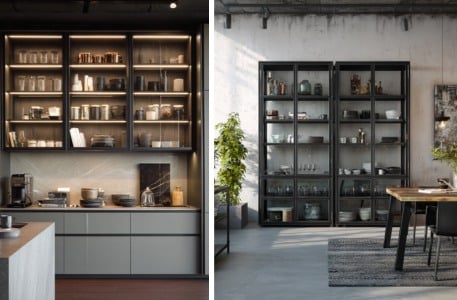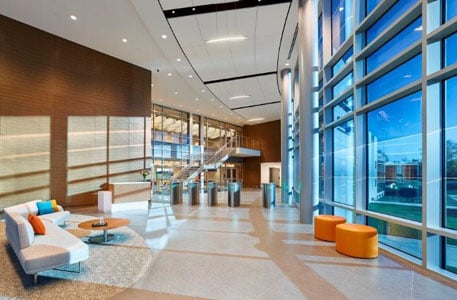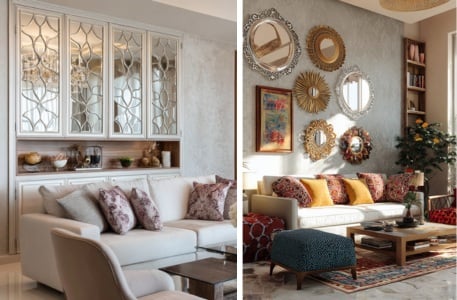
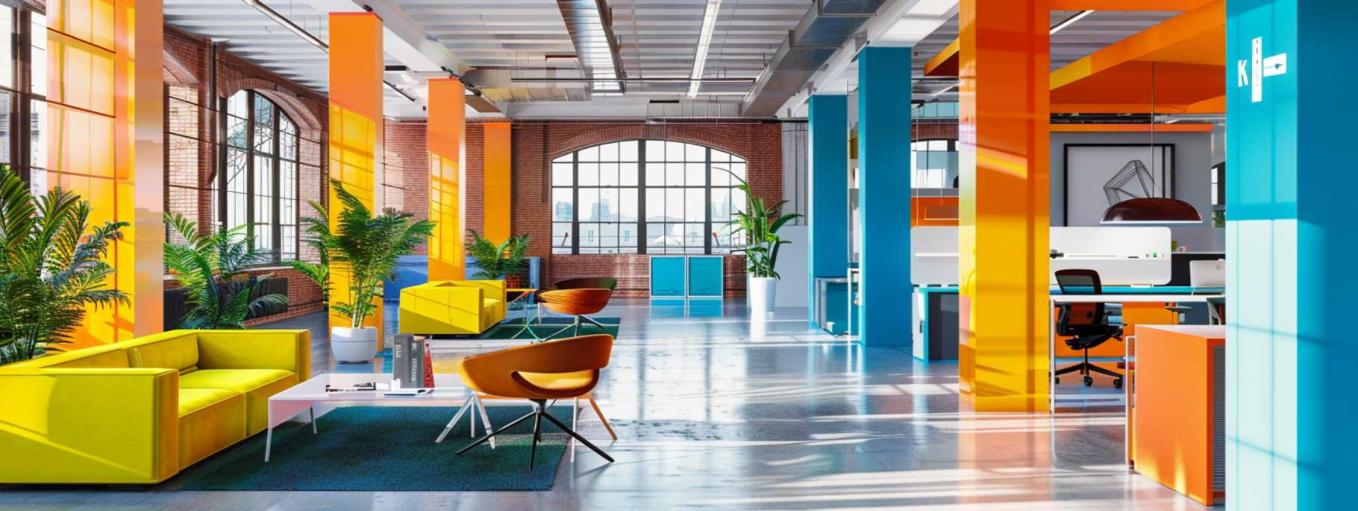
Design begins long before the first line is drawn. It lives in balance and contrast, flows through rhythm and harmony, and reveals itself in proportion, scale, and detail.
At its core, design is not decoration. It is an intention.
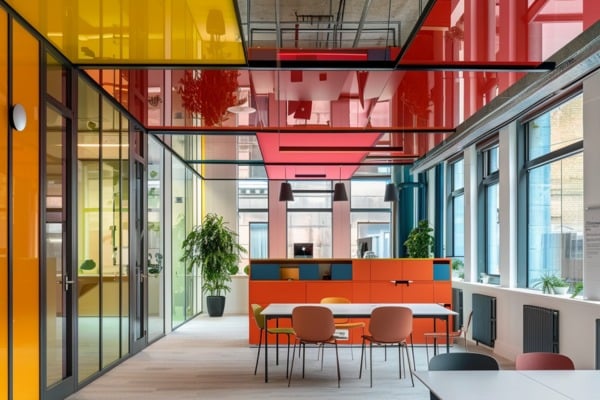
Design is a plan for arranging elements in such a way as best to accomplish a particular purpose - Charles Eames
That purpose is what separates design from art. Art can exist for expression alone. Design must work. It must solve, organise, guide and enhance daily life.
Interior design isn’t simply about choosing colours, furniture, or finishes. It is about how colour, form, texture, light, material, and spatial planning come together to create environments that feel balanced, coherent and purposeful.
The principles of design are the quiet framework behind this cohesion, guiding you through the process of shaping an overall space.
When these principles are applied thoughtfully, good design becomes invisible. It is only when they are ignored that we begin to notice discomfort: a space that feels “off”, cluttered, heavy, or restless.
Let’s explore the key principles of interior design for a well-structured interior space.
Balance is about thoughtful proportion and ensuring that no part of the room feels heavier than another. Designers achieve this by arranging colour, furniture, texture, material, and even lighting to ensure comfort without monotony.
It enhances spatial harmony and allows functionality to coexist with aesthetics. Bring balance to your spaces with thoughtful symmetry, elevated through material expression.
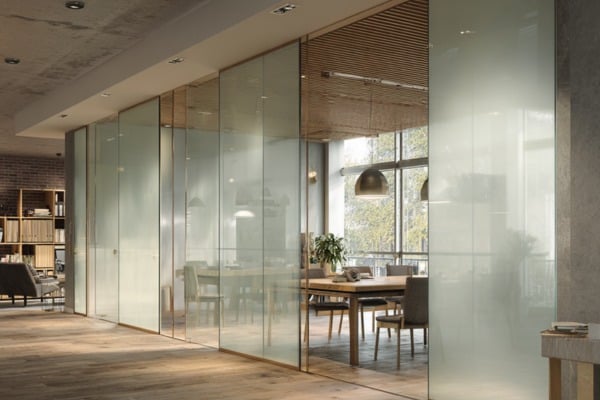
Switchable Glass Balances Openness and Privacy Effortlessly
For instance, PRIVA-LITE, privacy glass by Saint-Gobain, allows the sense of symmetry to extend across a space while enabling flexibility. Its switchable transparency maintains visual continuity, yet adapts to changing functional needs.
Whether in a workspace where it can preserve openness while offering privacy or in a home, it can demarcate spaces without disconnecting.
Also read Priva: Switchable Glass Partitions for Your Smart Home
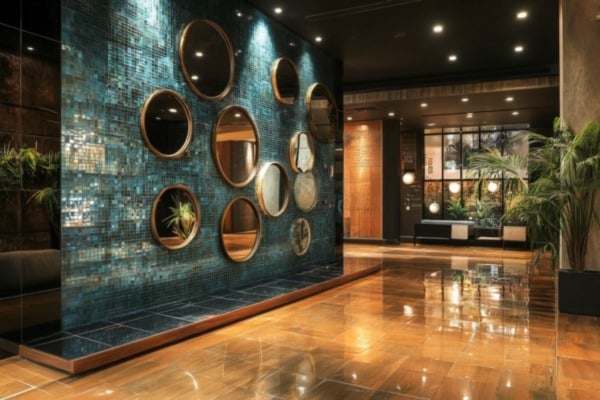
Anti-Corrosive Mirrors Amplify Subtle Tonal and Reflective Shifts
If balance gives a space stability, variation gives it life.
Variation is one of the most subtle yet powerful principles of interior design. It shapes how a space is experienced over time rather than how it is immediately perceived. It lies in the delicate shifts, for instance, a change in texture, a slight tonal contrast, an unexpected alignment or a play of reflection.
When variation is present, interiors feel layered, thoughtful, and refined, revealing their character gradually and rewarding closer attention.
Here, reflective surfaces amplify subtle shifts in form and light. SGG Mira anti-corrosive mirrors elevate variations in design compositions. Their high reflectivity accentuates forms, making intentional imbalance feel dynamic and refined.
As variation introduces difference, consistency ensures dialogue.
This is the principle of design that binds a space together. It ensures all elements, such as colours, materials, forms, textures, furniture, and lighting, speak the same visual language.
Without consistency, even beautiful elements can feel unrelated. A room may contain excellent furniture and refined finishes, yet still lack coherence.
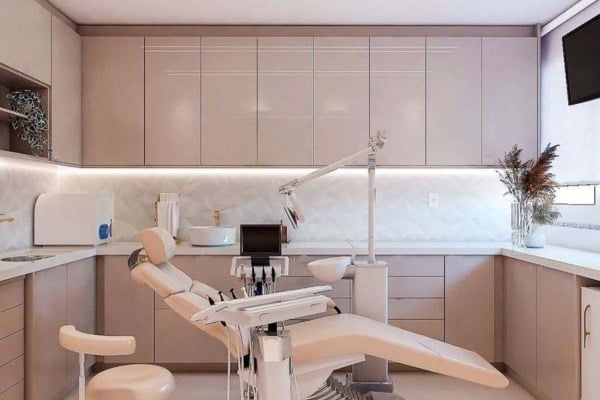
Lacquered Glass Maintains Visual Continuity Across Surfaces with its Smooth, Uniform Finish
In modern interiors, surface materials play a pivotal role in maintaining cohesion.
For instance, the SGG Planilaque range by Saint-Gobain offers a smooth, opaque finish and refined colour palette that supports visual continuity. Lacquered glass panels can be used across cabinetry, partitions, wall cladding, and backsplashes, allowing the same tone and texture to carry across different applications.
Also read Does Red Glass Look Good on Wall Panels? Let’s Find Out
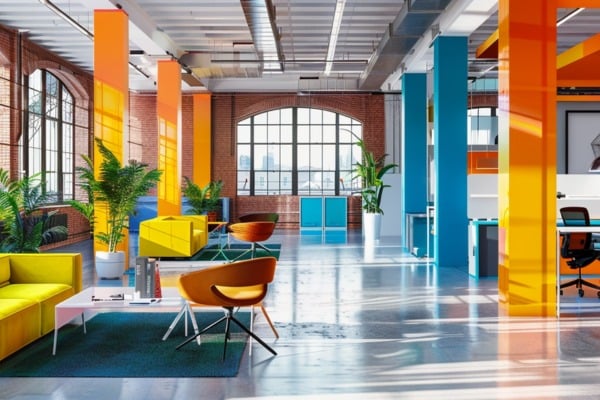
Colormaxx Dura Creates Harmonious Interiors Through Rich Colours That Visually Connect Multiple Surfaces
Moving on, consistency is the language of design, harmony is its music.
Harmony in interiors ensures that materials, colours, lighting, proportions, and furniture work together as a unified whole. When harmony is present, transitions feel seamless. There are no abrupt visual disruptions. The eye moves without resistance.
In workplaces, commercial environments, and healthcare settings, harmony creates a calm, organised environment that supports focus, comfort, and trust.
Bring harmony to your designs through a thoughtful curation of elements and colour.
For example, SGG Colormaxx Dura by Saint-Gobain allows designers to curate rich, uniform colours tailored to their vision. Its high-gloss finish visually connects different surfaces, creating a sense of continuity and a unified expression.
Also read Creative Ideas for Decorating Columns with SGG Colormaxx Lacquered Glass and Mirrors
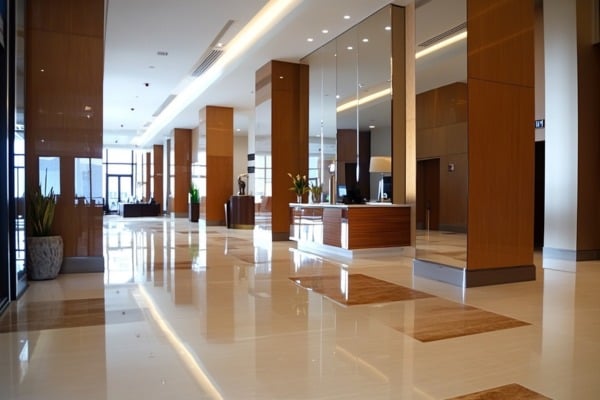
Mirrors Reinforce Rhythmic Repetition With Uniform Reflectivity while Ensuring Enhanced Safety
Rhythm in interior design is the principle that introduces movement, continuity, and visual flow. Much like rhythm in music, it is created through repetition, variation, and progression.
Where harmony ensures agreement, rhythm ensures motion.
Rhythm emerges when elements recur deliberately and sequentially, lending spaces a quiet sense of flow. For instance, repeated vertical panels along a corridor or consistent lighting intervals across a ceiling.
Mirrors and glass surfaces amplify rhythm by extending visual lines and reinforcing repetition.
SGG Mirasafe, a shatterproof mirror range by Saint-Gobain, enhances rhythmic compositions by offering uniform reflectivity with added safety.
Also read SGG Mirasafe: The Best Safety Mirror for Your Home and Business
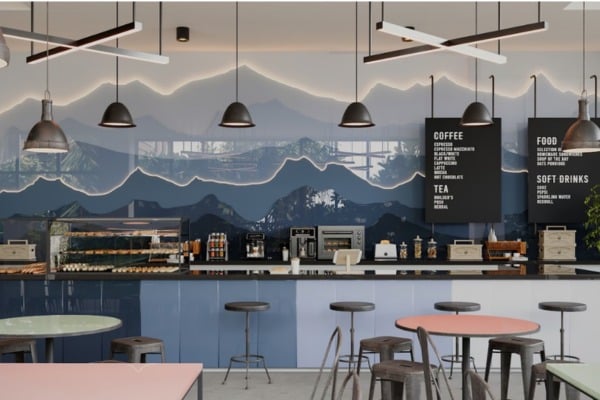
Lacquered Glass Allowing Spaces to Transition Smoothly in Tone, Scale, and Experience
Progression transforms interiors from static arrangements into experiences unfolding over time. It shapes how one space leads into another, how colour deepens or softens, how scale shifts subtly as we move through a building. It is the principle of evolution within design.
Rather than abrupt contrasts, progression relies on controlled change. It ensures that interiors feel legible, balanced, and thoughtfully curated.
SGG Colormaxx Dura helps achieve progression in design through its customizable colours and smooth finish. Subtle transitions in tone and depth allow surfaces to flow seamlessly from one shade to another, adding visual interest while preserving balance and harmony in the overall design.
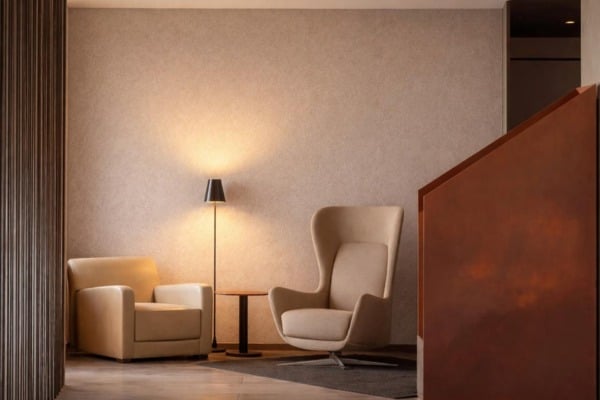
Novelio Wallshield Introduces Textured Focal Surfaces and Draws Attention
Emphasis is the principle that determines what the eye notices first. It introduces hierarchy into a space, ensuring that attention is directed. In its absence, interiors can feel visually overwhelming.
For example, a reception desk, a sculptural light installation, a feature wall, or a bold artwork can anchor an entire composition. In commercial and office environments, emphasis establishes orientation, signifying arrival and reinforcing identity.
Surface articulation plays a powerful role in creating focal areas in this design.
Novelio Wallshield by Saint-Gobain offers textured, durable wall coverings that introduce depth and character. When applied to feature walls in lobbies, conference areas, or collaborative zones, these surfaces naturally draw attention while maintaining a sense of refinement and performance.
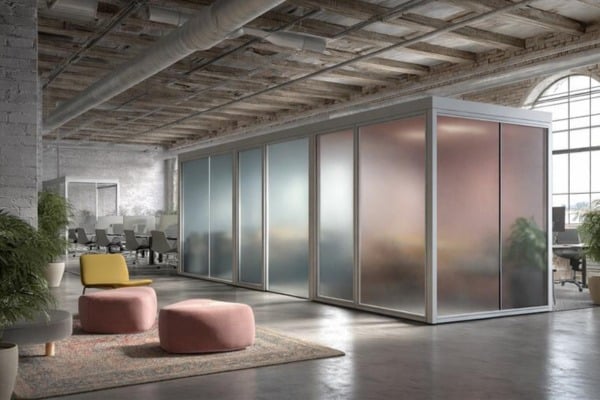
Priva-Lite Creates Striking Contrast by Shifting Between Transparent and Opaque States
Where harmony creates unity, contrast creates distinction.
Contrast or juxtaposition brings energy to the room by placing opposing elements together: light and dark, matte and gloss, solid and void, warm and cool. These elements sharpen perception and allow differences to be noticed and appreciated.
Without contrast, interiors can feel muted and monotonous. With excessive contrast, they feel fragmented. Therefore, the designer's role is to create a harmonious balance and visual elegance that provides excitement and dynamism.
PRIVA-LITE, switchable glass by Saint-Gobain, introduces contrast by shifting instantly between transparent and opaque states. This interplay of clarity and translucence creates visual drama while serving functional needs such as privacy and openness.
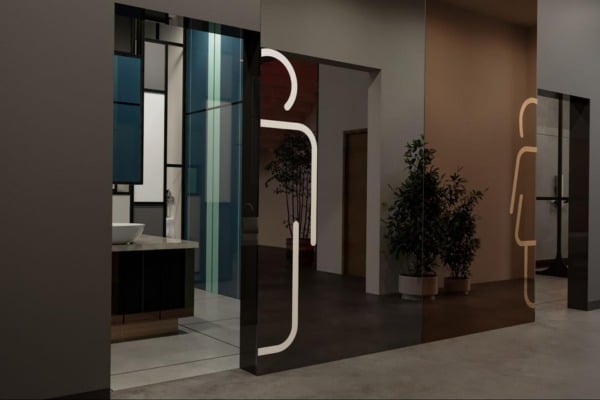
Mirrors Enhance Perceived Scale by Reflecting Architectural Lines and Movement with Clarity
The concepts of proportion and scale are about creating a sense of belonging among objects in a room.
While scale refers to the size of elements in relation to the space and the human body, proportion addresses the relationship between elements within the space. Together, they must be in balance with each other and the space to design a stimulating environment.
For example, an oversized sofa in a tiny space may feel out of place, or a small coffee table might feel lost in a huge space.
When proportion is thoughtful, a space feels grounded and composed. Mirrors play a fascinating role in reinforcing scale and proportion.
SGG Mira by Saint-Gobain enhances spatial perception by reflecting occupant movement and architectural lines. By visually expanding a space while maintaining human relatability, mirrors help interiors feel both generous and engaging.
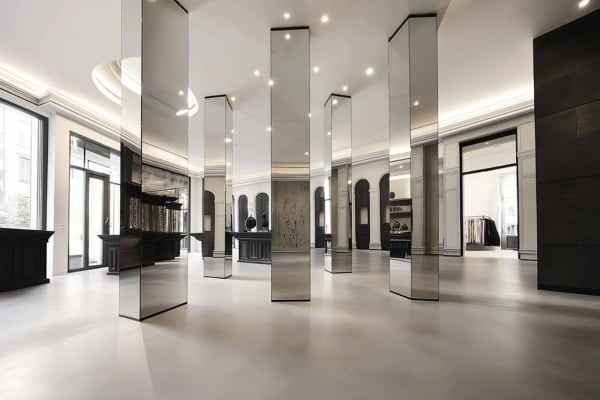
SGG Mirasafe Supports Layered Compositions With Reflection and Shatter-Resistant Reliability
A well-layered interior feels composed and intentional. It unfolds gradually, revealing textures, materials, light, and structure in calibrated sequences. Layering ensures that no single element overwhelms the space; instead, each component occupies its rightful place within a larger hierarchy.
In expansive environments, such as hospital corridors, corporate lobbies, and institutional buildings, layering becomes essential. Without it, large volumes risk feeling monotonous or impersonal. Through repetition of well-scaled elements such as lighting fixtures, wall panels, ceiling grids, or furniture modules, designers introduce rhythm and proportion simultaneously.
SGG Mirasafe by Saint-Gobain introduces crisp reflection with enhanced safety. Its shatter-resistant construction makes it particularly suited for high-traffic zones, furniture applications, and large-format installations.
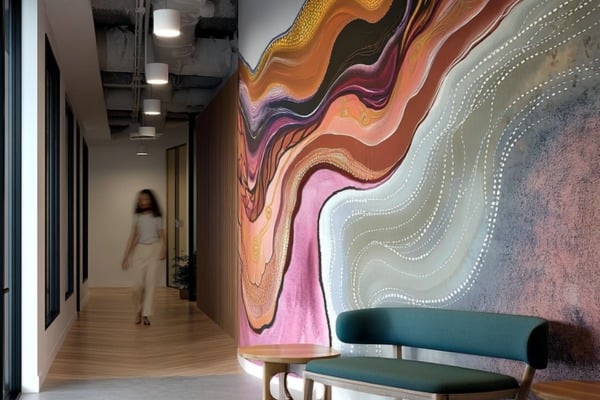
Novelio Wallshield Adds Tactile Refinement Through Paintable Fibreglass Textures
Detail is where the principles of design come together and become tangible. While concepts like balance, harmony, proportion, contrast, and emphasis shape the overall framework of a space, detailing is the final touch that can significantly transform the room.
In interior environments, detailing allows you to showcase your unique style and personalise the space. The alignment of panels, the depth of a textured surface or embroidery on cushions, these little details have a naturally attention-grabbing effect in interior spaces. For instance, wall surfaces often serve as the canvas for detailing.
Novelio Wallshield by Saint-Gobain offers paintable fibreglass wall coverings that introduce subtle texture and depth. These surfaces enhance walls with tactile interest while maintaining longevity and durability.
What are the main principles of interior design?
The main principles of interior design include Balance, Harmony, Contrast, Emphasis, Rhythm, Progression, Proportion, Scale, Consistency, Variation, Layering, and Detailing. These principles act as foundational guidelines that help designers create spaces that feel cohesive, functional, and aesthetically refined.
Why are the principles of design important in interior design?
Design principles ensure that interiors are not just beautiful but also purposeful. They help create spaces that feel comfortable, intuitive, and emotionally balanced.
Why is safety glass important when applying design principles in high-traffic areas?
Safety glass ensures that aesthetic choices, like transparency, reflection, and openness, do not compromise on durability or user safety. In hospitals, offices, and public spaces, toughened glass, or safety glass, resists impact and reduces injury risk.
Can lacquered or coloured glass reinforce consistency in design language?
Yes, lacquered or coloured glass creates visual continuity through uniform finishes. When used across cabinetry, walls, and partitions, it strengthens consistency and harmony. Its smooth, reflective surface also enhances balance while keeping interiors seamless and cohesive.
Jahanavi Arora is an architect by profession and a writer by choice, with over 7 years of experience in architecture and design writing. She graduated from Chandigarh and believes that writing and architecture are similar as both are forms of art. Read More