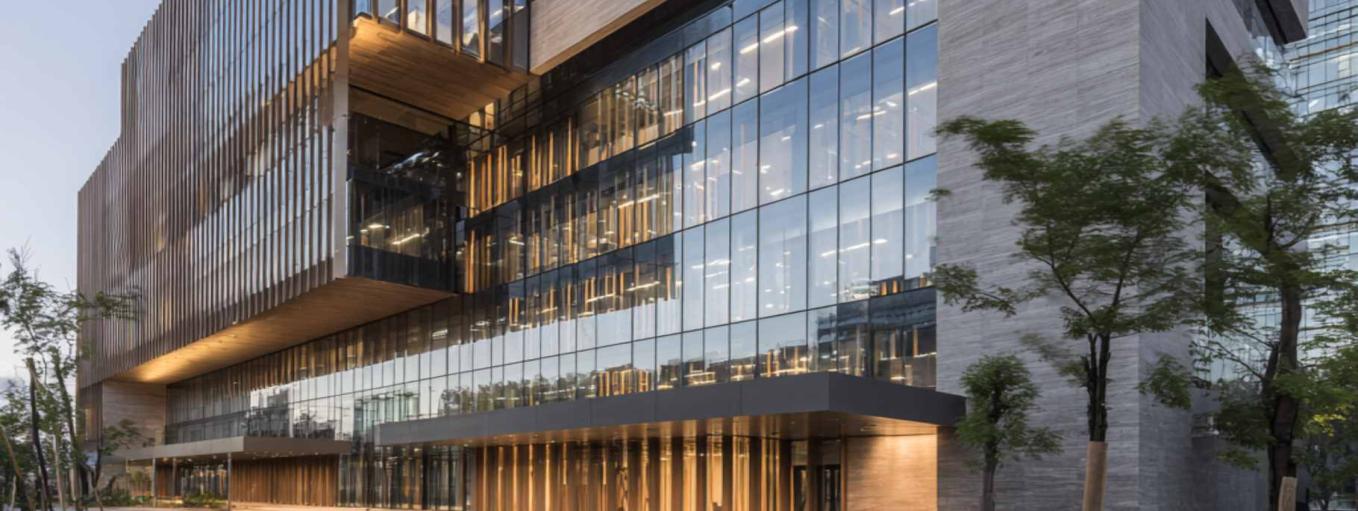
Building façades are more than just architectural aesthetic features. They define performance, energy-efficiency, and occupant comfort. In today’s climate-responsive design landscape, facades directly impact cooling loads, daylight quality, and even carbon footprint.
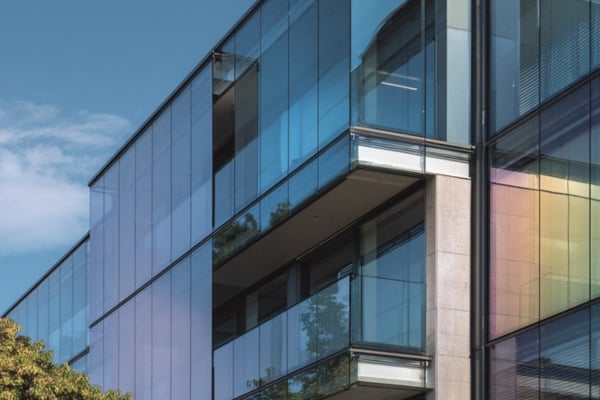
Smart glazing choices ensure comfort and efficiency without compromising on design.
Expansive glass façades are often associated with modern architecture, but glazing without performance planning is one of the most common and costly mistakes.
In climates like India, large untreated glazed surfaces can significantly increase solar heat gain, leading to:
Higher indoor temperatures
Increased HVAC loads
Thermal discomfort near façades
The issue is not the use of glass, but the type of glass used.
High-performance solar control glass uses advanced coatings to selectively filter solar radiation. It allows visible light to pass through while reducing the transmission of infrared heat. Furthermore, using such high-performance glass in insulated glazing (two or more sheets of glass with a cavity), can further enhance thermal insulation.
Also read How Solar Control Glass Drives Energy Efficiency In Net-Zero Buildings?
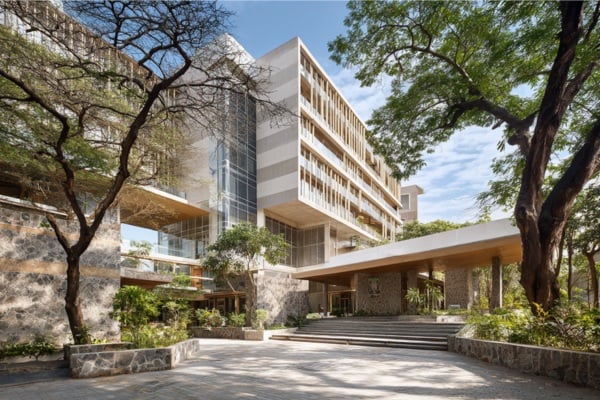
Orientation-driven design transforms facades into climate-responsive systems.
Facade orientation has a direct influence on heat exposure in buildings. West-and south-facing façades in India receive intense afternoon sunlight, which can result in overheating and glare if not addressed.
However, many designs adopt a uniform façade language across all orientations, ignoring this fundamental environmental factor.
Therefore, orientation-specific planning and facade design is essential. Different façades should house spaces basis their function. For example, store rooms, anti-spaces like lobbies, toilets etc, may be used as a buffer room on the sides receiving maximum heat, while the rooms used for longer durations receive lesser direct heat. Similarly, use of different glass specifications based on solar exposure:
West/South façades: Lower SHGC (Solar Heat Gain Coefficient) glass to reduce heat gain.
North façades: Higher visible light transmission (VLT) for daylight optimisation as this orientation receives the minimum direct heat.
East façades: Balanced performance for morning light.
By using solar control glass with tailored performance values, architects can create a façade design that responds intelligently to the sun's path.
Also Read Why You Need Solar Control Glass for Indian Buildings
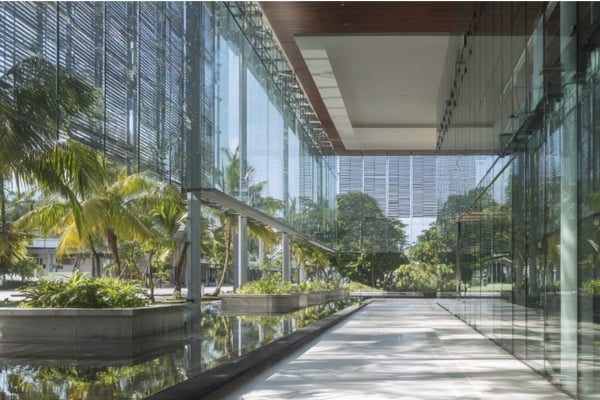
Integrated shading transforms glass facades into balanced, strategic designs.
Buildings without shading strategies often experience excessive glare, uneven daylight distribution and increased cooling demand. This is especially essential in tropical and composite climates. Therefore, the best-performing facades integrate glass solutions + shading systems.
Louvres, fins, or double-skin façades support performance glazing, further enhancing heat reduction. Shading strategies also help ease maintenance of the facade by reducing direct rainwater marks/stains.
This layered approach ensures visual comfort + thermal control without sacrificing design intent.
A major gap in facade design is the misinterpretation of key glass parameters, such as:
U-value (thermal insulation)
SHGC (solar heat gain)
VLT (visible light transmission)
Design decisions based purely on aesthetics or cost without understanding these metrics often result in potential future risks.
Modern high-performance glazing systems are engineered with precise performance parameters: Low U-value for improved thermal insulation, Controlled SHGC (solar heat gain coefficient) to limit heat ingress, and High VLT (visible light transmission) to maximise natural daylight.
These advanced coated glazing solutions deliver a well-balanced combination of thermal insulation, solar control, and optimal daylighting, enabling more intelligent, energy-efficient facade design.
Also Read Top 5 Ways Sustainable Construction Boosts Air Quality & Well-Being
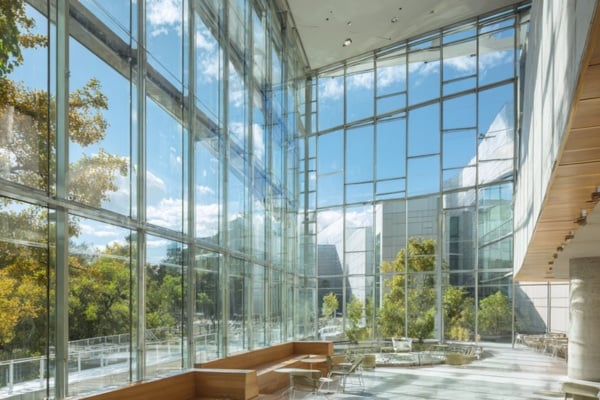
Designing for climate is key to achieving sustainable facade design.
India’s climatic diversity, predominantly ranging from hot-dry to warm-humid to composite, demands context-specific facade strategies to harmoniously fit into the surrounding landscape. Yet, many projects opt for a standard glazing specification across regions.
This results in:
Overheating in hot regions
Condensation issues in humid climates
Inefficient energy performance overall
Climate-responsive glass selection is essential to acknowledge seasonal variations in temperature and sunlight while maintaining comfort and occupants’ needs. Solar control glass enables this flexibility by offering a range of performance options, allowing architects to tailor facade solutions based on climatic conditions rather than a one-size-fits-all approach.
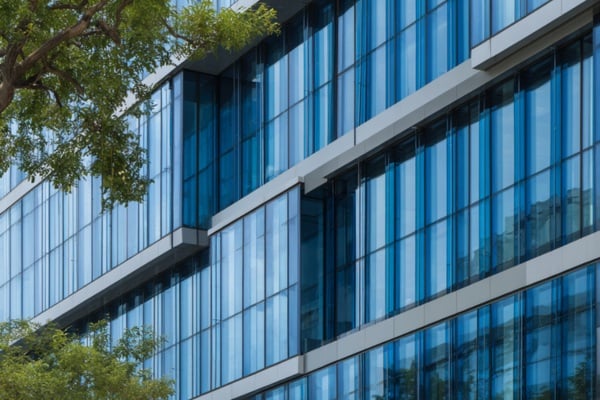
High-performance glass reduces energy demand while enhancing comfort.
Facade designs have a direct impact on a building’s long-term energy consumption, particularly cooling loads in India. However, initial cost often takes precedence over lifecycle performance.
Many conventional façade materials, such as untreated glass, metal panels, or poorly insulated assemblies, tend to absorb and transfer heat into the building envelope, increasing indoor temperatures, resulting in higher energy consumption and operational inefficiency.
High-performance solar control glass significantly reduces solar heat ingress, lowering dependency on air conditioning.
This leads to:
Reduced energy bills
Improved indoor comfort
Lower operational carbon emissions
It is available in tinted variants that improve glare control while maintaining UV reduction benefits and adding a subtle aesthetic tone to the facade.
Also read Safer, Stronger, Smarter: The Impact Of Modern Glass Facades On Urban Skylines
While operational efficiency is improving, the embodied carbon of construction materials remains a critical blind spot. Choosing materials that are both energy-efficient in use and responsible in production is becoming essential for future sustainable building design.
Glass manufacturing is rapidly evolving with innovations like Saint-Gobain’s ORAÉ® low-carbon glass that address this challenge by reducing embodied carbon at the material level.
Up to 40% reduction compared to conventional glass
When combined with solar control coatings, it delivers both:
Lower embodied carbon
Lower operational carbon
This dual benefit is beneficial for net-zero and green building goals and ratings such as IGBC, LEED, and GRIHA, by reducing embodied carbon and improving operational energy performance.
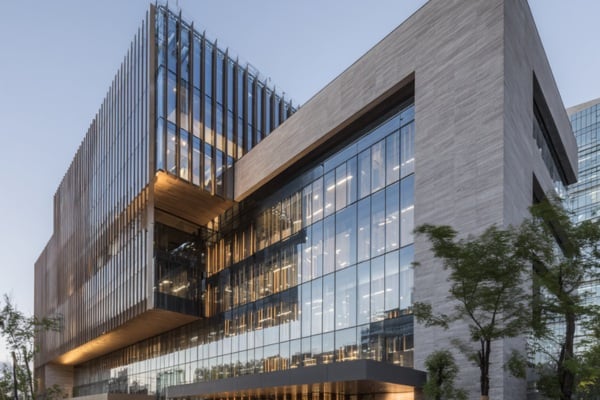
Advanced glass technologies bring together functionality, efficiency, and aesthetics.
Perhaps the most common mistake in facade design is viewing it purely as a visual element rather than a high-performance building system. This approach leads to compromises in comfort, efficiency, and sustainability.
Modern materials and glass technologies bridge the gap between design and performance by offering:
Controlled reflectivity
High transparency
Tinted shades
Strong thermal and solar performance
Aesthetic finishes
The future of building design lies in precision, performance, and sustainability. By addressing these common mistakes in facade and leveraging advanced glazing solutions, architects can design buildings that are iconic, intelligent and responsible.
What are the most common facade design mistakes in modern buildings?
The most common mistakes include glazing without a performance strategy, ignoring building orientation, a lack of shading systems, and not considering climate-responsive design. These can lead to heat gain, glare, and increased energy consumption.
Why is choosing the right glass important for facade design?
The type of glass used directly impacts heat gain, daylight, and indoor comfort. High-performance glass solutions, such as solar control or low-E glass, can significantly improve energy-efficiency while maintaining the desired aesthetic.
What is solar control glass, and how does it work?
Solar control glass is coated with advanced materials that reduce solar heat gain while allowing natural light to pass through. It filters infrared radiation, helping maintain comfortable indoor temperatures and reducing cooling loads.
What is climate-responsive glass selection?
It involves selecting glass based on environmental conditions like temperature, humidity, and solar exposure, ensuring optimal performance instead of using a standard solution across all regions. Solar control glass offers a range of performance choices, allowing architects to tailor facade solutions based on climatic conditions.
Jahanavi Arora is an architect by profession and a writer by choice, with over 7 years of experience in architecture and design writing. She graduated from Chandigarh and believes that writing and architecture are similar as both are forms of art. Read More