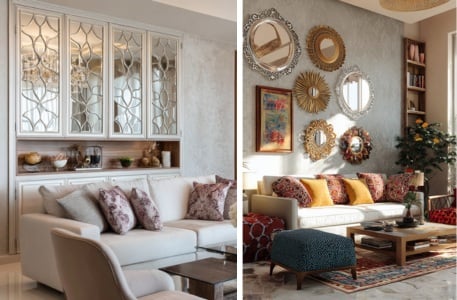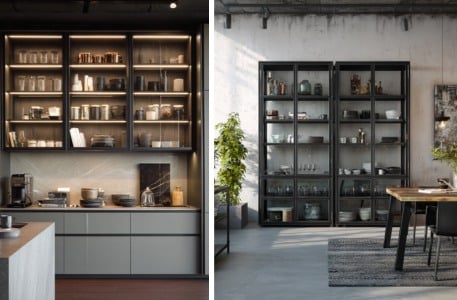
Interior design is constantly evolving, borrowing from past design movements while responding to how we live today. Amid this ever-changing landscape, two standout styles, minimalism and maximalism, couldn’t be more different in approach. Yet surprisingly, both find common ground in one adaptable material: glass.
Slim, versatile, and quietly powerful, glass has moved beyond its purely functional role. Whether it’s used to create openness or to spotlight layers of colour and texture, it adapts beautifully to both extremes. In minimalist spaces, it brings clarity and calm; in maximalist interiors, it adds light, drama, and depth.
So, how does one material thrive in two such opposing aesthetics? And more importantly, what does that mean for your own style? Let’s break it down and explore what role glass can play in your next interior design story.
Also Read Expert Tips To Select The Surface Materials For Your Home Interiors
Maximalism is a bold design philosophy rooted in the belief that more is more. It celebrates abundance, richness, and a fearless layering. Think vibrant patterns, clashing colours, plush textures, and decor that tells stories, sometimes all in one room. Maximalist interiors thrive on contrast and character. It’s about creating a space that feels collected, from art to heirloom, every piece plays a role.
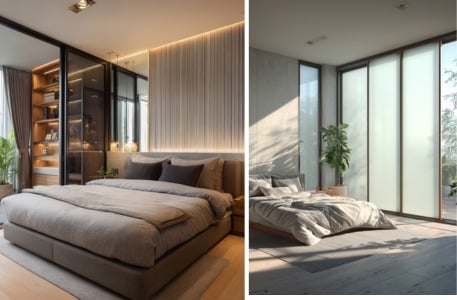
Minimalist interiors are all about clarity. The style leans into clean lines, neutral tones, and open spaces, creating a sense of calm that feels both intentional and effortless. It’s not about having less, but about choosing intentional living. And when it comes to materials, few are as fitting as glass. It adds lightness, openness, and flow without detracting from the simplicity.
Both styles, although different in essence, utilise glass in ways that enhance their core ideas. Ready to see how this versatile material adapts to both design styles? Let’s explore.
Also Read Top Glass Ceiling Design Trends
To create a maximalist space where no surface is shy, a bold, patterned wallpaper sets the tone, vibrant and full of personality. To complement this visual intensity without crowding the room, a mirror-clad ceiling becomes an unexpected yet strategic design move. Far from just decorative, mirrored ceilings introduce a clever spatial illusion, instantly doubling the perceived height and depth of the room. They also reflect light throughout the space, making even the most layered interiors feel brighter, more open, and inviting. Finish the look with an ornate chandelier, and you have a room that doesn’t just embrace maximalism, it dazzles in it.
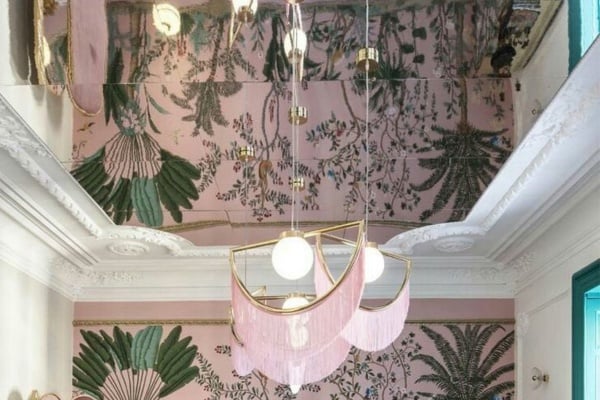
Mirrored ceiling amplifying light and drama in the space.
Ref. Virginia Gasch
Also Read Mirror Hacks: How to Make Your Rooms Look Bigger and Brighter
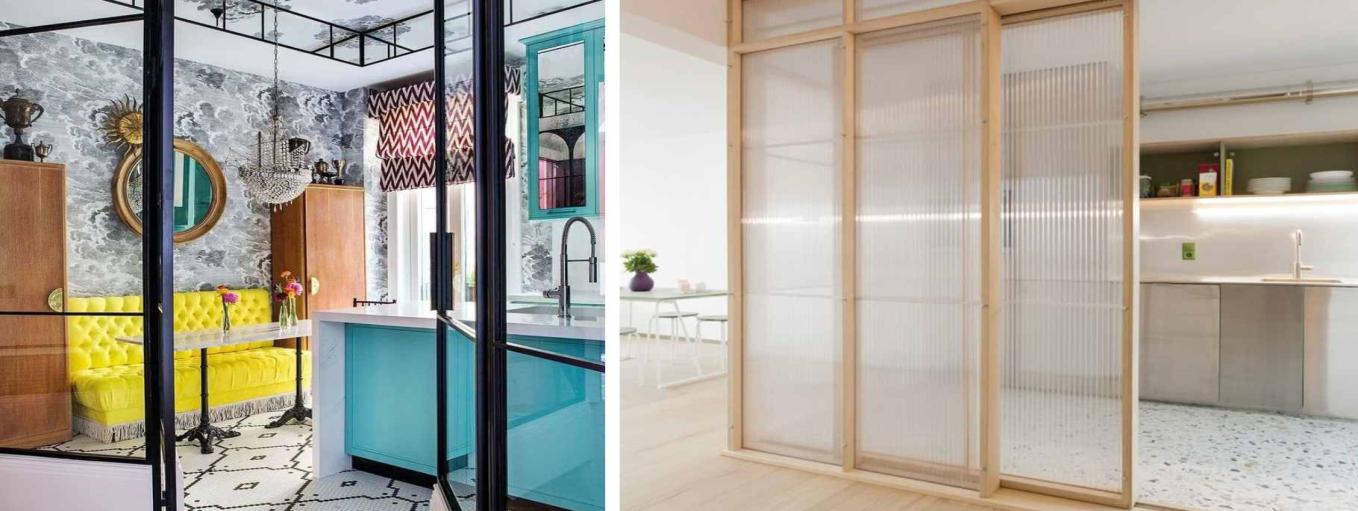
A fluted glass wall panel with a printed design brings a refined edge to any space. Its ribbed surface adds subtle texture and movement, catching light in soft, rhythmic ways, while the printed layer underneath offers a distinctive visual accent. What makes fluted glass especially powerful in such settings is its ability to adapt. It blends seamlessly into bold surroundings, acting as a textured veil that both softens and elevates. Whether used as a partition, wall panel, or sliding element, it brings a balance to maximalist interiors without stealing the spotlight.
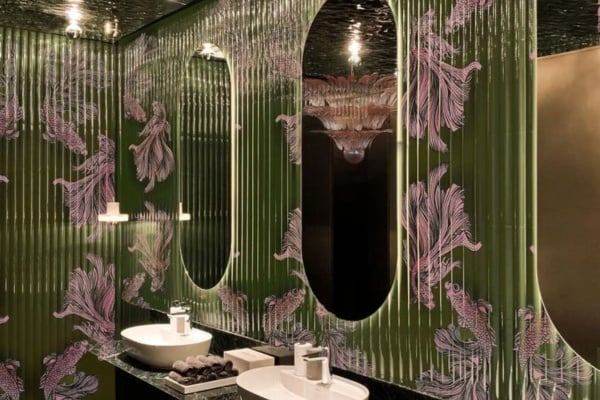
Fluted glass wall panel adds texture with subtle flair
Ref. Wuji Studio
A sliding or folding partition can instantly open up the space. When made with toughened glass and a bold-coloured metal frame, it functions as both a divider and a design feature. While float or toughened glass ensures strength, the glass grade can vary based on where it’s used. This solution offers flexibility, durability, and impact, perfect for dynamic maximalist interiors.
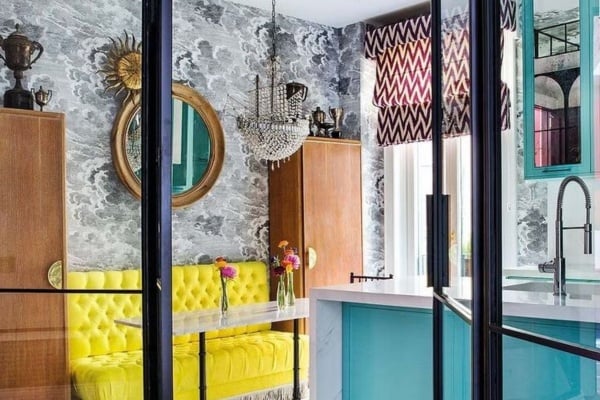
Bold framed glass partitions that double as décor
Ref. Designer Luis Garcia Fraile
Glass bricks are a smart way to break up large spaces without sacrificing light or openness. Their modular nature creates partitions, straight or curved, that fit the unique flow of any room. Due to their translucent quality, glass bricks let natural light flood through while still providing privacy. This balance of function and form makes them a perfect fit for minimalist interiors.
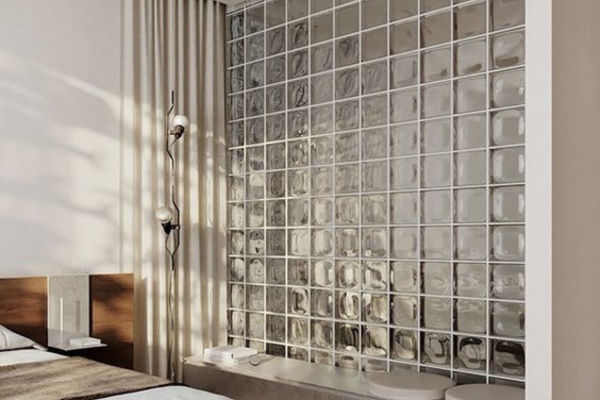
Soft separation of bedroom and bathroom with glass brick wall
Ref. Designer Oleksandra Smirnova & Yana Machukayte
Also Read 8 Reasons Glass Shower Enclosures Are Better Than Curtains
A well designed glass partition can elevate a minimalist bathroom by adding function without visual clutter. Toughened glass is ideal here for its durability and resistance to humidity. For a softer, warmer effect, consider a tinted finish that complements materials like concrete or stone. Go frameless for a barely there feel, or opt for sharp-lined metal framing that brings structure and quiet sophistication. The glass maintains openness while offering functional separation, making the bathroom feel both serene and well-composed.
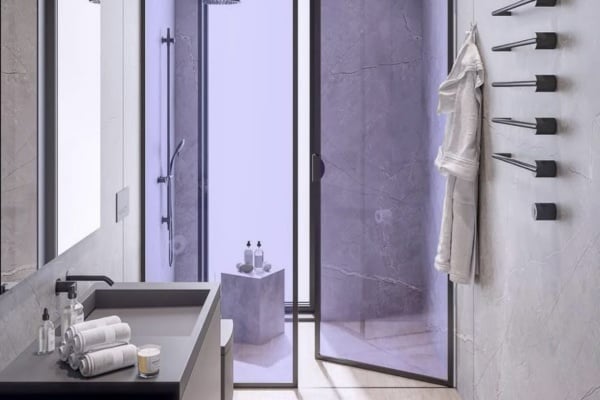
Tinted toughened glass partitions for serene and open bathrooms
Ref. Designer Alena Chmeleva
Also Read The Magic Of Glass-An Indore Home Redesigned By Studio Reflective Practices
Integrated glass shelves blend into the architecture of a minimalist room while providing quiet display moments. They keep things visually light, and at the same time, ensure space to display books, art, or cherished objects. Toughened glass here can ensure durability, and a soft tint can quietly echo your room’s palette. Add a gentle backlight to turn the shelves into a nighttime feature.
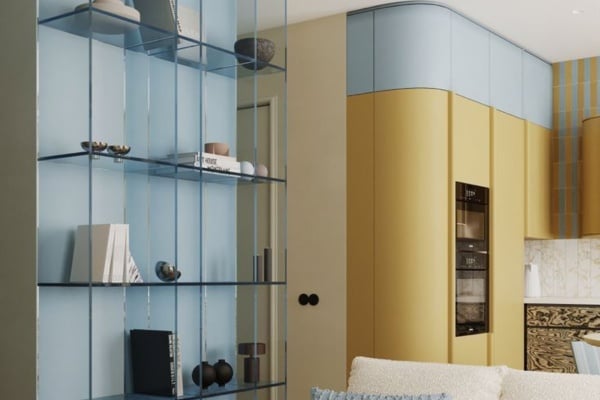
Built-in glass shelves with clean form
Ref. Interior Design by Anastasia Dyakonenko
A minimalist glass partition is a refined way to define an area without closing it off entirely. Opt for a sliding or foldable wooden frame paired with textured or frosted glass to create gentle separation while maintaining light flow. The subtle texture provides just enough privacy for areas and is ideal for separating a study, kitchen, or a library nook. The wood brings warmth and balance, pairing effortlessly with clean interiors.
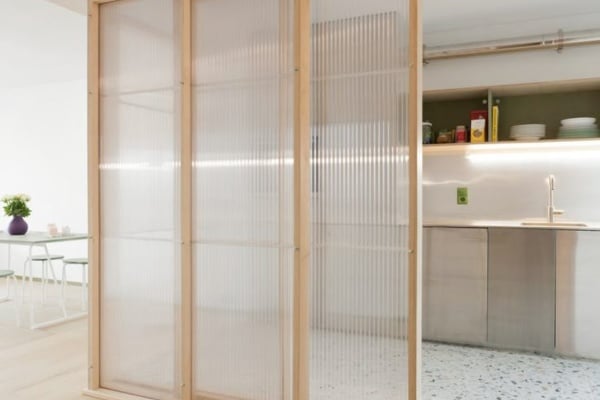
Sliding glass partition with natural wood frame to maintain fluidity in the space
Ref. midnight.green
Whether you’re drawn to the bold storytelling of maximalism or the serene calm of minimalism, glass proves to be a timeless ally. Its ability to reflect, reveal, and reshape space makes it a material that transcends style boundaries. From quiet accents to statement features, glass adapts itself. No matter your design philosophy, glass helps you see your space in a new light.
How can glass be used in maximalist interior design?
In maximalist spaces, glass is used to add contrast, reflect rich layers, and amplify drama—think mirrored ceilings, fluted panels, and bold-framed partitions or panelling.
What is the difference between using glass in minimalism vs. maximalism?
In minimalism, glass subtly opens up space and reduces clutter. However, in maximalism, it’s used to accentuate abundance and depth while balancing textures and colours.
Which type of glass is best for bathroom partitions?
Toughened or tempered glass is ideal for bathrooms due to its strength and moisture resistance. Tinted or frosted finishes can add privacy while maintaining elegance.
Shivanie Khanka is a passionate and versatile architect with a flair for writing, design, and photography. She is a curious soul and is always looking to learn from her experiences. Read More