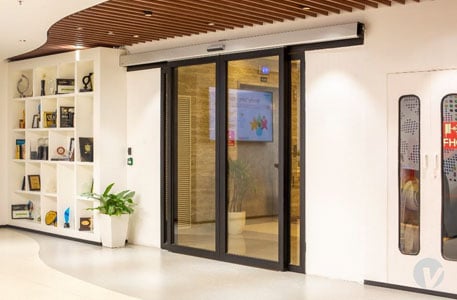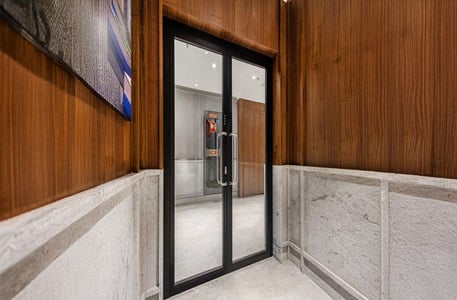

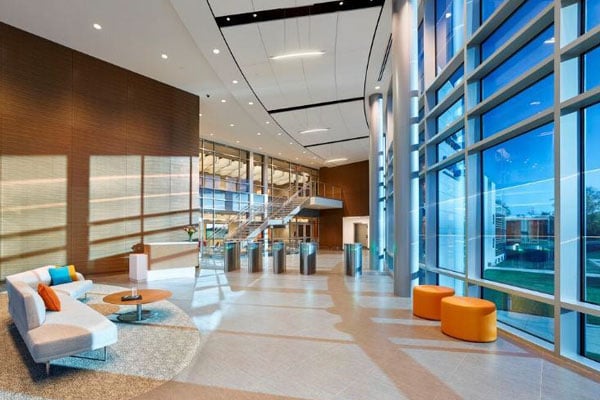
Open-plan office design with glass partitions enabling transparency and collaborative work environments
The modern workplace has undergone a fundamental shift.
From enclosed cabins and rigid layouts, offices have evolved into open, collaborative environments. Glass partitions replace solid walls, corridors are designed for movement, and visual connectivity is considered essential as structural integrity. Transparency is no longer a style preference; it is a spatial imperative.
Yet this shift introduces a design challenge that is frequently underestimated: as offices become more open, the discipline required to maintain fire safety becomes considerably more complex. Unlike traditional layouts, where compartmentation was inherently built into solid walls, contemporary workspaces demand a more deliberate approach, one that ensures safety without reversing the very openness they aim to create.
At the core of fire safety design lies a principle that has not changed despite how dramatically architecture has evolved: containment. In a fire event, a building must limit the spread of flames and smoke, maintain tenable conditions for occupants long enough to enable evacuation, and protect the routes through which that evacuation occurs.
This is achieved through compartmentation; the division of a building into zones that can resist fire for a specified duration. In traditional office layouts, compartmentation was largely inherent. Solid partitions and load-bearing walls naturally created boundaries. In today’s open-plan environments, where glass replaces walls and spaces flow into one another, that same level of protection must be deliberately engineered into the design.
The question is not whether open-plan offices can be made safe. They can. The question is whether the design team has specified the right materials, in the right locations, at the right performance levels.
Also read Vetrotech Design Solutions®: System-Led Fire Safety for Advanced Architectural Design
Fire safety in office buildings is not a uniform condition across the floorplate. Certain areas carry a disproportionate responsibility for life safety, and these are the zones where specification decisions carry real consequence.
Circulation paths and escape routes – corridors, lobbies, and transition zones leading to exits – must remain protected for the full duration of evacuation. Under Part 4 of the National Building Code of India (NBC 2016), these zones are subject to specific fire resistance requirements that vary with building height and occupancy type. Any breach in these zones directly impedes evacuation efficiency and can constitute a compliance failure.
Staircase enclosures are among the most critical elements in multi-story office buildings. They must be isolated from both fire and smoke, providing a protected path of vertical travel for the full duration of egress. In buildings above 15 metres, the fire resistance rating required for staircase enclosures is typically a minimum of 60 minutes — and in taller or higher-occupancy buildings, 120-minute assemblies may apply.
The interface between open work areas and protected zones, the threshold where the open floorplate meets an enclosed corridor, a lobby, or a stairwell, is frequently the most vulnerable point in fire safety design. This is where glazing decisions have the greatest impact on compartmentation integrity, and where under-specified or incorrectly rated glass can undermine an otherwise well-designed fire strategy.
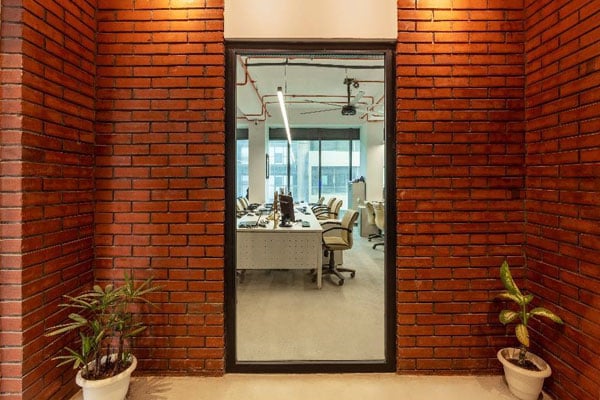
VDS® Fire-rated glass partition systems enabling transparent fire compartmentation within an open-plan office layout
Fire-rated glazing addresses this challenge by enabling transparent compartmentation — the ability to create code-compliant fire barriers without sacrificing visual connectivity or natural light.
For architects working on open-plan offices, this has a material consequence. Where a solid partition would compartmentalize but also isolate, fire-rated glazing allows the designer to define a fire boundary while preserving sightlines, maintaining daylight penetration into deeper floor areas, and sustaining the spatial quality that contemporary workspace design demands.
This performance capability is the foundation of integrated fire-rated glazing systems — such as those developed by Vetrotech Saint-Gobain India — where certified fire performance is designed to work in conjunction with the architectural language of the project, not in opposition to it.
Also read Fire-Rated Glass Systems in India: Standards, Classifications and Compliance
While transparency is the visible benefit, the true value of fire-rated glass lies in its tested performance.
In office environments, glazing systems may be required to contain fire and smoke within defined compartments, limit heat transfer to adjacent work areas, and protect escape routes for a specified duration.
Depending on the application, this may involve integrity-only solutions for internal partitions or insulated systems for high-occupancy or critical zones.
The selection must align with both regulatory requirements and spatial function, ensuring that each area performs as intended during a fire scenario.
In practice, one of the most consistent failure points in fire safety design is not intent; it is execution continuity. A fire strategy that is well-conceived at the design development stage frequently becomes diluted by the time a building is handed over.
The reasons are predictable. Glass, frames, and ironmongery are often specified separately, procured from different suppliers, and installed without unified coordination. Mid-project substitutions – a different frame profile, a changed door closer, an alternative glass specification – occur without recognition of their impact on fire performance. The result is an assembly that may look correct and pass visual inspection but has never been tested as a system.
This is a critical distinction: fire-rated glazing is not a product; it is a system. Its certification is valid only when every component within it, glass, frame, fixings, seals, and hardware, meets the conditions of the tested configuration. Substituting a single element can void the certification of the entire assembly, and that risk is rarely visible to anyone on site.
This is why a system-based approach to specification matters. Vetrotech’s fire-rated glazing assemblies are tested and certified as complete systems. VDS fire-rated doors and partitions ensure that the certified performance at design stage is the performance that is delivered on site.
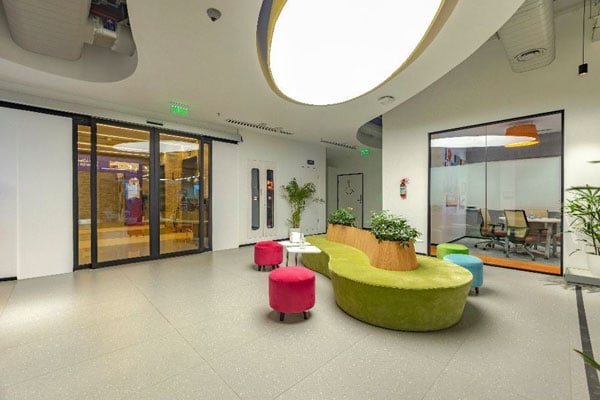
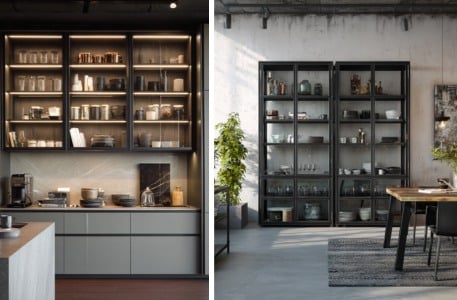
Fire-rated glazing system supporting seamless architectural design
The perception that fire safety restricts design quality is a legacy of the era when the only available fire-rated materials were opaque and architecturally disruptive. That constraint no longer applies.
Contemporary fire-rated glazing systems are available in slim-profile configurations that integrate with standard curtain walls and partition systems. Fire-rated glazed assemblies can be incorporated into glass walls with minimal visual discontinuity while maintaining the material language of the overall design. The constraint has shifted from material limitation to specification literacy, and that is a shift design teams are well-positioned to navigate.
Also read Secure Your Home with Vetrotech’s High-Security Glass
As office environments continue to evolve, the expectations from fire safety solutions will also expand.
Design teams are no longer just selecting materials; they are shaping how spaces will perform under both normal and critical conditions.
In this context, fire-rated glass becomes more than a compliance requirement. It becomes a design enabling material, allowing safety to coexist with transparency, flexibility, and user experience.
Creating safer office environments requires more than meeting regulatory requirements; it mandates a clear understanding of how materials, systems, and spatial planning perform together under real conditions.
Vetrotech Saint-Gobain India develops fire-rated glazing systems for commercial office projects tested to international standards and suited for the full range of workspace applications, from internal partitions and fire doors to full-height glazed corridors and staircase enclosures. Each solution is tested as a complete assembly, ensuring that certified performance at design stage translates to real performance on site.
If you are specifying fire-rated glass for a commercial office project, or reviewing whether an existing specification reflects current compliance requirements, speak to the Vetrotech team.
What is the difference between E-rated and EI-rated fire glass?
An E-rated (integrity) glass system contains flames and smoke for the rated duration but does not limit heat transfer to the unexposed side. An EI-rated (integrity + insulation) system additionally restricts the average temperature rise on the unexposed face to below 140°C.
What fire resistance rating is required for office buildings in India?
Under NBC 2016 (Part 4), fire resistance requirements for commercial office buildings vary by height and occupancy. Buildings above 15 metres typically require a minimum 60-minute fire resistance rating for compartmentation elements, including glazed partitions in escape routes. High-rise buildings may require 120-minute rated assemblies. State-level Fire NOC requirements may impose additional conditions; always verify with the applicable local authority.
Can fire-rated glass be used for full-height office partitions?
Yes. Modern fire-rated glazing systems are available in configurations that support floor-to-ceiling heights, minimal-frame aesthetics, and integration with standard office partition systems. The entire assembly, including glass, frame, fixings, and hardware, must be tested and certified as a system. Individual components cannot be substituted without re-evaluation of the assembly’s certification.
How does fire-rated glass support open-plan office design?
Fire-rated glass enables transparent compartmentation where spaces can remain visually connected while meeting fire separation requirements. This allows architects to maintain open, daylit environments in compliance with fire safety codes, rather than reverting to solid walls that interrupt spatial continuity.
Ashwin Kishore is a Technical Engineer at Vetrotech Saint-Gobain, specializing in testing and certification of passive fire protection glazing and high-security glazing solutions for commercial and infrastructure projects across India, Southeast Asia and Australia, NZ. Read More