A well-designed space can instantly evoke a sense of peace. This feeling of calm where the mind settles and the body unwinds, is the core goal of Japandi interior design. This style is a meaningful blend of two celebrated traditions. It merges the cozy warmth of Scandinavian “hygge” with the mindful tranquillity of Japanese “wabi-sabi.” In practice, Japandi design is about creating environments that support a slower and more intentional way of living.
This philosophy finds a perfect home in a Pilates studio. In today’s busy world, dedicated wellness spaces are essential. Principal Designer Devyani Godha of Teak and Linen Studio transformed a former apartment into a serene haven for movement. This project is a clear example of how interior design can directly influence wellbeing. It shows how Japandi principles align with a practice built on balance and control.
Understanding Japandi is key to appreciating this studio. It is a fusion that goes deeper than aesthetics. Scandinavian design brings functional minimalism, a love of light and the concept of “hygge” – a feeling of cozy comfort. It values simplicity and warmth. Japanese design offers Zen principles and a deep respect for nature. Its philosophy of “wabi-sabi” finds beauty in imperfection and authenticity. It values natural materials and masterful craftsmanship.
Japandi interior design brings these worlds together. It combines the Scandinavian desire for light open spaces with Japanese restraint. The result is a style that is both minimalist and warm. It uses a neutral palette of soft whites, warm beiges and natural browns. Furniture is chosen for quality and purpose. This style encourages a reconnection with what is essential.
The choice of Japandi for a Pilates studio is logical. Pilates is a practice of balance, control and intention where every movement is deliberate. A cluttered or distracting environment works against this goal. The Japandi interior design ethos creates a tranquil backdrop that allows practitioners to focus inward.
The vision for this Pilates studio was to create a space that was open, functional and calming. It needed to house essential Pilates equipment while including a small café. The transformation from a home to a wellness center is a lesson in thoughtful interior design.
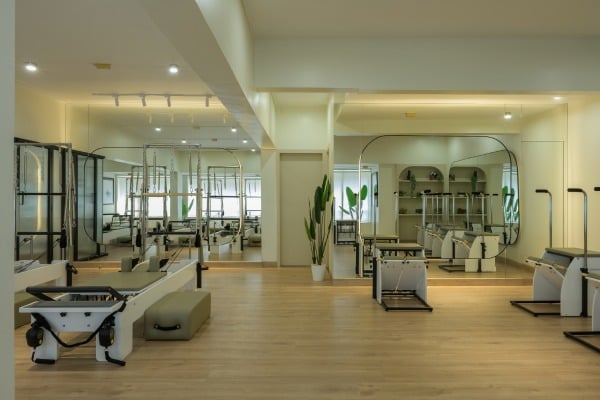
Neutral tones and clean design language creates a space that feels inviting
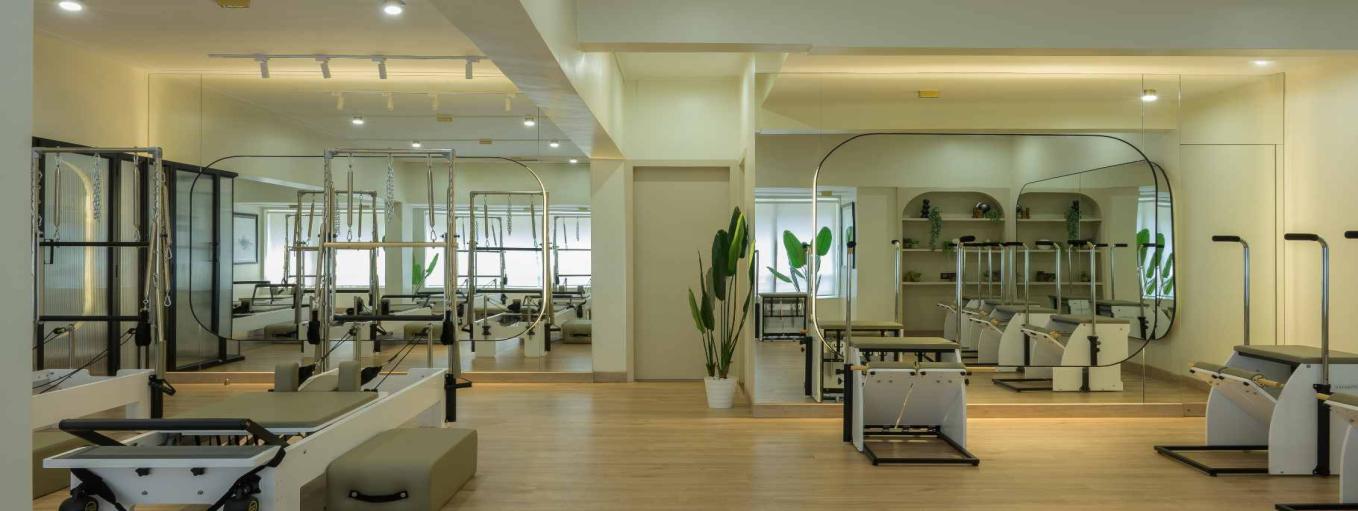
The main studio is the heart of the project, designed to make movement feel effortless. Warm wooden flooring immediately grounds the space, while soft indirect lighting creates a calming glow. Clean lines and a soft, neutral palette set the tone, with light walls and wooden floors enhancing the sense of openness.
The wall of mirrors stretches across the room, expanding the space, amplifying light, and offering the practical benefit of checking form. The Pilates reformers and chairs are arranged with care, leaving plenty of room to move freely without clutter. Built-in cabinets with subtle lighting keep equipment neatly concealed, maintaining the minimalist look.
What really brings the room to life are the thoughtful details: arched niches styled with plants and simple décor, a touch of greenery that softens the clean geometry, and a single piece of artwork that provides focus without distraction. The result is a studio that feels bright, intentional, and welcoming, a true reflection of Japandi’s calm and balanced design philosophy.
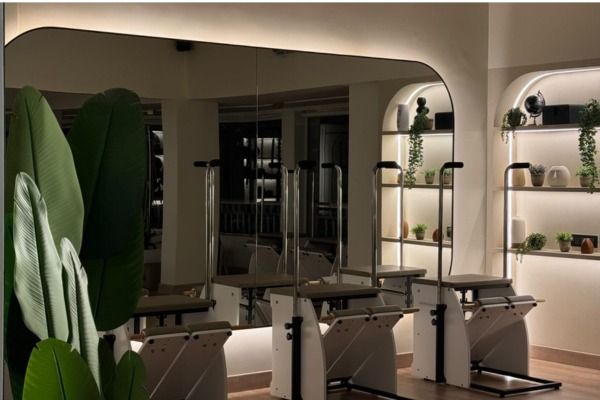
Backlit mirrors add depth and character to the studio space
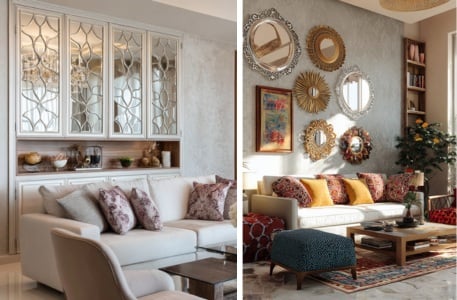
Also read Best Decorative Wall Mirrors to add a Flair to your Room
The office corner is a great example of how thoughtful design can make even the smallest spaces feel calm and efficient. The clean lined wooden desk and overhead cabinets provide plenty of storage without overwhelming the room, keeping the workspace clutter-free. Open shelving with a touch of greenery softens the straight lines, adding freshness and warmth.
The muted tones of the cabinetry blend seamlessly with the light walls, creating a bright and breezy atmosphere. Details like the textured glass partition introduce privacy while still letting in light, keeping the area from feeling boxed in. It’s a workspace that feels simple, grounded, and serene, aligned with the studio’s Japandi-inspired design philosophy.
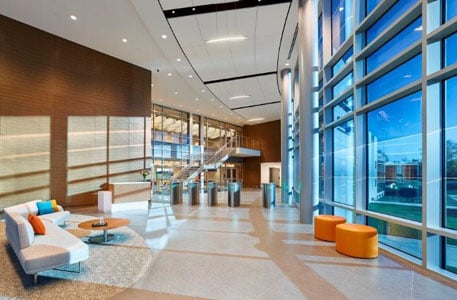
Also read Optimising Office Spaces - Seven Glass Options for Partitions
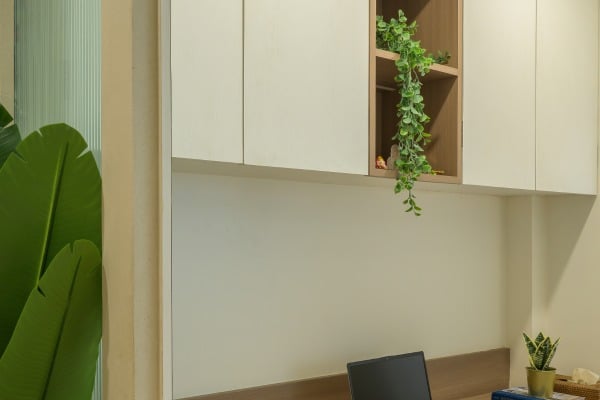
Light tones and a glass partition keep this workspace bright and open
Where the apartment’s kitchen once stood, an inviting café now serves students. Light coloured surfaces ensure the area feels spacious and clean, while rust-toned accents and rich textures bring in warmth. Striped upholstery adds a playful visual contrast without disrupting the calm palette, and terrazzo countertops and tables lend both texture and durability.
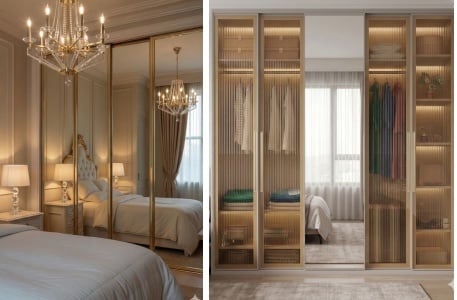
Fluted glass, woven cane panels, and terrazzo finishes add layers of tactile interest and character. The cane-panelling at the front of the bar isn’t just eye-catching; it cleverly provides ventilation for refrigeration units. Overhead, tinted fluted glass cabinets conceal storage while catching the light, creating a look that is both practical and elegant. It is a perfect spot to enjoy a post-workout smoothie or pause for conversation.
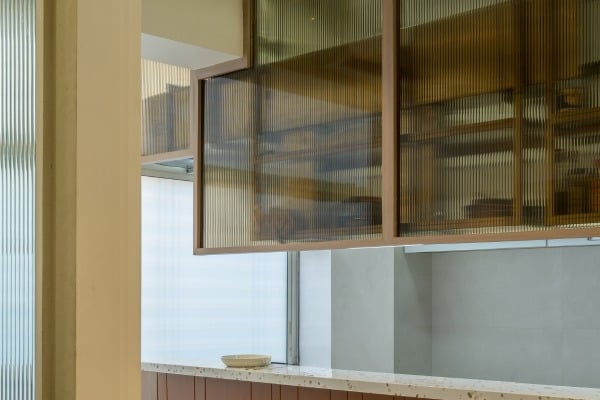
The play of textures makes the cafe a warm and inviting space
Also read A Practical Guide To Selecting Tinted Glass For Your Home Or Office
The experience begins the moment one arrives. The fluted glass partition framed in black metal not only defines the boundary between the hallway and the studio but also plays with light, creating a sense of depth and privacy without closing off the space. The choice of fluted glass adds subtle texture, keeping the minimalist palette visually engaging.
On the wall, two black-and-white artworks of figures in Pilates poses act as both inspiration and subtle branding, grounding the space in its purpose while doubling as understated décor. The warm wooden flooring continues here, tying the circulation area back to the studio and café while softening the otherwise clean architectural lines.
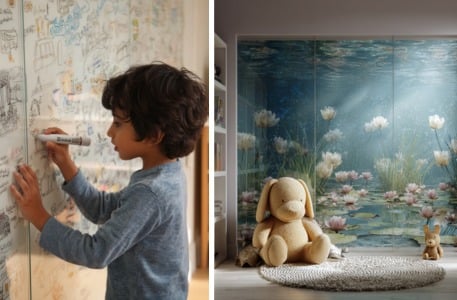
Also Read Creative Ways To Use Decorative Glass Partitions In Interior Design
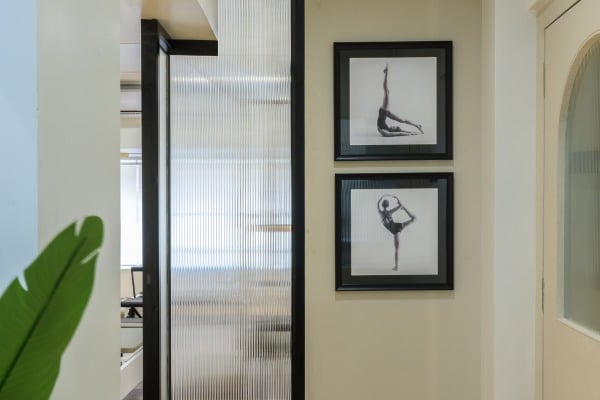
A minimal entryway sets the tone of the Pilates Studio
What makes this Pilates studio truly special is not just its equipment or its layout. It is the feeling it cultivates. The sense of calm that takes over as you enter the space. The feeling of being able to focus completely on your practice. By embracing the core principles of Japandi design, tranquillity, functionality, and a deep connection to nature, the design transforms a standard apartment into a restorative sanctuary a benchmark in wellness interior design.
This project shows that design is not just about how a space looks, but, more importantly, about how it makes us feel. It’s a gentle reminder of how design can influence wellbeing, and how a thoughtful blend of traditions can create something truly timeless.
What is the Japandi interior design style?
Japandi is a fusion of Japanese “wabi-sabi” and Scandinavian “hygge” style. It celebrates minimalism and natural materials while creating a cosy comfort and a tranquil atmosphere.
Why is Japandi design ideal for a Pilates studio?
Japandi interior design promote balance, calm, and focus, which align perfectly with the principles of a Pilates studio that encourages mindful movement, intention, and control.
How does Japandi differ from minimalist interior design?
While both focus on simplicity, Japandi adds warmth, natural textures, and cultural depth. Minimalism can feel stark, whereas Japandi feels inviting and serene.
How can lighting enhance Japandi-inspired spaces?
Soft, indirect lighting, backlit mirrors, and natural light are essential to creating a soothing atmosphere in Japandi interiors, especially in wellness-focused spaces.
Shivanie Khanka is a passionate and versatile architect with a flair for writing, design, and photography. She is a curious soul and is always looking to learn from her experiences. Read More