In contemporary design, glass balcony railings are no longer treated as secondary safety elements added at the end of construction.
Instead, they are shaping the architectural language of the building. The choice of glass, framing, and detailing now directly influences how a façade feels: light or grounded, minimal or expressive, private or open.
In 2026, the most compelling balcony designs are those where the railing responds intuitively to the building’s material palette, proportions, and relationship with its surroundings.
From muted, layered elevations to warm, urban homes, different façade expressions call for different glass railing treatments.
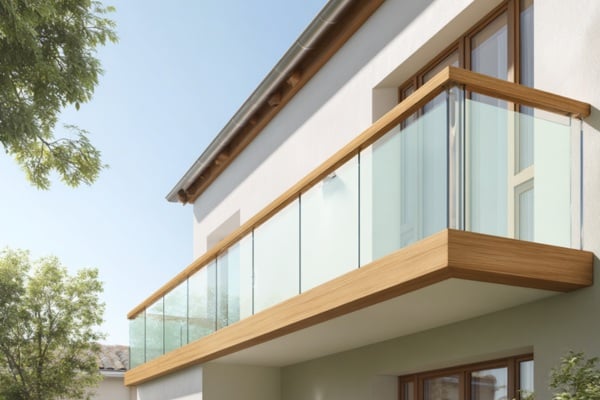
Clear Glass Paired With Warm Wood Framing for Texture and Visual Warmth
Homes with light-coloured or neutral-toned façades benefit from glass railings framed in wood or wood-finish profiles. Clear toughened glass keeps the elevation visually light, while the warmth of wood introduces texture and softness. Here, the railing becomes a transition element, bridging modern materials with natural finishes.
Also read 5 Advantages of Toughened Glass Railings and Balustrades
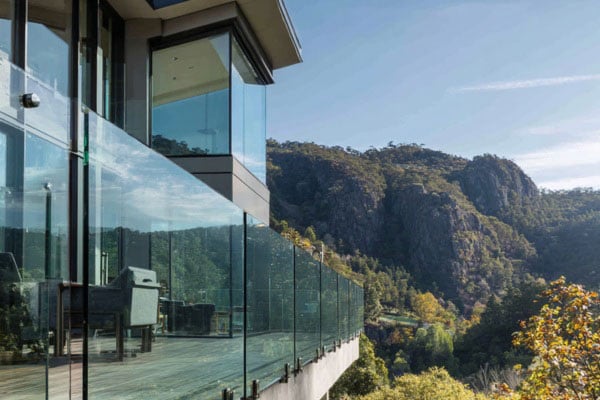
Frameless Glass Railings Allow Landscapes and Panoramic Views to Remain Uninterrupted
When a home opens out to hills, water bodies, or open landscapes, the architecture should step back and let the view lead. Frameless glass balcony railings with discreet inner supports or base-mounted systems are ideal in such settings. They maintain safety while visually disappearing, allowing panoramic views.
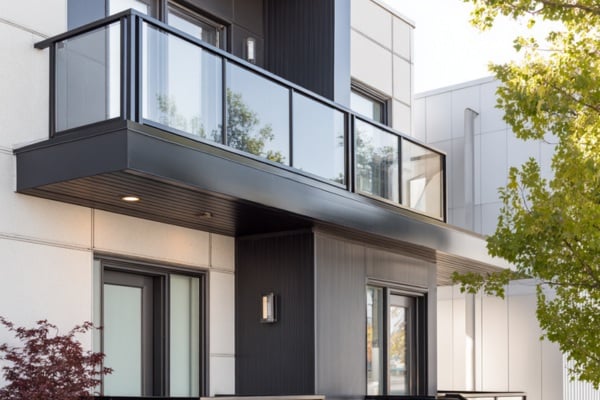
Slim Metal-Framed Glass Railings Add Structure and Rhythm
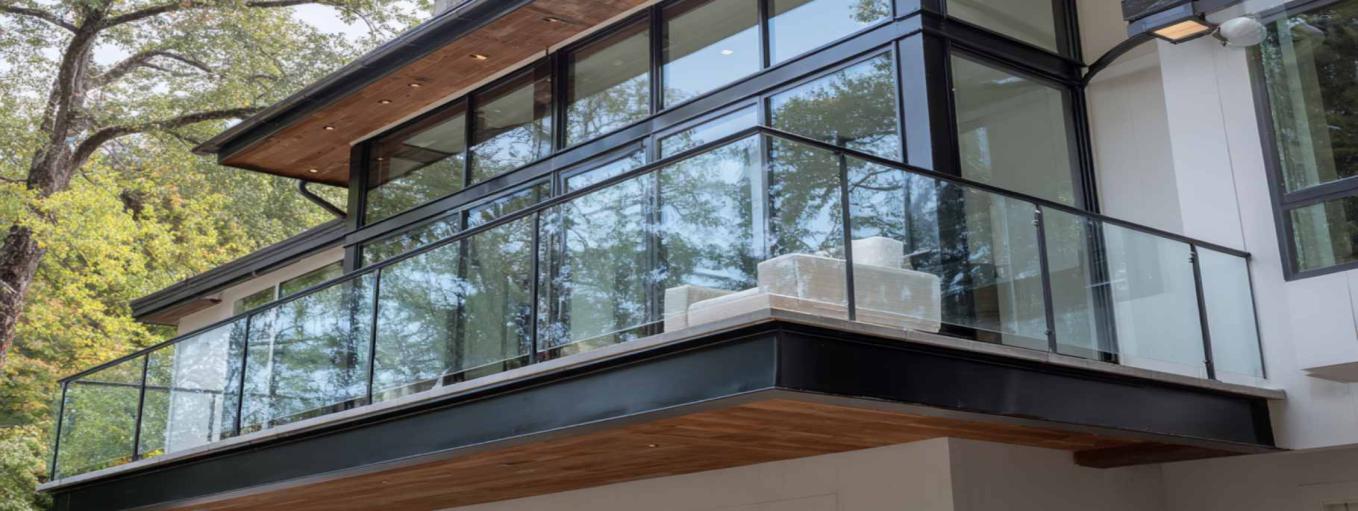
For modern city residences with bold lines and darker exterior palettes, toughened glass railings paired with slim metal posts or frames provide structure and rhythm. The glass keeps the façade open and breathable, while the metal introduces architectural definition. This style suits home façades with clean geometry and a strong silhouette, ensuring the railing complements the building’s form.
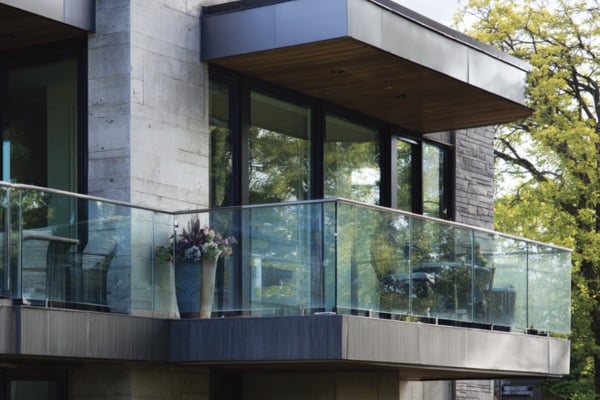
Coated Aluminium Toughened Glass Railings Anchor Material-Rich Façades
Homes that combine concrete, stone, or textured cladding often require railings that can visually anchor the balcony. Aluminium-coated toughened glass railings, especially in muted greys or charcoal tones, offer durability while reinforcing a contemporary aesthetic. The glass maintains openness, while the coated metal profiles echo the façade’s material strength, creating a cohesive and grounded exterior expression.
Beyond material-led façades, certain architectural contexts call for glass railings that address privacy, rhythm, and lifestyle more directly.
Also read Riverfront Bliss: A Home Designed Around Breathtaking Vistas with Toughened Glass
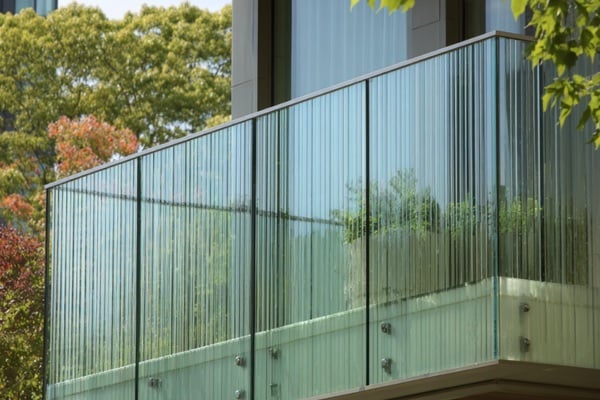
Fluted or Textured Glass Balances Privacy and Light
The facades that have strong vertical rhythms through columns, fins, or cladding, fluted or textured glass railings can be an ideal choice for them. The glass introduces visual depth and gentle diffusion, offering both privacy and light. These railings work well in urban homes where overlooking is a concern, but openness is still desired.
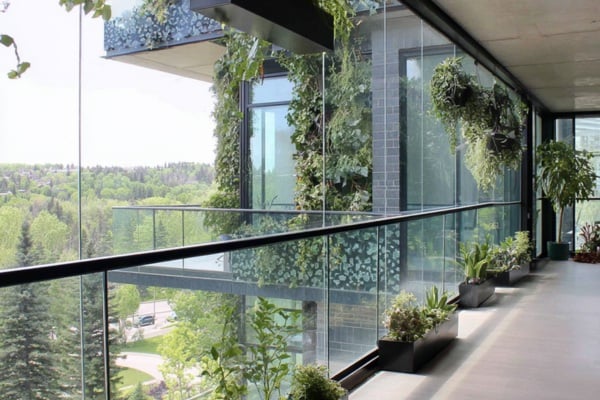
Glass Railings Paired With Planters Soften Balcony Edges
Homes that lean into greenery and indoor–outdoor living benefit from glass railings that act as a backdrop rather than a focal point. Clear or lightly frosted glass combined with planter-led detailing allows greenery to take centre stage. The railing visually recedes, while cascading plants soften horizontal balcony lines and connect upper floors to the landscape below.
From a design perspective, glass balcony railings continue to solve multiple architectural challenges simultaneously. They enhance the façade without adding visual clutter, preserve uninterrupted views, and maximise the flow of natural light, while complementing modern, contemporary, and transitional architectural styles.
Even the functional performance of modern glass railing systems is equally compelling. Designed with tempered or toughened laminated glass, these railings are engineered to withstand wind loads, weather exposure, and daily wear while reducing the risk of injury in the event of impact.
These systems deliver safety and durability without compromising on elegance. Unlike other alternatives, glass does not rust, warp, or peel, making it a resilient and low-maintenance solution across varied climatic conditions.
Also read Toughened Laminated Glass Shopfronts: The Perfect Blend of Style and Function
A well-designed glass balcony railing adapts gracefully over time. Its transparency allows it to complement changing interior styles and evolving architectural tastes without appearing dated.
When aligned with façade design and lifestyle needs, glass balcony railings become defining architectural components — functional, timeless, and visually enduring.
What type of glass is best for balcony railings?
The best type of glass for balcony railings depends on the location, material choice and facade design. Any type of glass, clear, frosted, tinted or textured, can be toughened to enhance its strength and durability.
Do glass balcony railings provide privacy?
Glass balcony railings can be customised to suit different privacy needs. Frosted, fluted, or tinted glass options offer visual screening while still allowing light to pass through. These options are ideal for urban homes or closely spaced residences where privacy is a concern.
Are frameless glass balcony railings strong enough?
Yes. Frameless glass balcony railings made with tempered or laminated glass panels are secured to robust base channels or spigots, providing safety and impact resistance.
Can glass balcony railings be customised to match the façade?
Absolutely. Glass railings can be customised through glass type, tint, texture, framing material, and finish. This flexibility allows them to complement different façade styles, from minimal modern homes to warm, biophilic designs, while ensuring visual consistency across the exteriors.
Jahanavi Arora is an architect by profession and a writer by choice, with over 7 years of experience in architecture and design writing. She graduated from Chandigarh and believes that writing and architecture are similar as both are forms of art. Read More