Studio Reflective Practices, founded in 2009 in Indore by architects Vrushali Pavsakar Sethi and Ashish Sethi, continues to redefine the boundaries of residential architecture through thoughtful materiality and human-centred design. In their latest project, a home located in Indore, glass becomes more than a building element, a medium of expression, expansion, and innovation.
The residence is sited on a plot that presents an intriguing challenge, three sides enclosed by neighbouring plots, with only the south-facing side being open. This orientation received maximum sunlight while also bringing intense heat.
The Sethi designers tackled this duality with precision by integrating double-glazing. The design balances natural light with thermal and acoustic insulation. The south-facing wall, thus, becomes a glowing asset rather than a liability. Additionally, toughened glass has been used across the home for enhanced security and durability.
The entry sequence starts from a common access point, leading through a covered garden and parking area, setting a serene tone. The ground floor houses a foyer, a mandir, and a seating area, along with a cosy home theatre, thoughtfully integrated to ground the home’s spiritual and social anchors.
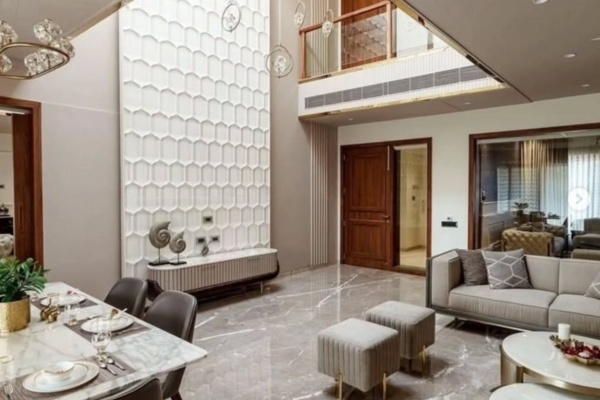
Double-Height Living Room Amplifies Space and Light
The staircase forms the backbone of vertical circulation, opening onto a first floor designed for a joint family. It features two separate living units, each with a double-height living room, a dining area, a kitchen, a guest room, and other essential spaces. These functional splits are harmonised through a shared staircase that unfolds to the second floor, which houses private bedrooms.
Also read Beyond The Ordinary: Exploring Innovative Glass In Modular Kitchens
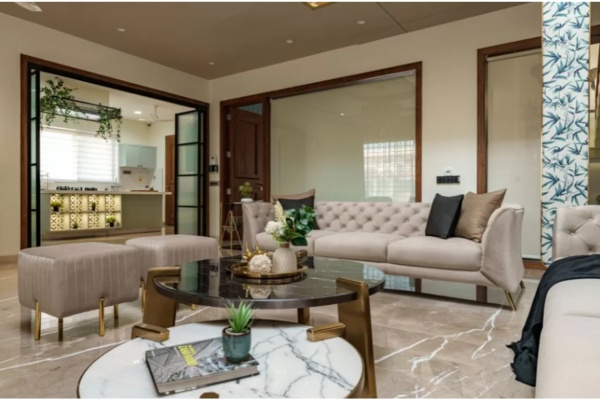
Clear Glass Partition Between Living and Dining Spaces
Ar. Vrushali emphasises that “glass can change the vision of the human eye.” This philosophy permeates the entire home, enhancing its utility and beauty.
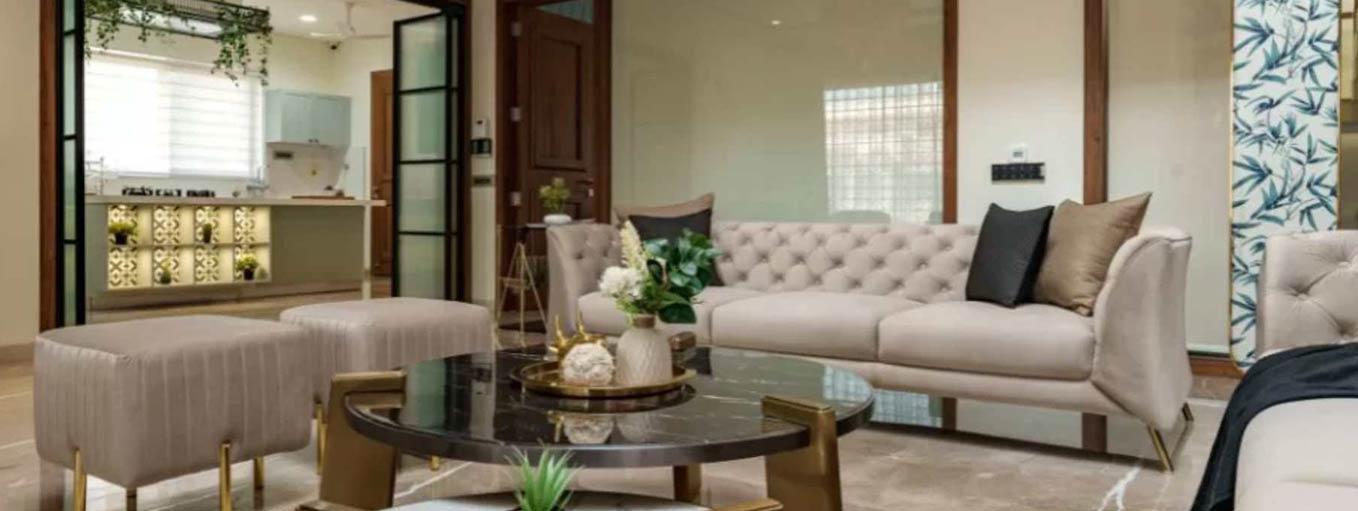
A striking example is the living and dining zone, connected through a glass partition. Clear glass partitions subtly demarcate zones without breaking visual continuity, while reflective glass creates an illusion of depth.
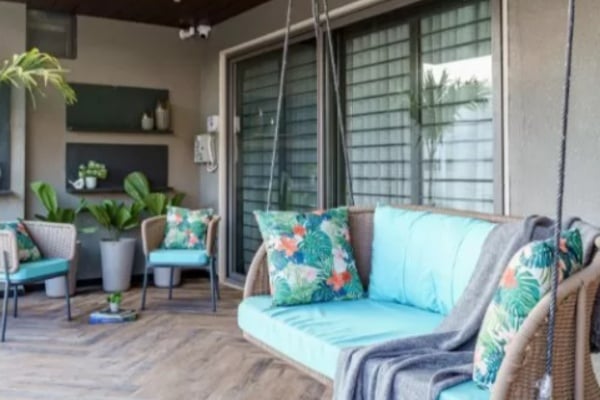
Toughened Glass Sliding Shutters Open the Dining Space to Balcony Views
The dining room extends into a balcony enclosed with a clear toughened glass sliding partition offering an enchanting view of the community garden beyond—a moment of openness and connection with nature.
Also Read The Ultimate Guide To Toughened Glass Partitions For Workspaces
Glass in architecture is often celebrated for its transparency, but when infused with texture and reflectivity, it transcends function and becomes an expression of design language.
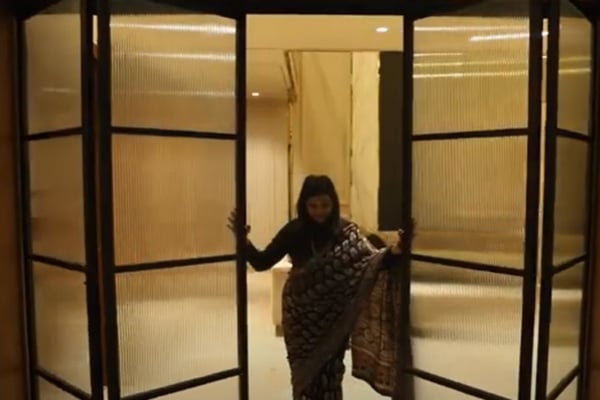
Foldable Fluted Glass Connecting Kitchen and Living Areas
Here, in the kitchen, foldable sliding doors with fluted glass bring an artistic vibe. Unlike plain frosted glass, textured glass offers a soft diffusion of light that preserves privacy while adding depth, tactility, and visual interest to the space.
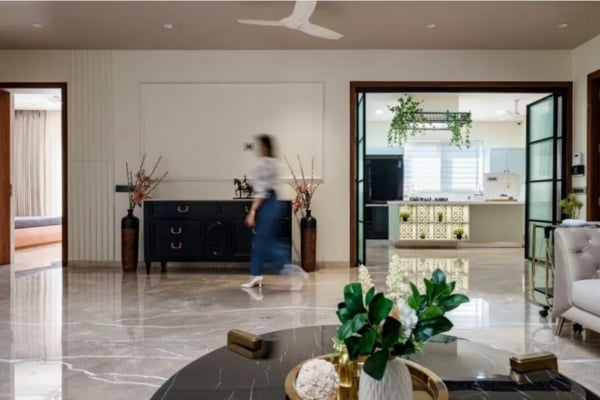
Textured Glass Partitions Bring Depth and Flexibility
These glass doors seamlessly merge the kitchen and adjacent zones, introducing a sense of movement. Additionally, the foldable mechanism adds functional elegance, offering flexibility and making the space modular and responsive to changing needs.
In the dining area, mirrors are used on the ceiling—a strategic move that does more than just reflect surfaces, accentuating the height and volume of the space.
Also Read Creative Ways To Use Decorative Glass Partitions In Interior Design
The second-floor houses private zones, bedrooms and bathrooms with glass accents, creating a sense of flow.
Glass partitions between bathrooms and dressing rooms allow natural light to spill through, boosting functionality and aesthetics. Meanwhile, wardrobes use mirror-clad sliding shutters and lacquered glass, adding layers of reflection and elegance.
A standout detail appears in one bedroom, where a wall unit with open and closed shelves interacts with ribbed glass sliding shutters. When slid open, the shutters overlap the unit, adding dimension and edge.
For architects at Studio Reflective Practices, no two homes are alike. Each project is a thoughtful curation of the client’s idea, lifestyle, and vision. Glass as a material innovates bold experimentation in redefining, connecting and transforming spaces into an elevated experience. Discover Saint-Gobain's versatile glass solutions to explore how glass can reshape your spaces with clarity, performance, and beauty.
How can glass be used effectively in modern home design?
Glass is a highly versatile material that brings in natural light, creates visual openness, and promotes a sense of connectivity between spaces. It can be used as partitions, balcony railings, skylights, and even foldable sliding doors. When thoughtfully integrated, glass enhances aesthetic appeal and functionality without compromising on privacy or safety.
What types of glass solutions are best for residential architecture in India’s climate?
Double-glazed glass is ideal for temperature control and noise insulation in India's varied climate, particularly in urban settings. Toughened safety glass adds durability and impact resistance, while reflective or tinted glass helps reduce heat gain in sun-exposed areas.
How does glass influence the perception of space in home interiors?
Glass has the unique ability to expand perceived space by reducing visual barriers. Clear glass makes spaces feel larger and more connected, while mirrors and reflective surfaces multiply light and create depth and dimension.
What are some trending ideas to use mirrors in interior architecture?
Mirrors are increasingly used not just for decor, but as an architectural accent on ceilings, partitions or wardrobe shutters to enhance height, double visual space and luxury. Strategically placed mirrors reflect light, maximise brightness, and create a sense of movement in the interiors.
Jahanavi Arora is an architect by profession and a writer by choice, with over 7 years of experience in architecture and design writing. She graduated from Chandigarh and believes that writing and architecture are similar as both are forms of art. Read More