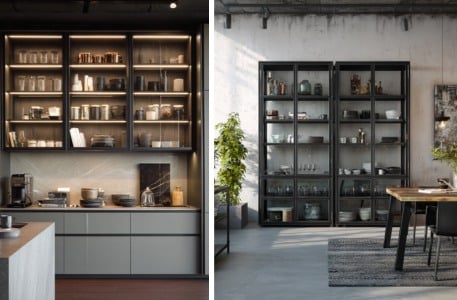
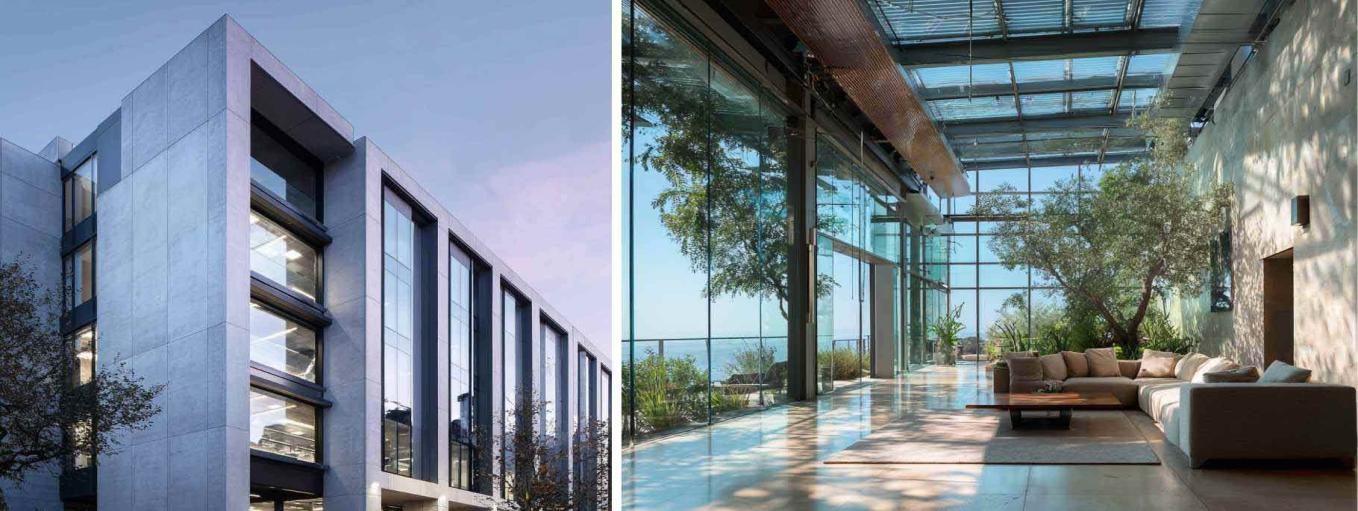
Scroll through architectural magazines or global design feeds, and you’ll notice a recurring visual – expansive glass facades, large picture windows, and seamless indoor–outdoor connections framing spectacular views. These images are aspirational, even romantic.
What they rarely show, however, is the other side of large openings – especially in India.
In most Indian cities, large openings often come at a cost: excessive heat gain, glare, increased radiation exposure, fading of interiors, and higher cooling loads. With a majority of the country falling under hot-dry and hot-humid climatic zones, “hot” remains the one constant that designers cannot ignore.
The good news? With the evolution of glass technology, glazing today is no longer just about transparency. The right type of glazing can significantly control solar heat gain while preserving daylight, views, and comfort.
Let’s understand how different glazing solutions impact solar heat gain in buildings, and how each can be used effectively in the Indian context.

Glass Windows with Shading Devices to Reduce Heat Gain
Plain or untreated glass offers good visual connection with the outdoors but also maximum solar heat gain. It allows a large portion of solar radiation to enter interiors, resulting in warmer indoor temperatures and increased dependence on air conditioning. Acoustic insulation is also minimal.
If untreated glass must be used, heat gain can only be mitigated through design strategies rather than material performance, such as:
Smaller window openings
Orienting openings towards the North or shaded sides
Horizontal and vertical shading devices like overhangs and fins
Traditional elements such as jaalis or perforated screens
Dense plantation or green buffers in front of glazing
From a safety standpoint, any external glazing should at least be toughened glass, ensuring impact resistance and reducing the risk of injury in case of breakage.
Best used when: Budget constraints exist and passive shading strategies are thoughtfully integrated.
Also read Tempered Glass - A Modern Solution for Strength and Safety
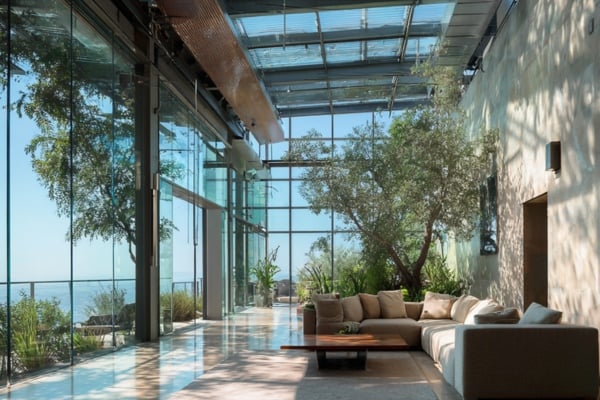
Laminated Glass for Sound Control and Enhanced Safety
Laminated glass consists of two glass panes bonded together with a PVB (polyvinyl butyral) interlayer, which plays a critical role in improving performance.
Compared to regular glass, laminated glass offers
Better thermal insulation, reducing direct heat transmission
Enhanced acoustic insulation, particularly useful in urban environments
Safety, as the PVB holds the glass together even when broken, preventing shards from failing
While laminated glass alone does not eliminate solar heat gain, it performs significantly better than plain glass. When combined with external shading devices, solar load can be further reduced.
Best used when: Safety, sound control, and moderate heat reduction are priorities, especially in residential and mixed-use buildings.
Also read Elevate Your Space with Laminated Glass: A Guide to Safety and Style
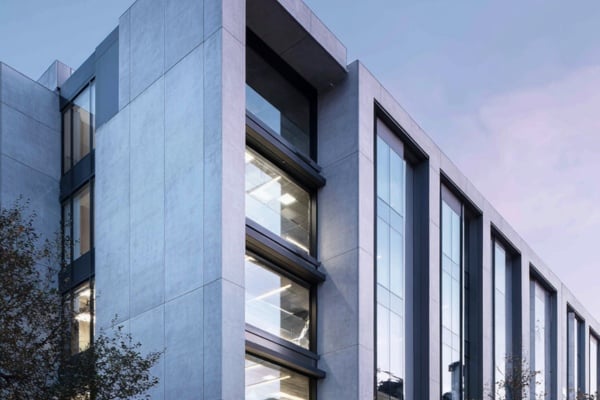
Double-glazed units (DGUs) in Facades for Noise reduction and Thermal Comfort
Double glazing introduces a more performance-oriented solution. It consists of two panes of glass sealed together with an air or gas-filled gap, creating an insulated glass unit (IGU).
This configuration
Significantly improves thermal insulation, reducing heat gain and heat loss
Enhances acoustic performance
Improves overall indoor comfort
For Indian conditions, it is important that both panes are toughened, ensuring durability and safety. Double glazing becomes especially effective when paired with solar control coatings, but even as a basic system, it offers a marked improvement over single glazing.
Best used when: Thermal comfort and noise reduction are important, particularly in commercial buildings, offices, and high-rise residences.

Solar Control Glass minimises UV-radiation and Solar Heat Gain
When it comes to addressing solar heat gain holistically, solar control glass stands out as a comprehensive solution.
Designed specifically to tackle high solar radiation, this glass:
Allows optimal daylight to enter interiors
Reflects and reduces up to 70% of solar heat
Minimises UV radiation, protecting interiors from fading
Helps maintain lower indoor temperatures compared to outdoor conditions
Solar control glass typically features a pyrolytic or coated surface that reflects unwanted heat while retaining visual comfort. Ideal for tropical climates like India, it is available in contemporary colours, varied thicknesses, and aesthetic finishes, making it suitable for both residential and commercial architecture.
Importantly, the solar control coating can be applied on toughened glass, offering the best of performance, safety, and design flexibility. Similarly, solar control glass can be used in insulated glazing as well to further enhance the performance of the glazing unit.
Best used when: Large glazed areas, façades, skylights, or west- and south-facing openings are unavoidable.
Also read How Solar Control Glass Drives Energy Efficiency In Net-Zero Buildings?
In Indian architecture, glazing should never be a purely aesthetic decision. Orientation, climate, usage pattern, and building type must guide material selection. From passive shading strategies to advanced solar control glazing, the right combination can dramatically reduce heat gain while preserving the joy of light and views.
Large windows don’t have to mean uncomfortable interiors if the glass is doing the right kind of work.
Is laminated glass better than regular glass for controlling heat?
Laminated glass performs better than standard float glass by reducing direct heat transmission through its PVB interlayer. It also improves resistance, acoustic insulation and safety, making it desirable for urban residential and mixed-use buildings where moderate heat control is required.
How does double glazing help reduce solar heat gain?
Double glazing, or insulated glass units (IGUs), reduces solar heat gain by creating an insulating air or gas-filled gap between two glass panes. This improves thermal performance, lowers indoor temperature fluctuations, and enhances acoustic comfort.
What is solar control glass, and how does it work?
Solar control glass is a specially coated glass that reflects a significant portion of solar heat while permitting daylight and views. It reduces up to 70% of heat gain, minimises UV radiation, and helps maintain cooler interiors in tropical climates like India.
Is solar control glass effective for large windows and glass façades?
Yes, solar control glass is ideal for large glazed areas, façades, skylights, and west- or south-facing openings where heat gain is unavoidable. It provides daylight, views, thermal comfort, and energy efficiency without compromising on aesthetics.
Jahanavi Arora is an architect by profession and a writer by choice, with over 7 years of experience in architecture and design writing. She graduated from Chandigarh and believes that writing and architecture are similar as both are forms of art. Read More