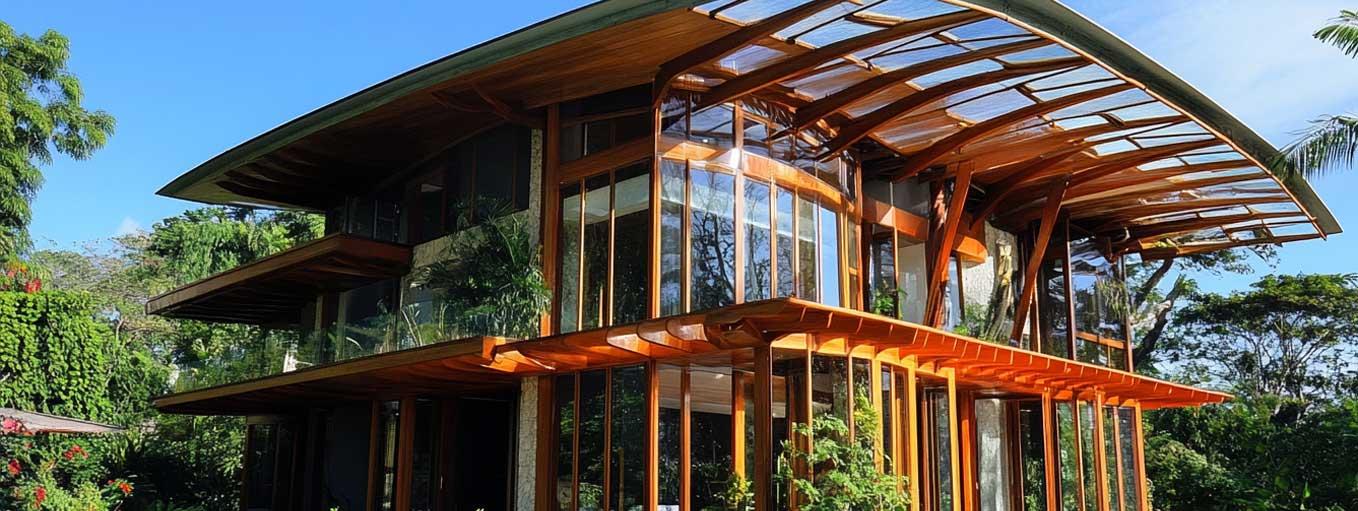
Every year on April 22, the world comes together to celebrate World Earth Day, a global reminder of our responsibility toward the planet. The theme for this year, "Our Power, Our Planet," highlights the role we, as individuals and communities, play in shaping a sustainable future.
While industries across the board contribute to environmental degradation, the construction sector alone accounts for nearly 35-40% of global carbon emissions. Yet, we cannot avoid the need to build—but what we can certainly do is build responsibly.
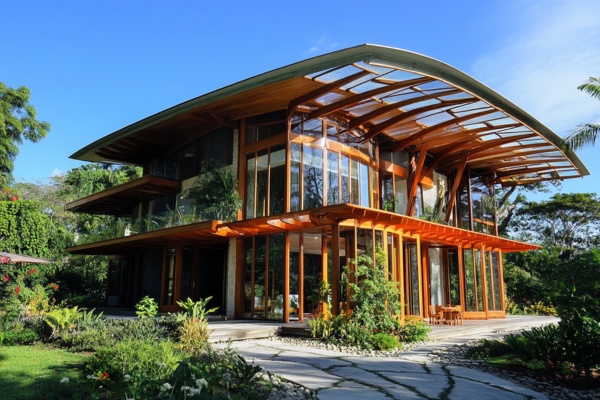
Efficient Planning and Impactful Designs Contribute to Energy-Efficency.
Architects and designers hold the power to drive a fundamental shift in the way buildings impact the environment. Their responsibility goes beyond creating visually stunning structures and must ensure that their designs contribute to a healthier, more sustainable planet.
A good design is incomplete without the right detailing, and detailing is crucial not only for aesthetics but also for the performance, energy efficiency, and sustainability of a building.
Smart planning plays a crucial role in reducing the energy consumption of buildings. Beyond spatial organization, planning impacts thermal comfort, daylight penetration, and cooling loads. Thoughtful orientation—such as placing buffer zones like bathrooms or storage areas on the south and west facades—can significantly reduce heat ingress in tropical climates.
Similarly, compartmentalization can limit air-conditioning loads, ensuring energy is only consumed where necessary. Designing multipurpose spaces also optimizes the building footprint, reducing resource consumption while maintaining functionality.
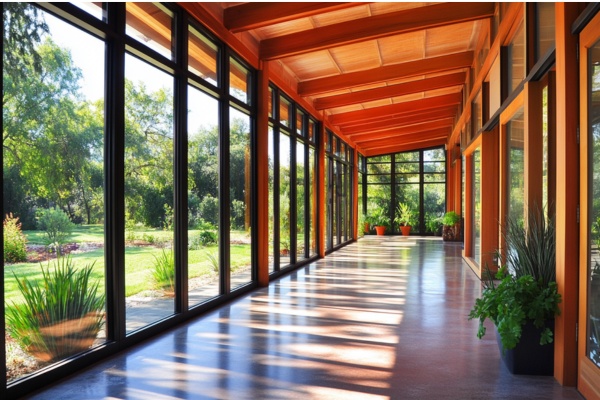
High-performance Glass Glazing Solution for Thermal Indoor Comfort.
In a tropical country like India, solar passive design principles can greatly reduce dependence on artificial cooling. Simple yet effective strategies such as cross ventilation, insulated walls and fenestrations, and self-shading facades help in maintaining indoor comfort while minimizing energy usage. Integrating these elements reduces lifecycle costs and enhances occupant well-being, making buildings more sustainable in the long run.
The building envelope, comprising facades and roofs, acts as the first line of defense against heat gain or loss. Well-insulated walls and roofs can prevent heat ingress in warm climates and retain warmth in colder regions.
Fenestrations, such as windows and skylights, play a dual role—they bring in natural daylight, reducing artificial lighting costs, but can also be a source of unwanted heat gain or loss.
Choosing high-performance glass solutions can mitigate these challenges.
Solar control glass helps reduce heat gain in tropical climates, minimizing air-conditioning requirements.
Low-E glass prevents heat loss in cold regions, ensuring better insulation.
Insulated glass units (IGUs) enhance thermal efficiency, reducing overall energy consumption.
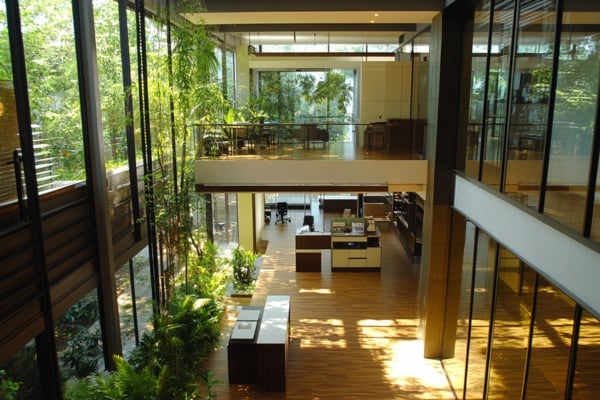
Low-Carbon Glass with Solar Control Coatings in Facade Enhance Sustainability
Every material choice contributes to the embodied carbon footprint of a building. Opting for locally sourced, recycled, and low-carbon materials can significantly reduce environmental impact. Sun-dried bricks, fly ash bricks, bamboo, and mud are some well-known sustainable materials.
When it comes to glass, innovations in manufacturing have made it possible to produce low-carbon glass, which contains up to two-thirds recycled content and is produced using renewable energy sources. This eco-friendly glass solution not only reduces embodied carbon but can also be enhanced with solar control coatings, making it both sustainable and high-performing.
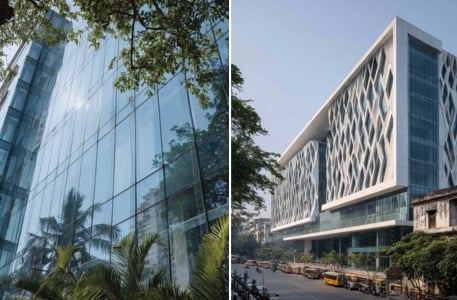
Fenestration plays a vital role in energy efficiency. Thoughtfully placed windows and high-performance glazing solutions (solar control and/or low-E glass) help optimize daylight while minimizing heat gain or loss. This, in turn, reduces cooling and lighting loads, making buildings more energy-efficient and cost-effective in the long run.

Design with Purpose and Build for the Future
As shapers of the built environment, architects and designers have the power to drive positive change. Every design decision, every material choice, and every construction detail contributes to the larger goal of a sustainable planet.
By integrating solar passive strategies, energy-efficient glass solutions, and low-carbon materials, one can significantly reduce the carbon footprint of the buildings they design and create spaces that are not only aesthetically pleasing but also environmentally responsible.
This Earth Day, let’s reaffirm to making thoughtful, responsible, and innovative choices towards ensuring a healthier planet for future generations.
How can glass contribute to energy-efficient and sustainable buildings?
Innovations in glass manufacturing have led to sustainable solutions like solar control glass, low-E glass, and insulated glass units (IGUs), which optimise daylight, reduce heat gain and glare while enhancing thermal indoor comfort.
What role do architects play in promoting sustainability in the built environment?
Architects and designers should focus on efficient planning, strategic building orientation, and smart compartmentalisation by integrating eco-friendly materials, passive design principles, and energy-efficient technologies. These strategies reduce reliance on mechanical devices and enhance energy conservation, creating sustainable and eco-friendly spaces.
How does low-carbon glass reduce emissions and impact a building’s sustainability?
Low-carbon glass has low embodied energy because it is manufactured using renewable sources of energy. Moreover, the use of a high percentage of recycled content leads to the conservation of virgin materials, which again reduces the depletion of natural resources.
Rasya is an architect and sustainability consultant based in Delhi. With over 10 years of experience in core architecture, and exposure to working in diverse contexts including India, Belgium and Ethiopia, she brings a multi-disciplinary approach to her work. Read More