Fire safety remains a fundamental pillar of contemporary building design, where the protection of life, property, and continuity of operations is paramount. As buildings become more open, transparent, and multifunctional, architects and consultants are increasingly required to reconcile stringent fire safety mandates with spatial openness and design intent. Beyond conventional safety measures, fire-rated glass has emerged as a sophisticated solution that integrates structural performance, fire containment, and design transparency.
However, fire-rated glass does not perform in isolation during real fire events. Its effectiveness depends on how it is specified, tested, and installed as part of a complete, certified system. Any misalignment between classification, system components, or installation methodology can significantly compromise real-world fire safety.
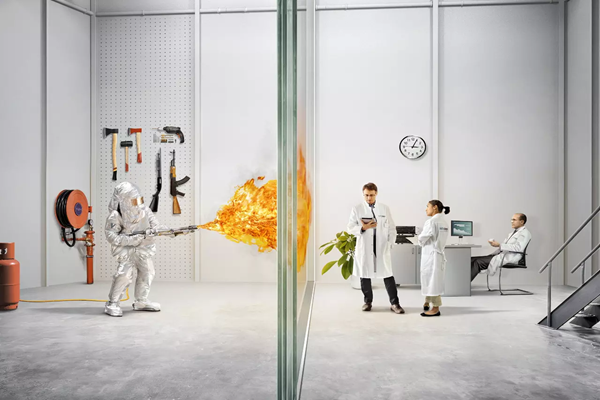
Tested and certified fire-resistant glass solutions for fire safety
This article provides a professional guide to fire-rated glass systems, examining their classifications, applications, and the regulatory standards that govern their use.
It also highlights why a system-based approach—rather than product-led specification—is critical to achieving both compliance and dependable fire performance in modern buildings.
In fire scenarios, fire-rated glass derives its performance from the system in which it is installed. Treating fire-rated glass as a standalone product, rather than as part of a tested assembly, introduces risk at both the design and execution stages.
Vetrotech Saint-Gobain follows a system-based approach to fire protection, where glass, framing, fixings, hardware, and installation protocols are tested and certified together. This ensures that the fire-resistance performance demonstrated during testing is reliably replicated on site.
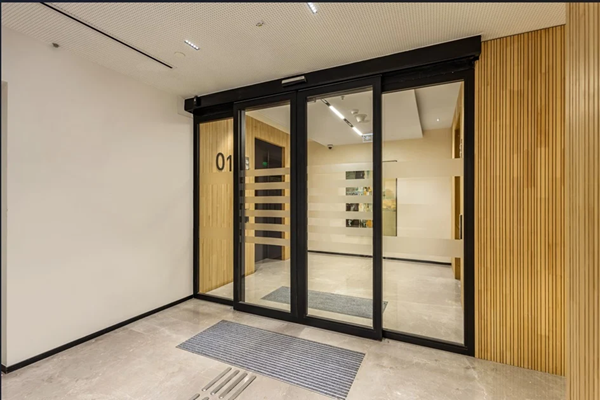
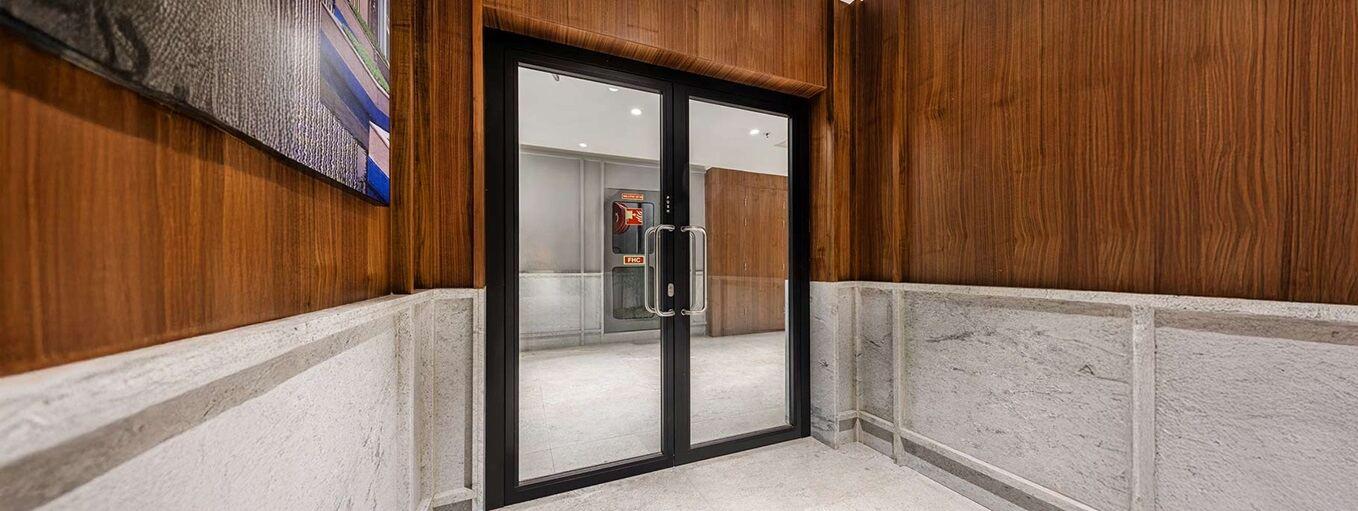
VDS® fire-rated glazed system for performance and architectural integration
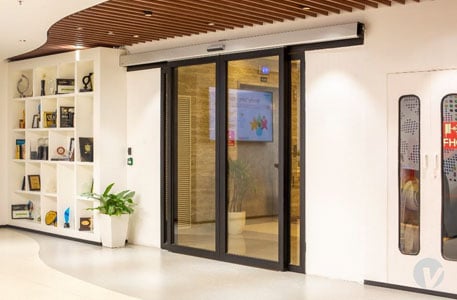
Vetrotech Design Solutions® (VDS®) is a comprehensive portfolio of tested fire-rated systems, including swing doors, sliding doors, partitions, and curtain wall applications. The range is classified across EW and EI categories and is designed to address diverse building types while maintaining transparency, safety, and design flexibility. All Vetrotech systems undergo rigorous third-party testing in accordance with international standards, providing specifiers with confidence that regulatory compliance and real-world performance are fully aligned.
Also Read Secure Your Home with Vetrotech’s High-Security Glass
Standard glass lacks the resilience to withstand high temperatures and rapidly fails when exposed to fire, allowing flames, smoke, and heat to spread quickly. In contrast, fire-rated glass is engineered, tested, and certified to resist fire for a specified duration, facilitating compartmentalization of spaces and enabling safe evacuation while preserving structural integrity.
Depending on its classification, fire-rated glass can contain flames and smoke, limit radiant heat transfer, or restrict temperature rise on the non-fire side. When integrated into stairwells, corridors, facades, and partitions, fire-rated glass enables effective fire containment without compromising daylight access or visual continuity.
Fire-rated glass is classified based on its capacity to resist fire, limit heat transfer, and control smoke propagation. Correct selection ensures optimal protection for occupants and property.
E Classification (Integrity): Contains flames and smoke within a compartment. Commonly applied in fire doors and partitions where localized containment is the primary objective.
EW Classification (Integrity + Radiation Control): Restrains both flames and heat radiation, making it suitable for windows, facades, and doors adjacent to escape routes.
EI Classification (Integrity + Insulation): Offers full protection by maintaining compartment integrity and limiting heat conduction, ideal for skylights, glass floors, and high-occupancy zones.
D/DH Classification (Smoke Control): Specifically engineered to manage smoke movement, ensuring safe evacuation routes remain unobstructed.
Classification must align with tested framing systems, accessories, hardware, and installation methodologies to ensure certified performance is achieved in practice. Selecting the correct classification depends on building type, occupancy, regulatory requirements, and intended use of the space.
Frames, fixings, and hardware are integral to the fire performance of glazed systems and must never be treated as secondary components. Even high-performing fire-rated glass can fail prematurely if paired with non-tested or incompatible frames and accessories.
Fire-rated framing systems are engineered to accommodate thermal expansion, maintain stability, and retain the glass throughout the certified fire-resistance period. Hardware such as hinges, closers, locks, and seals must also be tested as part of the complete assembly to ensure consistent performance under fire exposure.
Compliance with internationally recognized fire safety standards is essential to ensure that fire-rated glass systems perform as intended in real-world scenarios. Key standards include:
EN 13501-2 (Europe): Provides fire classification for construction products and elements, specifying requirements for integrity (E), radiation control (EW), and insulation (EI). Compliance ensures that materials adequately contain fire and limit heat transfer in designated compartments.
BS 476 (United Kingdom): Establishes fire-resistance criteria for walls, floors, doors, and glazing, emphasizing compartmentalization and safe evacuation in line with UK building regulations.
ASTM E119 (United States): Defines testing methods for structural and non-structural elements, assessing duration and effectiveness of fire resistance in diverse applications.
Understanding these standards is critical for ensuring safe building design, meeting legal mandates, and selecting fire-rated glass with the appropriate performance characteristics. Misinterpretation of these standards, especially when products are substituted or systems are partially replicated, can significantly compromise real-world fire performance. Compliance with these standards must extend beyond product selection. It must include system integrity, installation methodology, and adherence to tested configurations on site.
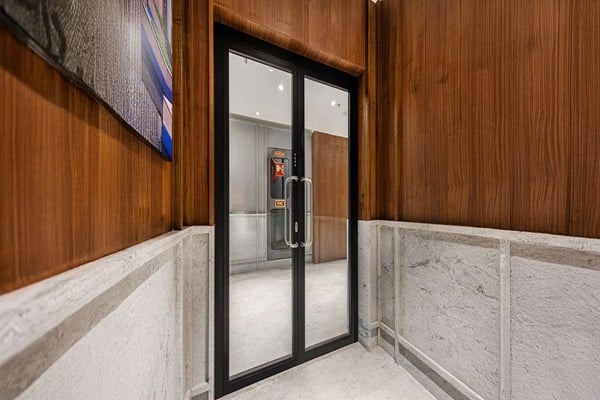
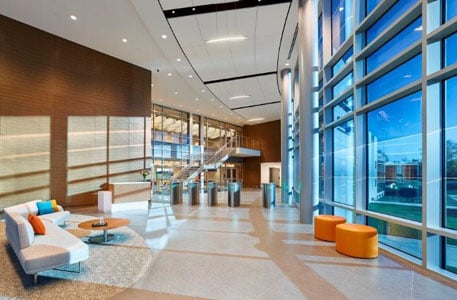
Fire-rated glazed system safeguarding stairwells, lobbies, and key areas in modern buildings
Fire-rated glass solutions are versatile and suitable for a wide array of building applications. Their correct specification and implementation ensure compliance with fire safety mandates while supporting architectural intent:
High-Rise Buildings: Fire-rated glass systems in stairwells, lobbies, and elevator cores prevent vertical fire spread, protecting critical evacuation routes and structural elements.
Healthcare Facilities: EI-rated glass systems are essential to ensure patient safety and uninterrupted evacuation, particularly for occupants with impaired mobility.
Educational Institutions: Fire-rated glass systems ensure safe evacuation and effective containment, while providing a secure learning environment for students and staff.
Public Infrastructure: Airports, metro stations, and train terminals use smoke-control glass to maintain safe egress for large crowds, balancing fire containment with operational efficiency.
Hospitality Sector: rated glass systems integrated into lobbies, kitchens, and stairwells, deliver fire safety without compromising design sophistication. These applications demonstrate that fire-rated glass is a strategic, multifunctional material, enhancing safety across sectors while preserving architectural aesthetics.
Modern building design increasingly integrates fire-rated glass as both a functional safety element and an architectural feature. Transparency, natural light, and visual continuity can coexist with regulatory compliance, offering a holistic solution for modern construction challenges.
Transparency, natural light, and visual continuity can coexist with regulatory compliance.
When selecting fire-rated glass, professionals should consider:
Fire-rated glass is evolving to meet stricter regulations while supporting innovative, visually appealing designs. It is no longer solely a safety feature but a strategic material for contemporary architecture.
Fire-rated glass represents a critical investment in building safety, enabling the containment of flames, heat, and smoke while maintaining structural and aesthetic integrity. By understanding classifications, applications, and regulatory standards, architects and consultants can make informed decisions that enhance occupant safety and building performance.
Early engagement with specialist system providers ensures design intent, compliance, and tested fire performance are fully aligned.
Early engagement with specialist system providers is essential to ensure that design intent, compliance, and tested fire performance are fully aligned. Working with system-based manufacturers such as Vetrotech Saint-Gobain, project teams can confidently deliver fire protection systems that are reliable, compliant, and architecturally integrated.
Surya Prakash S. serves as the Testing and Certification Manager for India, Middle East, Asia, and Oceania at Vetrotech Saint-Gobain, specializing in fire resistant and high security glass systems. Read More