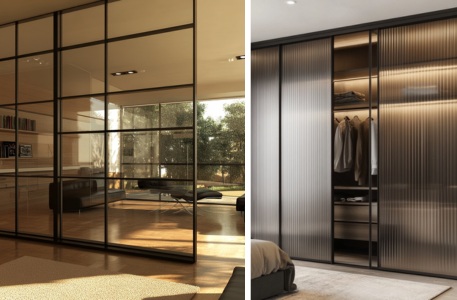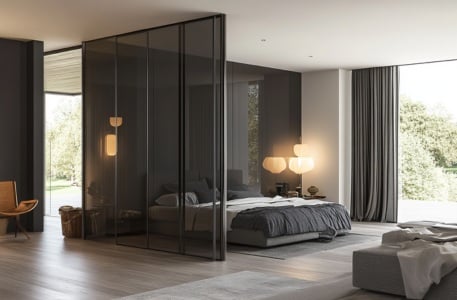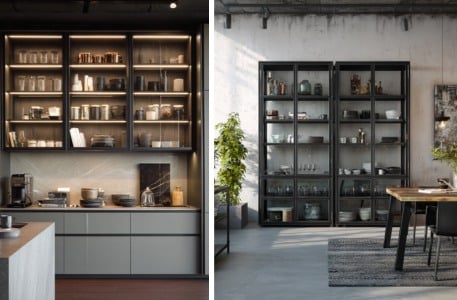

Clearly, the beauty of glass reflects in its versatility. Look around, and you will be dazed by the sheer number of ways that glass can adapt itself to. From furniture to facades, from windows to doors, glass has broken every barrier to emerge as more than just a building material. An aesthetic value-addition and a functional necessity, today, glass is indispensable to every living and working space.
Indeed, what makes glass the go-to choice is its ability to meet different needs. There is glass when you want light, and even when you don't.
There is glass when you need privacy, and when you don't. So much so, that even the same glass can switch from one mode to another at the flick of a switch.
More on that later, but for now, let us see how the very basic clear and reflective glass work wonders to amp up spaces, be it at home or at work.
Clear Glass is ordinary float glass and does not come with any coating. It is the way to go if you are looking at meeting the following priorities:
Clear Glass offers the highest levels of transparency. It comes in handy when visibility gains precedence over privacy. For instance, some of the applications where clear glass can be used are furniture, partitions, staircases, balustrades, balconies, shower cubicles, doors and windows.

Clear Glass, as its name suggests, is best-suited for applications that demand clarity. In fact, there are high-definition and extra-clear glasses available to deliver a higher degree of clarity. For example, be it in retail showrooms or display cabinets at home, clear glass is clearly the choice for showcasing products, artefacts, etc.
Reflective Glass is also ordinary float glass, but with a metallic coating that is designed to cut off solar heat. It is ideally suited to cater to the following parameters:
The special metallic coating on the reflective glass helps to provide visibility from inside but prevents it from outside, therefore ensuring privacy. Reflective glass is used mainly for structural façade glazing. It is also a good option for window glass for those who treasure their privacy.
Among the biggest advantages of reflective glass is its ability to provide solar control and glare control. Not only does it prevent harmful UV rays, helps cut down on artificial lighting and heating, and therefore energy bills, it also ensures occupant wellbeing with better thermal comfort. Reflective glass for windows is among its most popular uses.
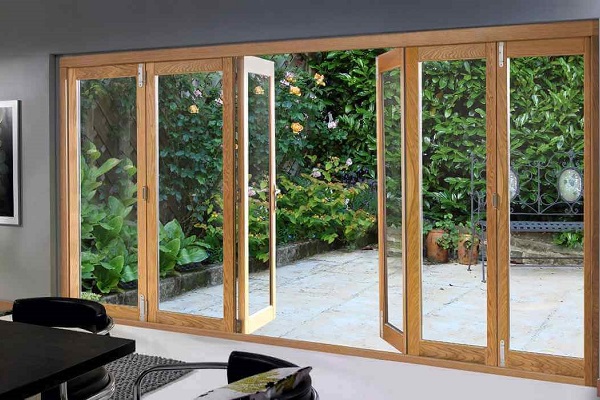
Clear Glass vs Reflective Glass
Clear glass and reflective glass have different properties and performance characteristics.
Clear glass has high transparency and low solar reflectance, while reflective glass has moderate to low transparency and moderate to high solar reflectance.
Clear glass and reflective glass are both durable and can be customized to a limited extent.
Here's a quick look at some of the salient properties of both clear glass and reflective glass:
| Properties | Clear Glass | Reflective Glass |
| Coating | Does not come with coating | Comes with metallic coating |
| Heat Transmission | Allows nearly 80% to pass through | Reflects away nearly 70% of heat |
| UV Protection | Does not ensure protection from UV Rays | Ensures protection from UV Rays |
| Glare Control | Low | High |
| Colour | Transparent | Comes in variety of colours |
| Solutions | Transparency and Clarity | Privacy and Solar Control |
| Customization | Limited | Limited to coating colour and finish |
| Applications | Display Cabinets, Furniture, Glass Partitions, Staircases, Balustrades, Balconies, Shower Cubicles, Doors and Windows | Facades and Windows |
While both clear glass and reflective glass have their own distinct properties, a prudent mix of both can take glazing to the new levels of perfection.
Whether it is clear glass or reflective glass, in the end, glass is clearly the winner when it comes to choosing a smart, sophisticated and sustainable building material. Read more - Is Glass the New Wall?
What is the main difference between clear glass and reflective glass?
The main difference between clear glass and reflective glass lies in their appearance and function. Clear glass is transparent and allows full visibility, making it ideal for windows and doors where natural light and views are important, while reflective glass has a mirrored finish that offers privacy by reflecting light.
When should clear glass be used in home design?
Clear glass should be used post toughening for sliding doors, and interior partitions where transparency and openness are desired and the goal is to maximize natural light and maintain unobstructed views. It is recommended to opt for high performance glass such as solar control glass for windows and facades
What are the benefits of using reflective glass in a building?
Reflective glass provides privacy by reflecting exterior light, making it difficult for people to see inside during the day. It also reduces glare and helps control solar heat gain, making it an energy-efficient choice for windows and facades in buildings.
How does reflective glass contribute to energy efficiency?
Reflective glass contributes to energy efficiency by reducing the amount of solar heat that enters a building, thereby lowering cooling costs. It also minimizes glare, improving comfort inside the building without compromising natural light.
What factors should be considered when choosing between clear and reflective glass?
When choosing between clear and reflective glass, consider factors such as the desired level of privacy, energy efficiency, and the aesthetic effect. Clear glass is ideal for transparency and natural light, while reflective glass is better for privacy, reducing glare, and enhancing energy efficiency.