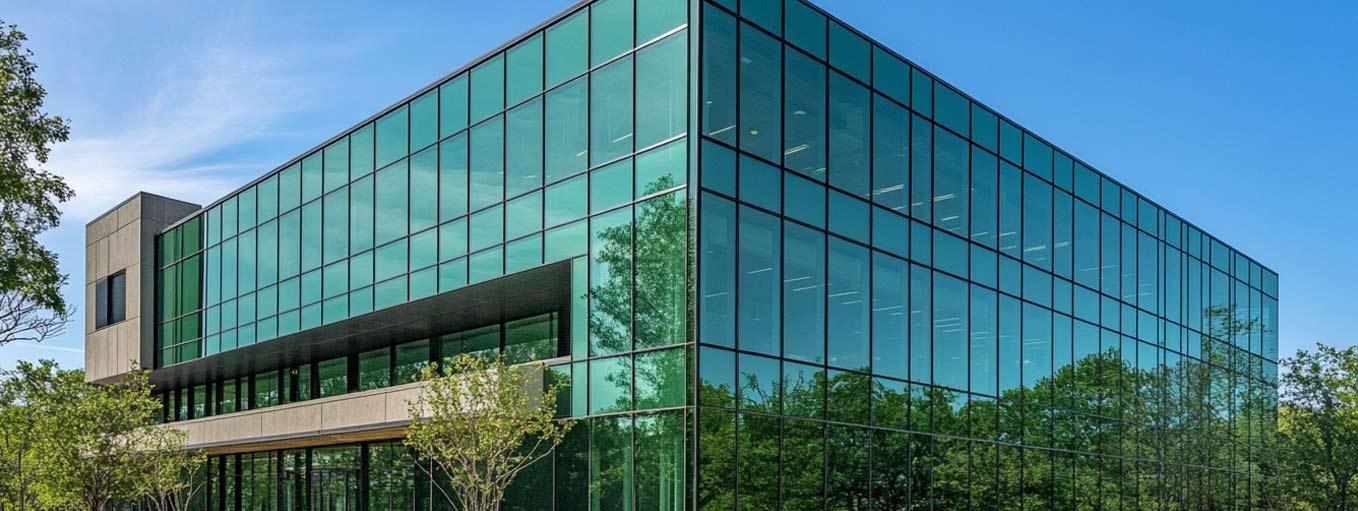
As our planet grapples with intensifying climate conditions, sweltering heat waves, unpredictable monsoons, and widespread droughts, there's a growing urgency to rethink the way we design and construct.
In a rapidly developing country like India, where much of the expected infrastructure development is yet to be built, the choices we make today will have a profound impact on the environment and quality of life.
To achieve Net-Zero Energy Buildings (NZEBs), every design element must contribute to energy efficiency and carbon reduction. Strategies and materials that lower the operational energy demands of buildings, such as enhancing insulation, optimising HVAC systems, and integrating passive design elements, must be implemented.
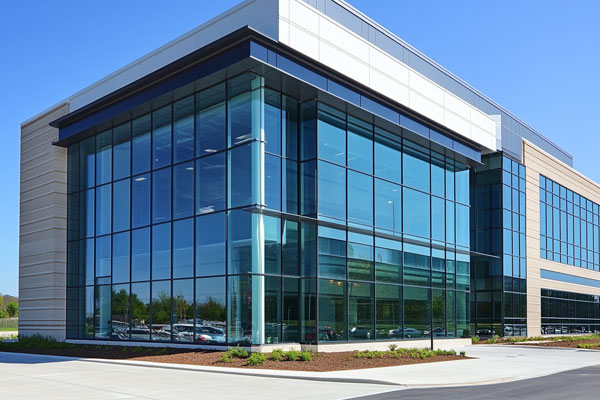
Solar Control Glass in Facades Creates Cooler, Energy-Efficient Interiors
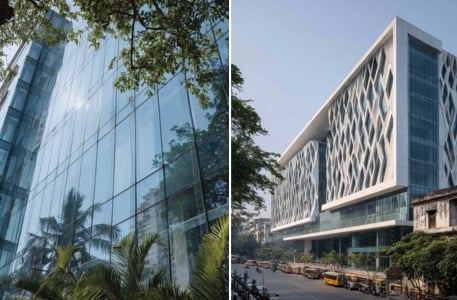
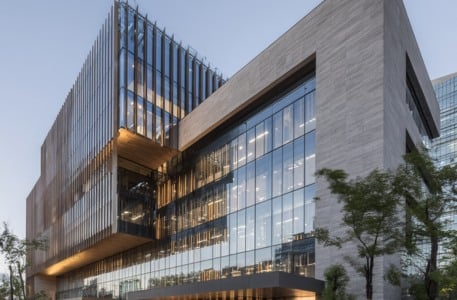
In tropical architecture, the right choice of glass can dramatically influence daylighting, thermal comfort, and energy consumption. When selected and applied thoughtfully, a high-performance glazing solution becomes a powerful tool in reducing the building's operational carbon footprint. This is where solar control glass steps in, offering a smarter, climate-responsive solution.
Solar control glass is engineered to reflect and filter incoming solar radiation. A high-quality solar control glass can reduce heat gain through windows while blocking a substantial portion of infrared and ultraviolet rays.
Integrating solar control glass into façades and windows can reduce cooling loads, significantly lowering reliance on mechanical cooling systems and leading to substantial energy and cost savings.
Also Read Why You Need Solar Control Glass for Indian Buildings
The advantages of solar control glass extend beyond thermal comfort. By minimising energy consumption, it enables buildings to meet green certification standards such as GRIHA (Green Rating for Integrated Habitat Assessment) and LEED (Leadership in Energy and Environmental Design), both of which are gaining traction across India. These certifications are increasingly becoming prerequisites for urban development projects, public buildings, and private investments.
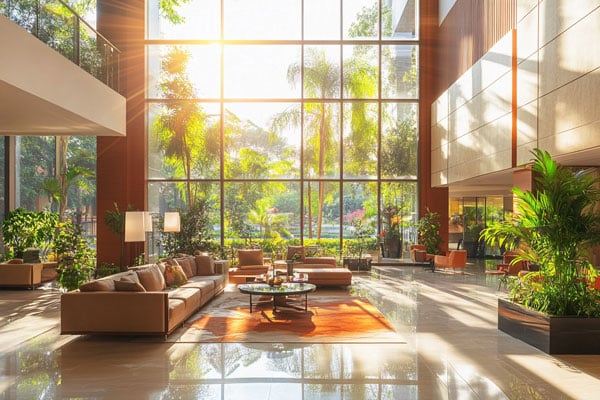
ORAE, Low-Carbon Glass Combines Aesthetic Elegance with High-performance Coatings
While operational energy reduction is important, the focus is now expanding to reducing the embodied carbon emissions associated with the production of construction materials. This is where low-carbon glass, such as Saint-Gobain's Oraé, becomes indispensable.
Oraé is India’s first low-carbon glass, setting new standards for responsive material innovation. Made by using 70% recycled materials and cleaner fuel sources like LNG, Oraé achieves a lower carbon footprint without compromising on aesthetics or performance. Its compatibility with high-performance solar control coatings makes it an ideal choice for Net Zero Buildings striving to minimise both operational and embodied emissions.
Oraé reduces harmful emissions by 54%, which is lower than those of conventional glass. It offers variations in size, but with the same quality, coating, and application as traditional glass to meet specific needs while reducing the carbon footprint, making it a practical solution for new constructions and renovations.
Also Read Top 5 Ways Sustainable Construction Boosts Air Quality & Well-Being
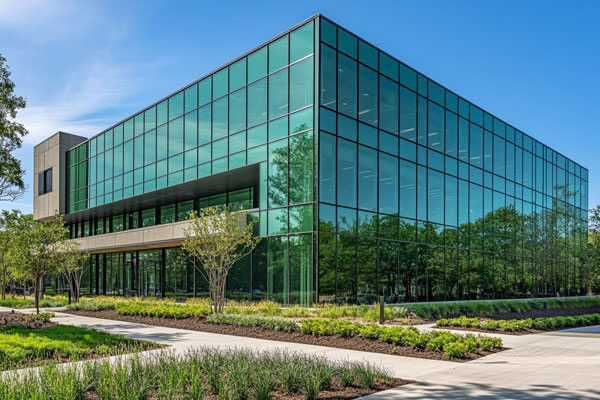
Green-Tinted Solar Control Glass Transforms Façades Into Climate-Responsive Envelopes
Saint-Gobain's commitment to carbon neutrality by 2050 aligns seamlessly with India’s national pledge to achieve Net-Zero emissions by 2070. As awareness for sustainability grows in the construction sector, low-carbon solutions like Oraé address the increasing demand for eco-conscious design without compromising on performance and aesthetic appeal.
This next-generation glass substrate is compatible with advanced solar control coatings, offering enhanced thermal insulation, UV protection, and reduced solar heat gain, slashing energy costs in buildings.
The transition to Net-Zero Energy Buildings is a shared responsibility, one that requires bold innovation, thoughtful material choices and long-term commitment.
Also Read Sustainability Principles, Values and Goals at Saint-Gobain Glass
What is low-carbon glass, and how is it different from regular glass?
Low-carbon glass is made from 70% recycled materials and cleaner energy sources. Compared to traditional glass, it significantly lowers embodied carbon, making it a preferred choice in green building materials.
Is solar control glass energy-efficient?
Solar control glass reduces the amount of heat entering any building, lowering the need for air conditioning. This leads to savings on energy costs and enhances energy efficiency.
Why is choosing the right glass important in sustainable building design?
Glass plays an essential role in green architecture. The right glazing solutions can significantly improve energy performance, lower costs, and contribute to achieving long-term environmental goals. In tropical climates, solar control glass, when paired with low-carbon substrates like Orae, helps cut embodied and operational carbon emissions, promoting sustainability.
Jahanavi Arora is an architect by profession and a writer by choice, with over 7 years of experience in architecture and design writing. She graduated from Chandigarh and believes that writing and architecture are similar as both are forms of art. Read More