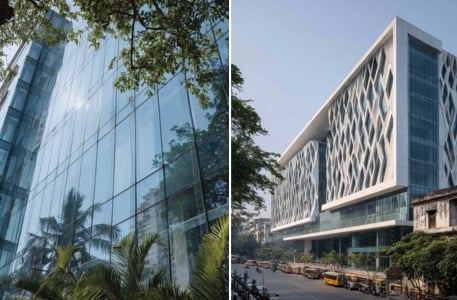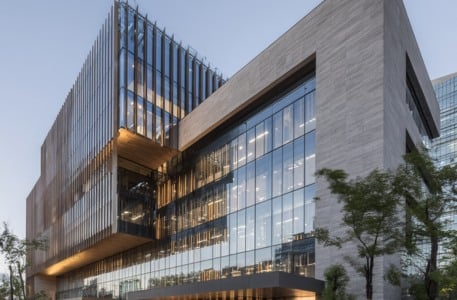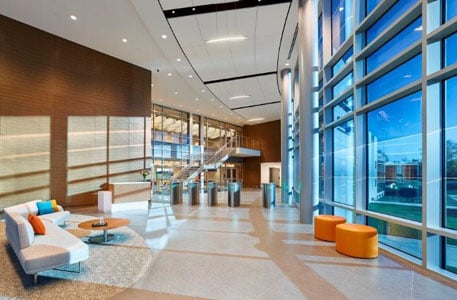
On every skyline, there is a defining gesture, be it a curve, a shimmer or a silhouette against the horizon. We call them landmarks. But before they become icons, they begin as facades.
A facade is the first dialogue between architecture and the city. It shapes identity, moderates climate, frames light, and increasingly, defines environmental responsibility. In contemporary facade design, the building envelope has evolved from a decorative frontage into a high-performing environmental system.
Today, facades stand at the frontline of resilience.
They shield.
They perform.
They inspire.
Historically, facades conveyed power, commerce, and culture. Whether it’s Gothic Cathedrals, Mughal palaces, or Art Deco towers, the buildings used their external expression to define eras.
Over time, facades have evolved from static envelopes into active mediators between climate, energy, function and form.
With rising global temperatures and increasing urban density, facades are treated as the primary interface between our perception and interaction with the built environment.
At the centre of this transformation lies one material: glass.
Glass architecture began its evolution in the 19th century with advancements in industrial glass production. What was once ornamental has become structurally robust, thermally intelligent, and technologically advanced.
Today’s high-performance glass can be toughened, laminated, insulated, coated, curved, and digitally engineered. Through advanced architectural glazing solutions, glass facades regulate solar gain, reduce glare, and enhance occupant well-being, all while preserving transparency and views.
Let us look at some of the world’s most iconic glass facades and the performance stories behind them.
Also read Why Modern Commercial Buildings Rely on High Performance Glass Facades
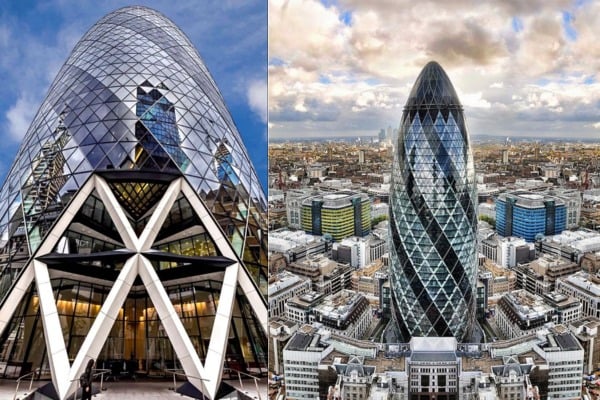
An Aerodynamic Glass Facade that Reduces Wind Loads while Maximising Daylight and Natural Ventilation.
The aerodynamic facade of 30 St Mary Axe, popularly known as The Gherkin, redefined London’s skyline.
The Gherkin’s curved facade is formed by 24,000 square meters of glass, arranged in a spiralling pattern of 5,500 glass panels. The design of the building reduces wind loads, maximises natural light, and makes the tower one of London’s most energy-efficient skyscrapers. This is climate-responsive architecture expressed through geometry and glazing.
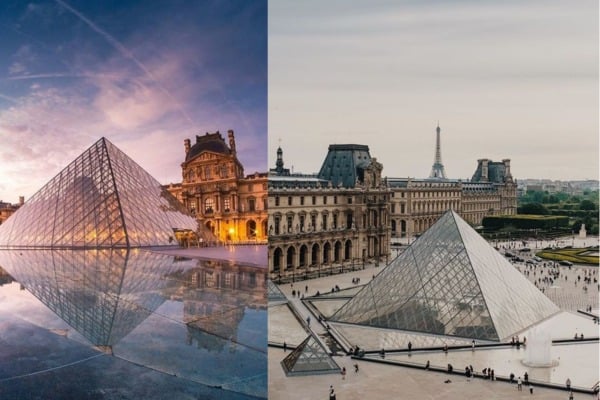
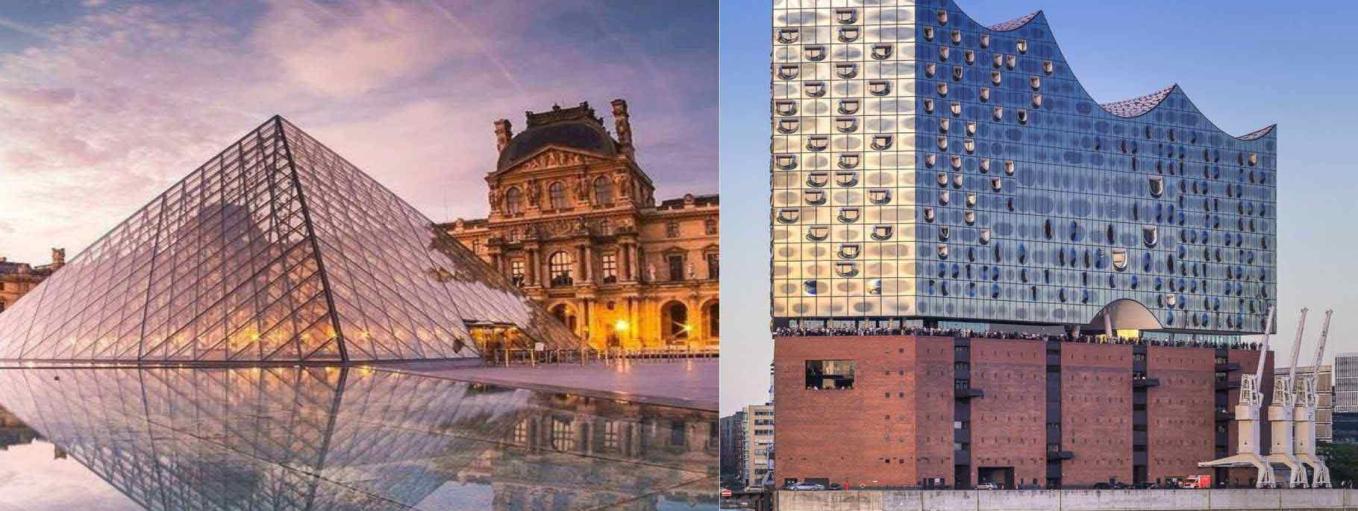
A Transparent Intervention that Bridges Heritage and Modernity Through Precision-Engineered Glass.
When the Louvre Pyramid was unveiled, it sparked debate. Today, it stands as a masterclass in transparency and material precision.
The Louvre Pyramid is built with 673 diamond-shaped glass panes, constructed with a special low-iron glass that eliminates the usual green tint, making the structure appear crystal clear and perfectly transparent against the Parisian sky. Here, glass creates a beautiful dialogue, maintaining visual continuity while introducing contemporary structure.
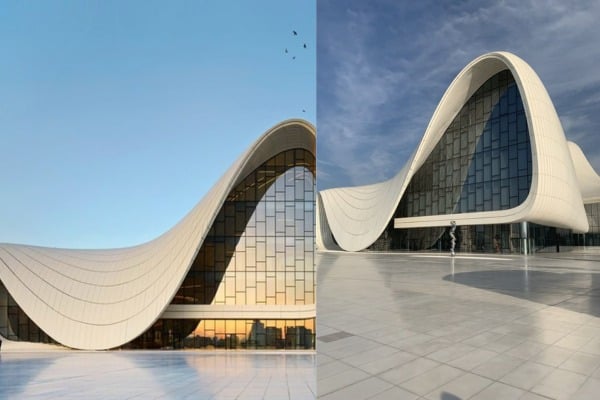
A Fluid Architectural Facade where Seamless Glazing Blurs the Line Between Wall, Roof, and Landscape.
Designed by Zaha Hadid, the Heydar Aliyev Centre challenges conventional facade character.
The flowing facade of the Heydar Aliyev Center designed by Zaha Hadid Architects, uses over 40,000 square meters of glass-fibre reinforced panels, seamlessly merging glass with curves so smooth that the building appears to have no joints at all; a continuous wave rising from the earth.
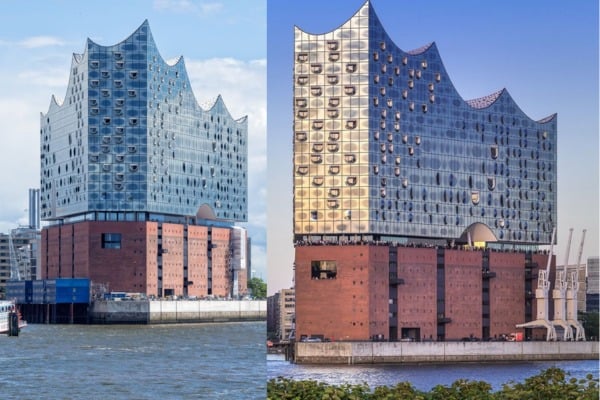
A Shimmering Glass Crown that Reflects the Riverfront while Optimising Light and Solar Performance.
The wave-like glass crown of Elbphilharmonie Hamburg, designed by the renowned Swiss architectural firm Herzog & de Meuron, is a unique work of art that sits within the historic city port.
The Elbphilharmonie’s wave-like facade is made of 1,100 uniquely curved glass panels, each individually crafted and partially treated with reflective, silvery dots that both reduce solar gain and create the illusion of shimmering water, making the building appear to merge with the Elbe River below.
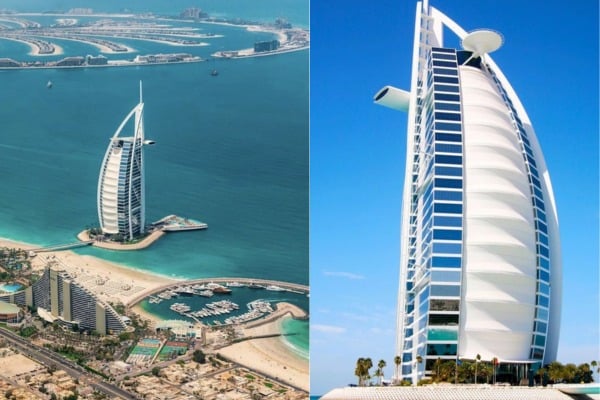
A Sail-Shaped High-Performance Facade Engineered to Withstand Extreme Desert Conditions with Elegance.
Internationally acclaimed for its visionary architecture, Jumeirah Burj Al Arab is a sculpted statement against the horizon.
The sail-shaped facade of Burj Al Arab is made of over 43,000 square meters of high-performance glass, specially treated with a Teflon-coated fibreglass fabric that reflects the harsh desert sun by day and transforms into a luminous canvas by night.
As cities pursue net-zero targets, the next generation of glass facades increasingly depends on intelligent envelopes, smart glazing technologies, and sustainable designs that optimize internal environments.
Rather than acting as static shells, today’s dynamic facades function as living architecture: responding to shifting climatic conditions, occupant needs, and energy demands. Saint-Gobain provides an array of advanced glass solutions - from solar control and low-E coatings to high-performance double-glazed units - that support architects and designers in creating climate-responsive and energy-efficient spaces.
Also read An Architect’s Guide to the 5 Best Building Glass Facades
What exactly is a glass facade?
A glass facade is an exterior building envelope composed of glass panels that allow natural light to enter interiors while providing a gleaming, modern architectural expression.
How do glass facades improve energy-efficiency in buildings?
With advanced glazing, such as Low-E coatings, insulated glass units (IGUs), and solar control glass, facades regulate heat gain/loss, reduce HVAC loads, and enhance thermal performance of the buildings.
What are the benefits of a glazed curtain wall system?
Curtain walls provide extensive natural light, strong energy performance with coated glass, improved sound control, and aesthetic impact, making them popular in commercial and high-rise buildings.
How are structural integrity and safety ensured in glass facade design?
Safety is achieved through engineered framing systems and laminated glass that withstands wind loads, thermal stresses, and offers high-impact resistance, which means it is safer than non-laminated glass, especially in high-rise buildings with a greater risk of breakage.
Jahanavi Arora is an architect by profession and a writer by choice, with over 7 years of experience in architecture and design writing. She graduated from Chandigarh and believes that writing and architecture are similar as both are forms of art. Read More