Commercial architecture in India has always been a fascinating blend of the formal and the informal, the traditional and the contemporary. From street stalls and open markets, much like the ancient Greek stoas, to mixed-use commercial spaces, home-and-shop typologies, multi-level shopping arcades, air-conditioned markets, high-end malls, corporate offices, and multiplexes, India accommodates every scale of commerce. This diversity makes the commercial landscape in India one of the most dynamic in the world.
Over the past two decades, with rapid globalisation, international investments, and an expanding economy, Indian cities have witnessed a significant shift in how commercial buildings are designed. Today’s commercial developments—whether retail, office, hospitality, or institutional—are expected not only to perform but also to stand out visually. As a result, the building façade has taken centre stage in modern commercial architecture.
A commercial building façade is no longer just a protective skin that shields the interiors from heat, rain, dust, and pollution. It is now
A brand statement: The facade reflects the identity, ethos, and values of the organisation or enterprises it houses.
An environmental buffer: With India’s tropical climate, high solar radiation, and rising energy costs, façades act as an environmental buffer by controlling heat gain, enabling natural daylight, and improving thermal comfort.
A design driver: The façade becomes a design driver—determining curb appeal, influencing footfall, and shaping the perception of the overall built environment.
A performance layer: Modern façades integrate energy-efficient materials, high-performance glazing, ventilated systems, and sustainable façade technologies.
In short, the façade in contemporary commercial architecture is a synergy of aesthetics, engineering, performance, and brand experience.
Architectural Glass for Facades Balance Functionality and Aesthetics
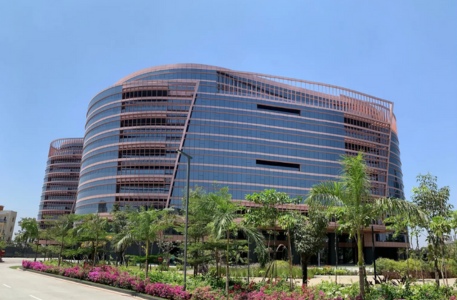
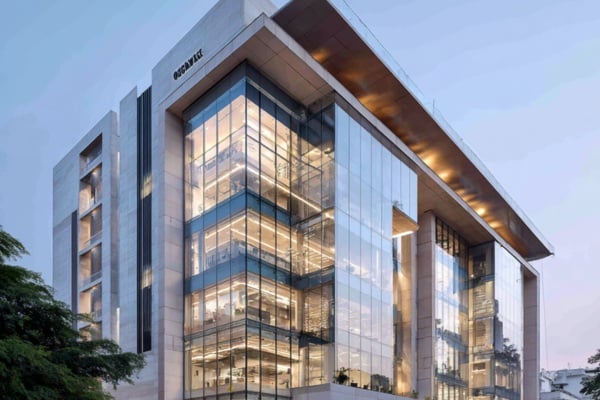
Glass continues to be the most popular façade material in modern commercial buildings. Beyond aesthetics, architectural glass today offers advanced performance features such as:
Solar control glass to reduce heat gain
Low-E (low emissivity) glass for thermal insulation
Laminated and toughened safety glazing
Double-glazed units (DGUs) for insulation
Tinted and reflective glass for glare control and privacy
Glass façades allow natural light to enter, improve indoor comfort, enhance retail visibility, and lend buildings a sleek, contemporary identity.
Also read Safer, Stronger, Smarter: The Impact Of Modern Glass Facades On Urban Skylines
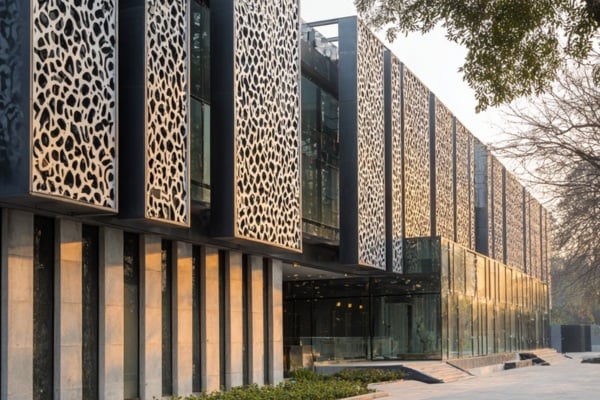
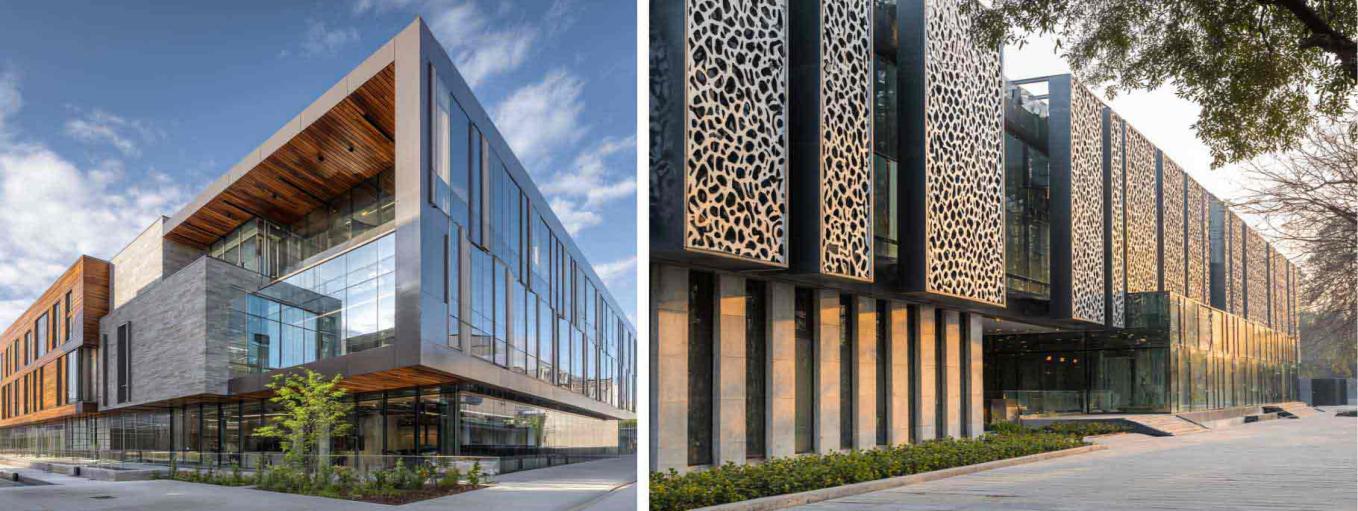
Perforated Screens with Glass Improve Shading and Thermal Performance
Architectural fins, louvers, and perforated screens are increasingly used to create dynamic commercial building façades. They:
Add rhythm, depth and visual interest
Reduce direct solar exposure
Improve shading and thermal performance
Create opportunities for branding and lighting effects
Fins can be designed in aluminium, steel, GFRC, or high-performance composite materials and work very well with glass façades.
Also read An Architect’s Guide to the 5 Best Building Glass Facades
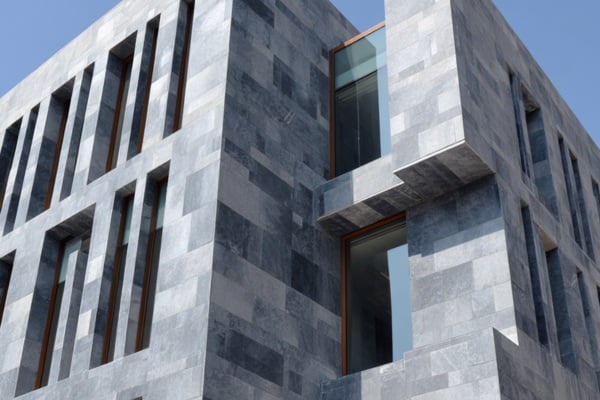
Solid Facades Shape Timeless, Sculptural Silhouettes
Solid façades crafted with stone, ceramic tiles, HPL, ACP panels, UHPC, or brick offer a powerful, monolithic character.
Communicate solidity and permanence
Provide superior thermal insulation
Reduce glare and heat gain
Suit hospitality, retail, and premium commercial developments
Using solid materials in combination with glazing helps create a balanced façade that is both sculptural and efficient.
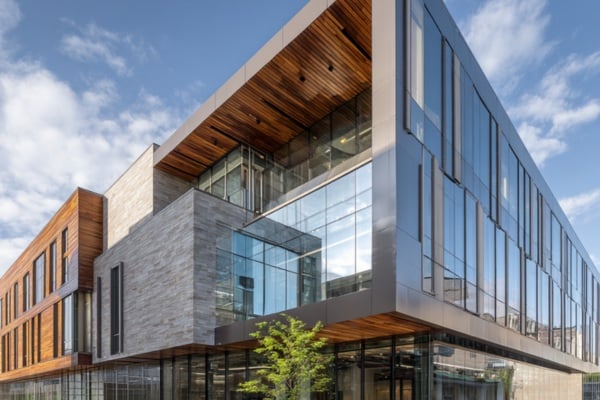
A Smart Fusion Of Materials that Turns Performance into a Bold Visual Language
Modern commercial buildings often blend multiple materials—glass, metal, stone, and shading systems—to achieve a multi-layered façade.
Improved daylighting
Ventilation strategies
Greater energy efficiency
A strong architectural statement
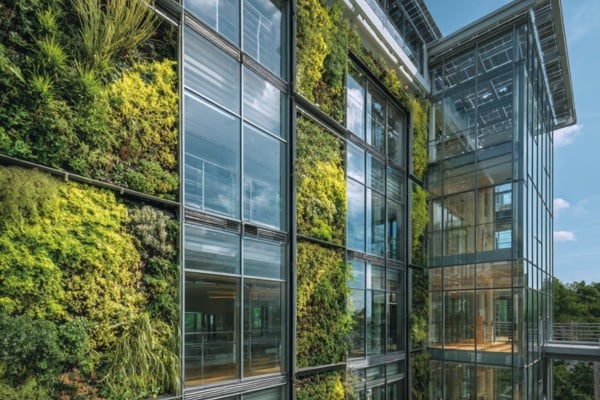
Green Facades and High-Performance Glazing Solutions Power the Future of Sustainable Design
With rising emphasis on sustainability , many commercial buildings are adopting:
Green façades and vertical gardens
High-performance glazing solutions
Double-skin façades
Ventilated façades
Photovoltaic (solar) panels integrated into façades
These systems help reduce heat gain, improve air quality, enhance building performance, and contribute to green building certifications like IGBC and LEED.
As India continues to evolve into a global commercial hub, the role of the building façade has become more critical than ever.
What is the role of a façade in modern commercial buildings?
A building facade is a functional and aesthetic layer that shapes brand identity, controls heat gain, enhances daylight, improves energy-efficiency, and elevates the overall experience.
Are glass façades energy-efficient in India’s climate?
Yes, glass facades designed with solar-control, low-E, reflective, DGU, or laminated glazing systems significantly reduce heat gain, improve indoor comfort, and lower energy consumption.
What is a hybrid or mixed-material façade system?
A hybrid façade integrates glass, metal, stone, and shading devices into one system to maximise performance, improve daylighting, and create a layered, visually dynamic appearance.
What maintenance is required for commercial façades?
Maintenance of facades varies by material and design choices, but includes cleaning schedules, sealant checks, glazing inspection, waterproofing reviews, and replacing worn shading components.
Rasya is an architect and sustainability consultant based in Delhi. With over 10 years of experience in core architecture, and exposure to working in diverse contexts including India, Belgium and Ethiopia, she brings a multi-disciplinary approach to her work. Read More