In the evolving landscape of luxury interior design, bathrooms are becoming immersive, spa-like sanctuaries designed to restore, rejuvenate, and elevate everyday living.
Today’s discerning homeowners are leaning into wellness-centric design, seeking experiences that rival boutique spas—without leaving their homes. At the heart of this evolution lies the intelligent use of elements, such as glass, mirrors, lighting, and different finishes that transform even the most compact spaces into serene retreats.
Mood Lighting and Mirrors Redefine Relaxation
With wellness becoming the focus of modern living, homeowners are increasingly investing in bathroom interiors that soothe the senses. Think heated floors, mood lighting, soaking tubs, rain showers, Jacuzzis, and ambient acoustics—all curated to deliver a multisensory escape. This transformation is driven by the growing desire to create private spaces that encourage mental clarity, physical relaxation, and aesthetic indulgence.
Also read Features for a Luxurious Bathroom
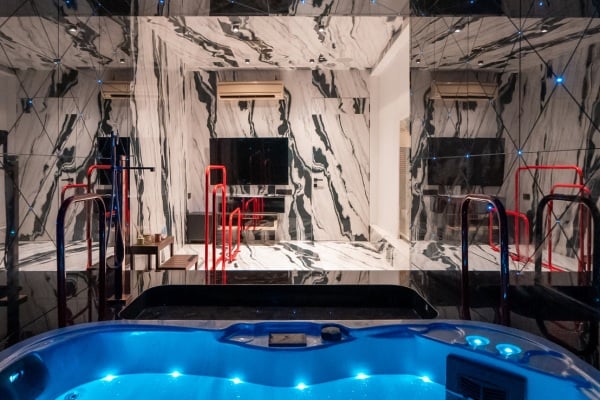
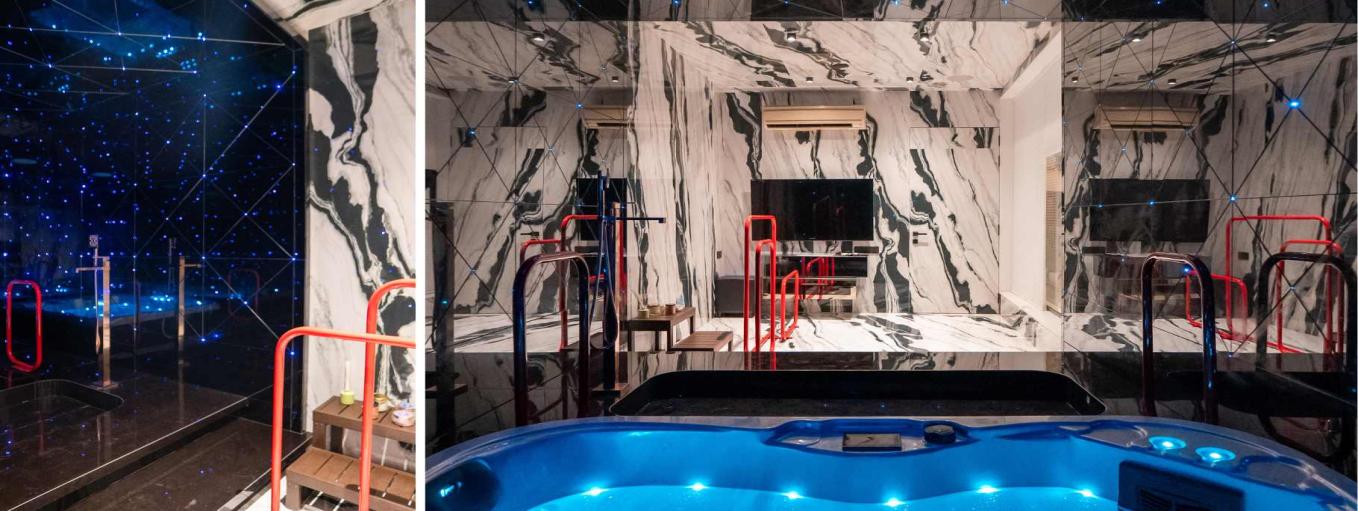
A Cosmic Retreat Wrapped in Black-Tinted Mirror Luxury.
One stunning example of this trend is the celestial-themed Jacuzzi space designed by Suchit Mutha and Mandar Khele of Tres Atelier.
Ready for a cosmic era? This immersive space blurs the line between reality and the stars.
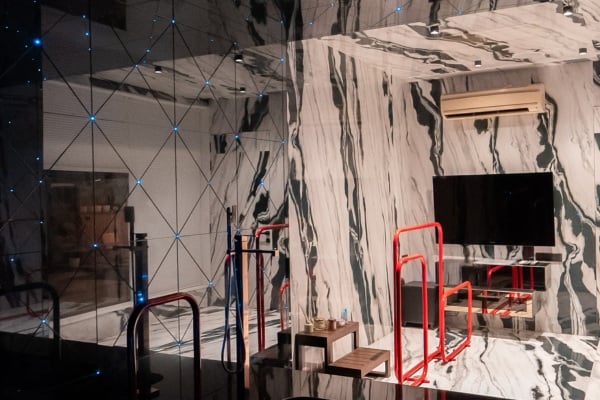
A Seamless Blend of Mirrors and Light
This interplay of mirrors and light transforms the room into a galaxy of calm—where reality fades and serenity begins. The design not only evokes visual drama but also offers a low-maintenance, high-luxury solution for a spa-style living experience
Also read Mirror Design Ideas to Elevate Your Bathroom Style
Today’s modern bathrooms are designed to curate experiences with muted or vibrant colour combinations, high-quality materials, matte and gloss finishes, and luxe accents to exude the space with understated luxury.
And yet, what truly brings these bathrooms to life is the intelligent use of glass and mirrors—not merely as decorative elements, but as dynamic tools that shape perception, amplify space, and craft atmosphere.
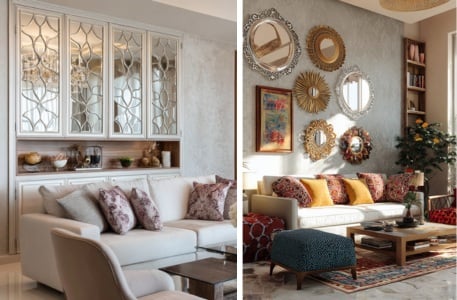
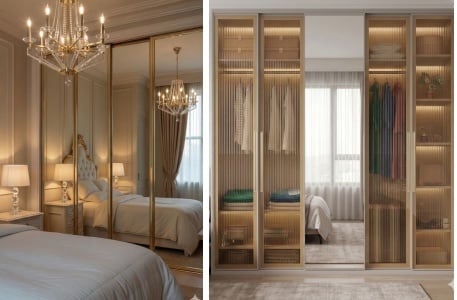
Mirrors serve as architectural statements in bathroom interiors. Be it antique mirrors that add soul to the space or smart LED mirrors that deliver both style and utility, mirror and glass ceilings or a mirror-clad ceiling that evokes drama and elegance—these reflective surfaces are central to shaping atmosphere and enhancing user experience.
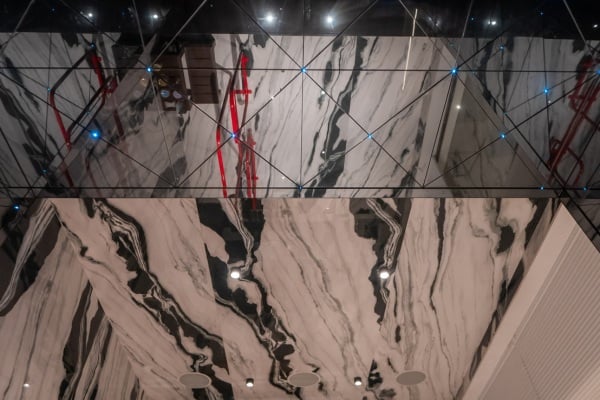
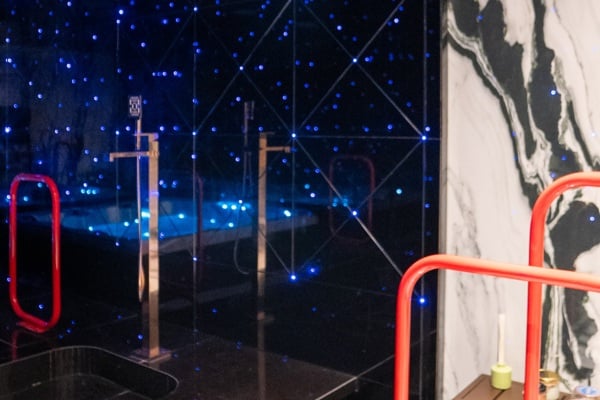
Fibre Optic Lights Elevate the Ceiling Drama.
In luxury bathroom design, ceilings are becoming active design zones—and lighting is the hero. Instead of relying on harsh overhead spotlights, designers are embracing low-level ambient fittings or embedding fibre optic lights into mirrored or glass ceilings to create a soft, spa-like glow.
Also read How to Design a Luxurious Spa-Style Bathroom
Glass partitions are the go-to choice for designers to maintain fluidity between wet and dry areas, offering visual clarity without breaking the design narrative. Whether frosted, clear, or tinted, these barriers help preserve natural light and sense of openness.
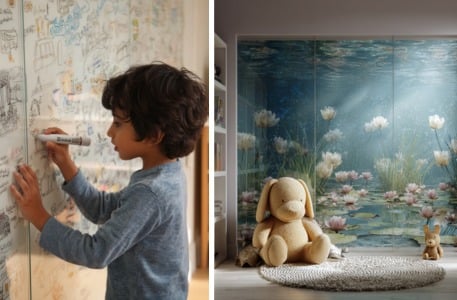
Lacquered glass or digitally printed panels bring in a splash of colour, texture, or even artistic expression—without compromising on cleanliness. These non-porous surfaces are easy to maintain, resistant to moisture, and free from grout lines—making them ideal for high-traffic areas that require both usability and aesthetic appeal.
Whether you're designing from scratch or renovating, the thoughtful integration of materials, smart features, glass, mirrors, ambient lighting, and hydrotherapy can transform any bathroom into a personal retreat. As seen in Tres Atelier's celestial Jacuzzi room, the possibilities are as countless as the stars.
Also read How to Keep Glass Bathroom Shelves Spotless and Organized
How can you make a small bathroom appear larger?
Use light colours and large mirrors to reflect natural light and create a sense of openness. Frameless glass showers or partitions and floating vanities can also make the space feel more expansive.
How do tinted or black mirrors enhance bathroom design?
Tinted or black mirrors add depth, reduce glare, and create a unique, luxurious ambience. They work beautifully with different styles and when combined with ambient lighting and luxe accents.
What are the benefits of using lacquered glass in bathroom design?
Lacquered glass offers a seamless, easy-to-clean surface that resists moisture and staining. It's ideal for high-humidity spaces and adds a bold pop of colour or texture on wall panels or vanity without the maintenance issues of tiles.
How can I create a spa-like bathroom at home?
Incorporate a calming colour palette, ambient lighting (such as fibre optic or LED systems), a Jacuzzi or soaking tub, natural elements like wood or stone, and smart technology, including touchless faucets and anti-fog mirrors.
Jahanavi Arora is an architect by profession and a writer by choice, with over 7 years of experience in architecture and design writing. She graduated from Chandigarh and believes that writing and architecture are similar as both are forms of art. Read More