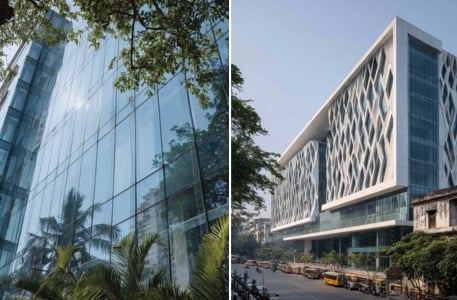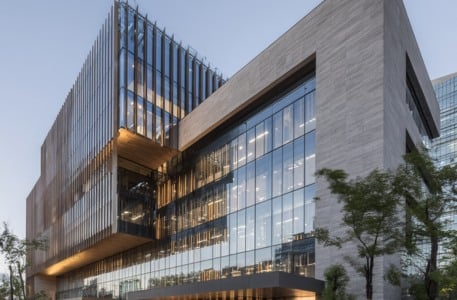
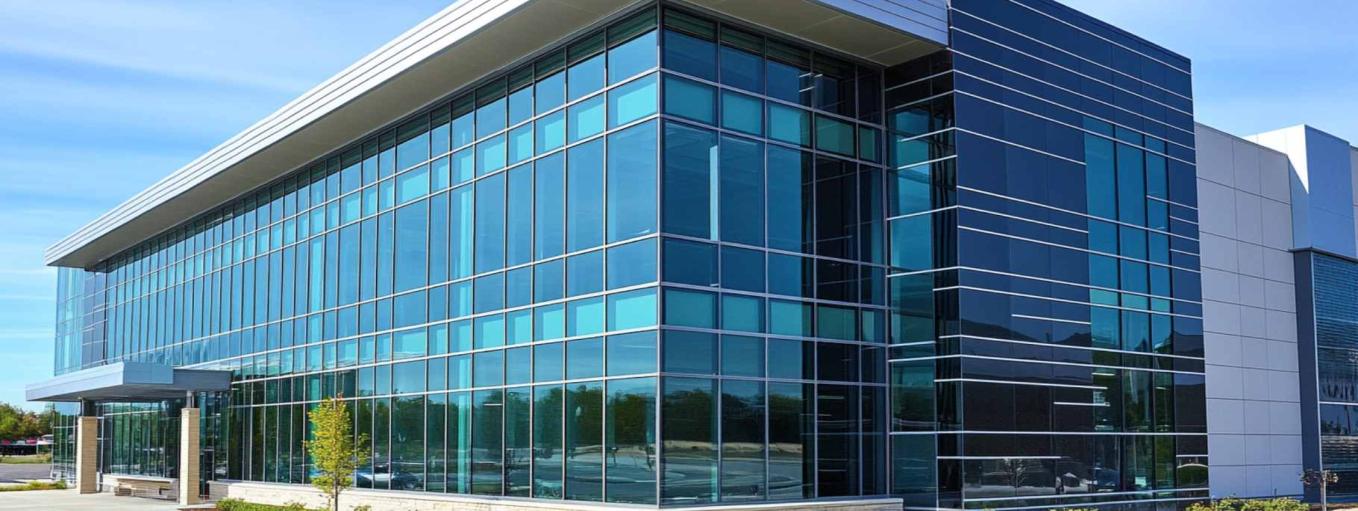
Glass for building facades have long been considered an iconic architectural element, especially for high-rises and corporate buildings. With thickness ranging from 6 mm to 12 mm, architectural glass not only lends a chic aesthetic to modern buildings, but also offers advanced functionality.
Glass does a lot more than make buildings look good; energy efficient facade glass helps regulate indoor temperature by blocking the sun’s heat while letting in natural light. This reduces dependence on electricity and has a positive impact on the health of the occupants.
Saint-Gobain has a wide range of glass for building facades that offer excellent thermal insulation and elevate the aesthetics from humdrum to scintillating, the Infinity series being the most popular.
Also Read: Safer, Stronger, Smarter: The Impact Of Modern Glass Facades On Urban Skylines
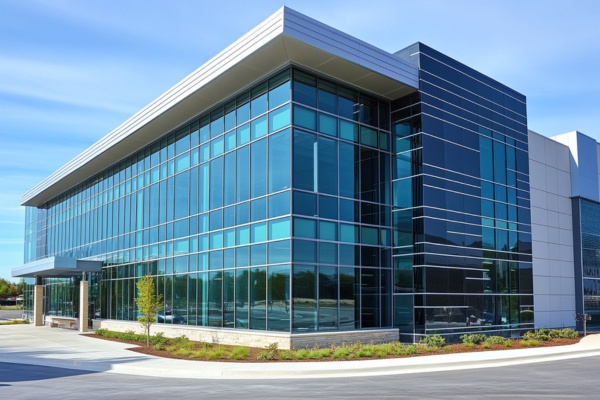
High-Performance Glass for Building Facades
When used for building facades, glass offers several benefits, ranging from visual appeal to functionality.
Thermal Insulation
The low-E coating on insulated glass minimizes heat gain, transmits light, and blocks UV rays. By minimizing transmission of heat and UV rays indoors, glass with thermal insulation prevents skin damage, fading of curtains and upholstery, and indoor plants from drooping.
Solar Control
Solar control glass not only reduces the heat that enters the building, but also cuts down on the glare of the sunlight.
Using solar control glass greatly reduces the need for air conditioning, as the indoor temperature is automatically reduced, thus bringing down dependence on electricity for cooling, and the associated expenses.
Safety and Durability
While the glass for building facades is available in 12 mm thickness also, toughened glass facade can be installed for additional security, especially for very tall high-rises, or where the chance of glass breakage due to strong winds is high.
Acoustic Comfort
Using glass for building facades may also help reduce the outside sounds of traffic, loud music or similar noise from entering, especially if laminated glass for facades is used.
Building occupants have reported significantly reduced noise levels with laminated glass facades as compared to those with concrete walls.
Aesthetic Appeal
Glass for building facades ups the glamour quotient of the building, elevating it into a stylish and stunning architectural masterpiece. Today, the wide variety of colours available is sure to satisfy the most discerning designer.
Also Read: 12mm Toughened Glass - Understanding Its Benefits And Applications
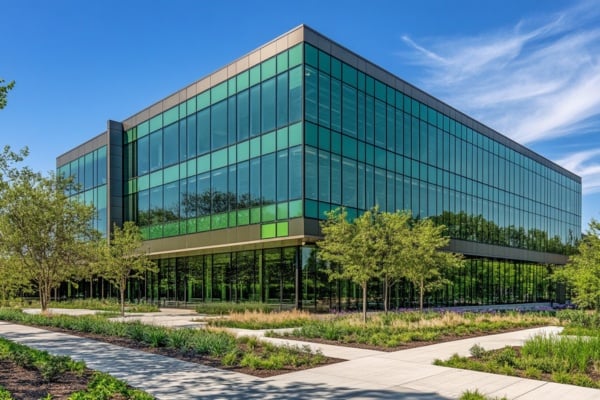
Solar Control Glass Providing Thermal Comfort
Solar Control Glass
As mentioned before, solar control glass reduces heat and glare, still allowing light in. This glass is ideal for warm climates as it minimizes heat gain. It also reduces the load on the air conditioner, and your electricity bills.
Reflective Glass
By reducing glare, reflective glass for buildings offers enhanced privacy, which is especially useful for lower floors of buildings.
With its glossy mirror-like finish, reflective glass boosts the visual appeal of the facade, and is used mainly in high-rises and commercial buildings.
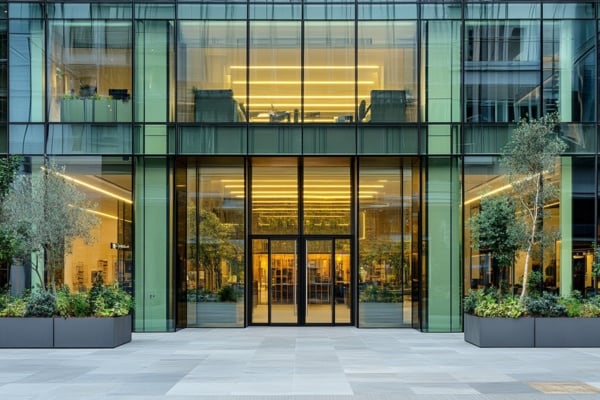
Shatterproof Laminated Glass for Building Facade
Laminated Safety Glass
Laminated glass is made up of two or more layers of glass bonded with PVB interlayer, and it provides improved security and noise reduction. Being shatter-resistant and having high resistance to impact, laminated safety glass is ideal where safety is a priority.
Insulated Glass Units (IGUs)
Double (DGU) or triple glazed insulated (TGU) glass units are used in facades to provide thermal and acoustic insulation. It consists of two glass panes separated by a layer of inert gas, diffusing heat transfer. It also prevents the formation of condensation on the glass.
Toughened or Tempered Glass
Glass that is heat-treated for maximum durability and safety is the perfect choice for high-rise facades and curtain walls, as there is little danger of breakage. In the rare event that it breaks, toughened glass breaks into small pebble-sized pieces, and not tiny fragments or shards.
Also Read: Interesting Differences: Toughened Glass vs Tempered Glass vs Annealed Glass
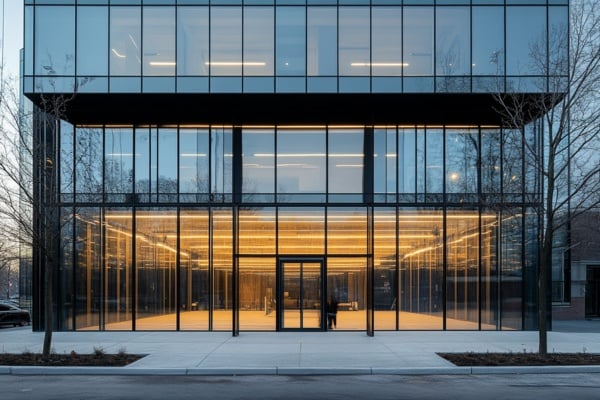
Glass Facades Boost Functional and Aesthetic Value
When you choose the appropriate facade glass based on climatic conditions and purpose, you can ensure:
Saint-Gobain offers a versatile range of high-performing facade glass that is designed to fulfil both aesthetic and functional requirements. Facade glass from Saint-Gobain offers advanced solutions like the SGG Infinity range with solar and thermal insulation capabilities, SGG Planitherm, for advanced solar control, and SGG Rosa, which radiates a rose gold hue.
The stunning palette of colours and finishes includes everything from demure blues to soothing greens and dazzling metallic colours, like SGG Quartz, SGG Midas Gold, SGG Kopper, SGG Pacific Sky, and SGG Nano Silver.
The wide range of facade glass from Saint-Gobain elevates architectural design and enhances energy efficiency at the same time.
Choosing the ideal glass for building facades goes beyond mere aesthetics; it is also about achieving the optimal blend of occupant comfort and safety, along with sustainability, energy efficiency, lasting performance, and cost savings.
From stylish modern homes to lofty commercial high-rises, glass from Saint-Gobain offers path-breaking solutions, customized for the architectural vision.
Saint-Gobain has earned a reputation for crafting the best-in-class facade glass with sustainable processes.
As the world’s leading manufacturer of glass, Saint-Gobain has several feathers in its cap, including awards and quality certifications, making it the preferred choice of architects and designers for architectural glass.
With Saint-Gobain’s innovative facade glass solutions, your buildings don’t just stand tall — they stand exquisite.
Also read Luxury By Design: Transforming Jewellery Showrooms With Glass & Mirrors
What is the best type of glass for building facades?
The ideal facade glass depends on your requirements and the climatic conditions where the building is. In hot weather, solar control glass is ideal, while thermal control glass works well in warm and cold climates.
How do insulated glass units or IGUs work?
As IGUs comprise two or more glass panes separated by space filled with inert gas; they are ideal for providing thermal and acoustic insulation, and preventing the formation of condensation.
Why is laminated glass considered safe for facades?
Laminated glass offers high-impact resistance, which means it is safer than non-laminated glass, especially in high-rise buildings with greater risk of breakage.
Is toughened glass shatterproof?
Toughened glass is shatter resistant, making it extremely durable, and ideal for high-rises and everywhere that safety is a priority. It does not shatter into tiny, sharp fragments, rather, in the event it breaks, which is rare, it breaks into small pebble shaped pieces, which poses less danger.
What is the difference between reflective and solar control glass?
While reflective glass is similar to mirrors and offers greater privacy along with reduced glare, solar control glass is designed to allow light and filter out UV and infrared rays.
Is it possible to achieve customized facade designs with Saint-Gobain glass?
While reflective glass is similar to mirrors and offers greater privacy along with reduced glare, solar control glass is designed to allow light and filter out UV and infrared rays.