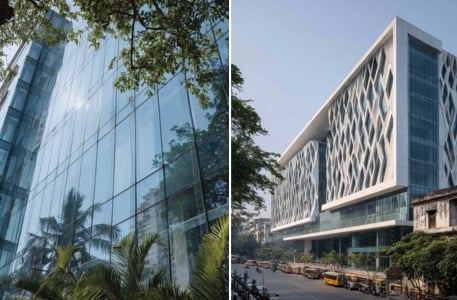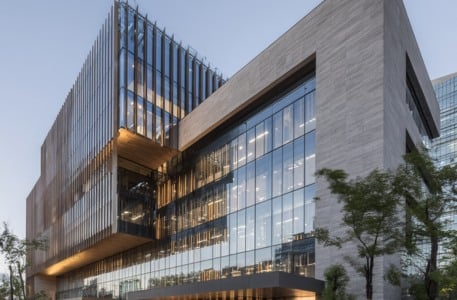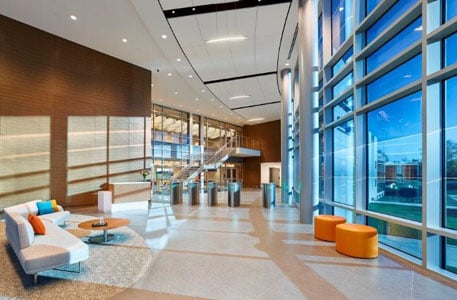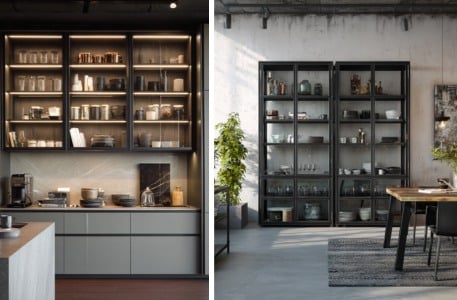
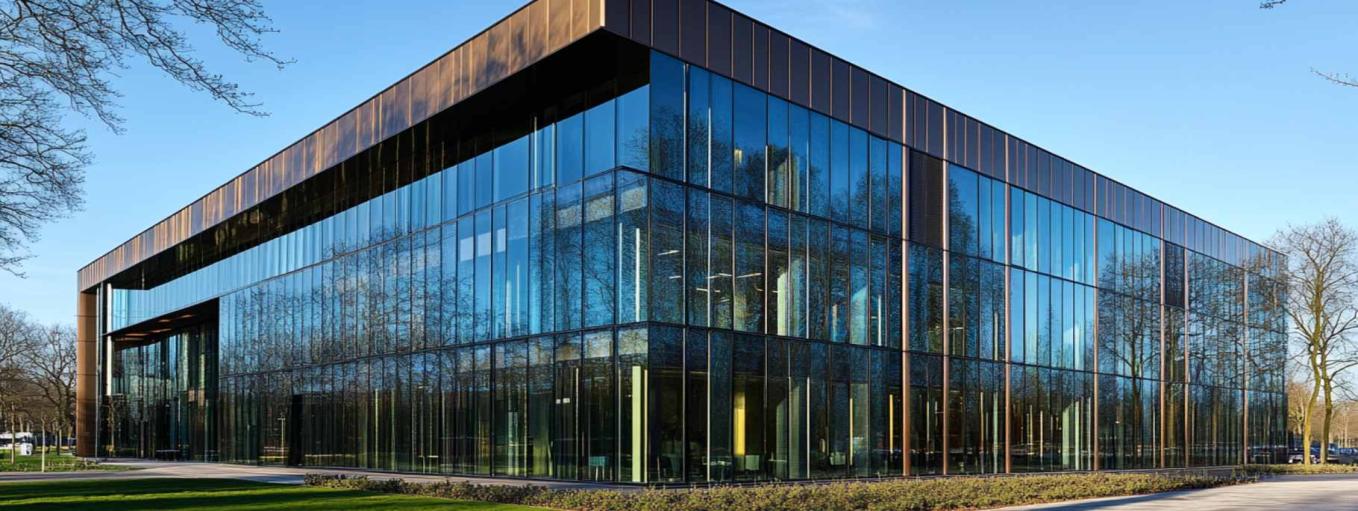
Today, we see breathtaking modern glass skyscrapers and buildings that sparkle in the sun, and make for imposing architecture. They make heads turn and become the talk of the town for their exceptional shine, scintillating colours, and dazzling aesthetic appeal, standing out from the mundane, run-of-the-mill buildings around them.
But have you ever wondered how this came to be? When did glass begin to be used so much in buildings?
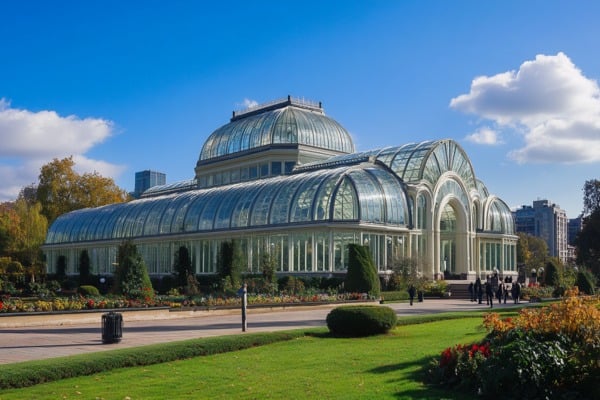
While glass began to appear in medieval churches and homes of nobility, it was only with the industrial revolution of 1851 that glass was mass-produced, and more commonly used in buildings and homes.
The Great Exhibition in Hyde Park, and the making of the Crystal Palace, made almost entirely of glass walls and ceilings, were major landmarks in the evolution of glass buildings.
Architects started experimenting with the concept of glass curtain walls. In 1918, Chicago got its first glass curtain wall building, the Hallidie Office. This was the precursor of glass skyscrapers.
There were more developments in glass technology, like laminating and tempering, that helped assuage concerns around safety and security about using glass; high-performance glass such as Solar Control and Low-e glass helped regulate indoor temperature. Traditional glass buildings focused more on transparency and the decorative aspect, but technology advancements brought glass to the focus in mainstream architecture.
Laminating and tempering glass also made it easier to craft huge, continuous sheets that could be used not just in windows, but walls and flooring too.
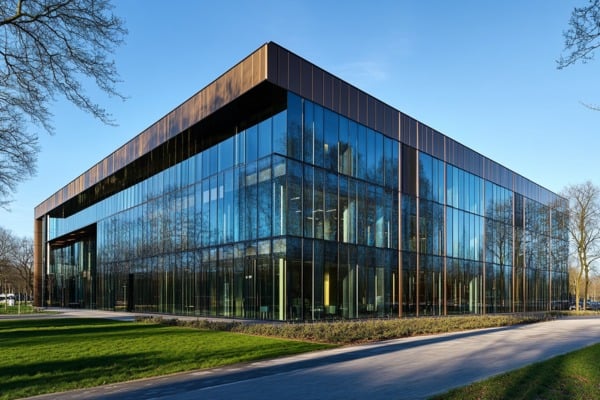
The glass facade buildings we see today have their origins in the 1950s, when technology developed enough to support such building facades. Today, the technology has become sophisticated enough to allow uncommon colours of glass, like bronze, gold, and hues of green. Here’s an example: SGG Kopper from Saint-Gobain.
Today, solar control glass is extensively used in residential and commercial buildings.
This type of glass helps to make the interiors more pleasant. Advanced solar control and thermal insulation glass, like SGG QUARTZ and SGG LUNAR are some of the best-in-class glass that architects use today thanks to their neutral colour.
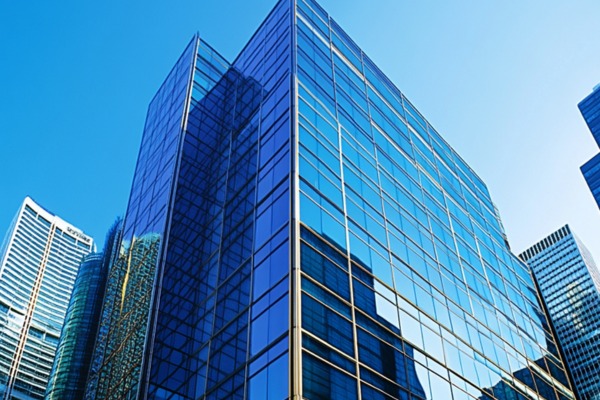
With glass becoming cheaper and more easily available, glass established itself as an important part of building architecture. In the 20th century, glass skyscraper design started trending. Architects now looked at glass for high-rises, as it rendered buildings safer, secure, and more energy efficient.
Laminated and tempered glass sheets contributed significantly to the growth of skyscrapers and high-rise buildings, which used this glass to allow natural light to enter and offer unobstructed views.
The next thing architects did was to experiment with differently shaped glass of various sizes. This skyscraper glass design was not just for decorative purposes, but to also let in more natural light and allow greater transparency. The building occupants could enjoy panoramic views of the outdoors with the 360 degrees glass windows.
Glass became a vital element in the architectural revolution of modernism thanks to its features like lightness, transparency and durability. The evolution of glass architecture in skyscrapers has been a constant improvement in beauty, quality, functionality, and durability; the most recent one being energy efficiency. The Shard in London is the tallest building in the UK, standing at over 1015 feet, and has a glass facade.
We have come a long way from the traditional glass architecture of old times; and yet, architectural glass continues to become more sophisticated by the day. From the staid white or grey, we have a whole range of coloured glass that helps you make a statement.
Today we have skyscrapers featuring gorgeous golden hued glass like SGG ROSA NXT or SGG MIDAS GOLD from Saint-Gobain. Those who prefer quiet elegance have buildings with exquisite shades of blue glass like SGG COOL-LITE and SGG PACIFIC SKY. These are all superior quality glass from the leading glass manufacturer Saint-Gobain.
Glass offers innumerable benefits in architecture, and there is no doubt that it is here to stay. Make sure you choose the best glass for your building projects. Saint-Gobain offers a wide variety of solar control and thermal insulation glass, which is also aesthetically attractive.
They are available in a range of thicknesses, and you can choose according to your specific requirements, the design, and your budget. Saint-Gobain is one of the world’s leading manufacturers of high-quality glass, with over 360 years in the industry.
Our representatives will be happy to guide you about which glass would be ideal for your high-rise or skyscraper project.
What is the advantage of glass in public buildings?
Glass serves to create a warm and welcoming atmosphere as it lets in plenty of natural light. It creates a feeling of openness, accessibility, and inclusivity, encouraging interaction.
Why do architects increasingly use glass in building projects?
Glass makes the architectural design richer. It boosts the visual appeal of a building, makes it more energy efficient, increases its functionality, and enhances its environmental connection. Infinity Glass from Saint-Gobain is the number one choice for building facades thanks to its superior energy efficient capabilities.
Which glass is the strongest?
Tempered glass, also called toughened glass, is significantly stronger than regular glass, and is used extensively in buildings.
What is smart glass?
Smart glass can be rendered opaque at the click of a switch. SGG Priva from Saint-Gobain is used in homes and offices; it creates an open and well-lit ambience, which can be changed in an instant.