A child’s bedroom is usually the first space in the home that truly becomes their safe haven. It is where toys are left mid-play, books are revisited, and routines slowly take shape. Unlike living rooms or kitchens, which follow adult rhythms, this room constantly adapts to the child using it, growing with them.
Wall décor plays a quiet but important role here. It influences how the space feels throughout the day, whether it feels calm enough to rest in, open enough to play in, or organised enough to study in. Wall décor helps these surfaces move beyond being blank boundaries and become part of how the room functions on an everyday basis.
For many parents, this is often where uncertainty sets in. There is a desire to make thoughtful choices, along with the awareness that children change quickly. Rather than aiming for permanent solutions, the most effective wall décor choices are those that allow flexibility and adjustment over time. Here are a few directions worth considering when designing wall décor for your child’s bedroom.
In everyday use, walls do much more than hold décor. They influence how a child moves, plays, and rests within the room. A visually calming wall can help reduce overstimulation, while a more active surface can support curiosity, play, or learning in daily life.
Wall décor also plays a role in how comfortable a child feels occupying the space. When a room reflects some aspect of their interests or habits through colour, imagery, or interactive surfaces, it reinforces a sense of belonging. This does not require heavy visual elements; even small acknowledgements can make the space feel more personal.
Before choosing specific children’s room wall décor ideas, it helps to clarify what each part of the room should support. Many parents approach wall décor as a finishing step, but it works better when treated as part of the room’s overall function.
One wall might allow drawing or pinning things up, another might support study, and another might remain visually neutral. When these roles are defined, design decisions feel less forced.
Make sure to involve children at this stage by letting them choose where certain activities take place or what gets displayed. It gives them a sense of control and often results in better long-term use of the space. Keeping decisions flexible is important for every parent. The aim is to support growth, not lock the room into a specific phase.
Also read Shared Space, Double the Fun: Kid’s Bedroom Decor Tips for Pre-Teen Brother Sister Duo
When it comes to colour, children’s bedrooms are often treated in extremes, either very bright or deliberately restrained. In practice, most rooms benefit from a balanced approach. Softer base colours help the room feel stable and reduce visual fatigue. Brighter or stronger colours can then be introduced through wall décor elements rather than permanent finishes. This makes it easier for children to adjust to the room over time.
Instead of choosing colours based on age or gender expectations, the most practical way is to consider how colours affect behaviour. Warm tones can feel comforting but may become overstimulating if overused. Cooler tones can calm the space, but may need layering through materials or textures to avoid feeling flat.
Safety is a core requirement in kids’ rooms because children constantly interact with their surroundings. Wall décor materials should always be non-toxic and low in VOCs, especially in sleeping areas where children spend long hours. VOCs (Volatile Organic Compounds) are chemicals released by certain paints, adhesives, laminates, and finishes, and they can affect indoor air quality over time. For children, this may mean irritation or breathing discomfort. Low-VOC or zero-VOC paints and coatings help create a healthier room without changing how the space looks.
Also read 6 Unique Ways to Design a Colorful Kids' Room with Glass
Children lean, pull, and climb more than expected, often using walls as part of play. Shelves, panels, and décor should be securely fixed into the structure, with realistic load considerations rather than purely visual placement. Details like rounded edges, softened corners, and smooth finishes quietly reduce everyday risk. When safety is thoughtfully integrated, it fades into the background and supports how comfortably the room functions.
Once safety is addressed, the focus can shift to how walls can actively support a child’s daily routine. From creativity and learning to storage and personal expression, the right wall solutions can make the room more functional without adding visual clutter.
The following ideas explore wall designs that balance interaction, durability, and ease of use.
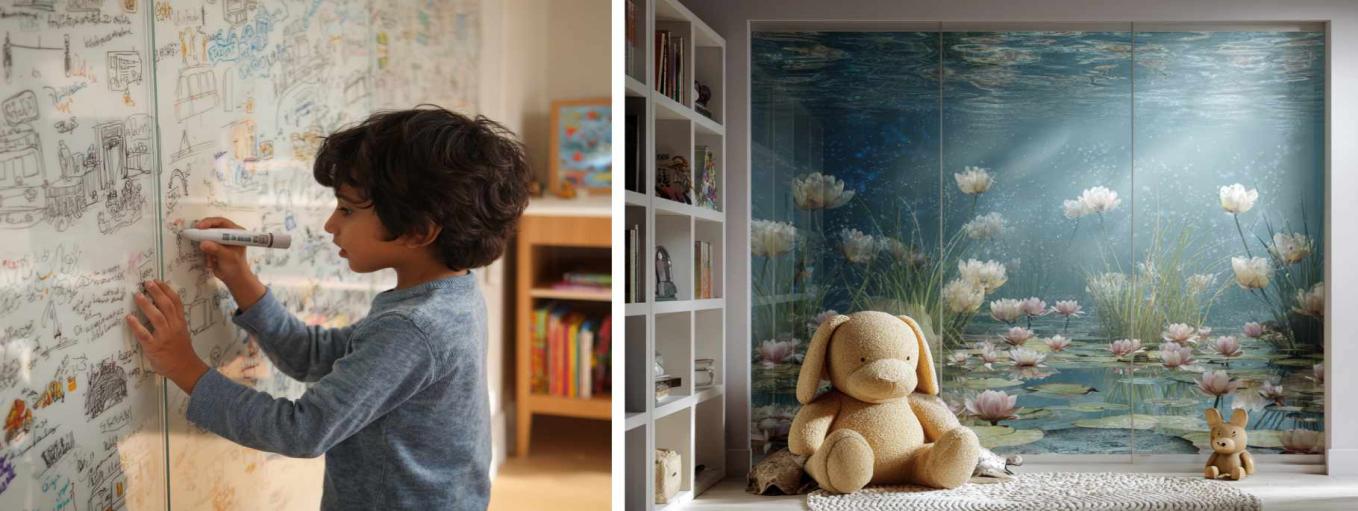
Interactive walls are increasingly useful in children’s bedrooms because they support activity without creating mess. A lacquered glass wall as a writing and drawing surface provides a durable alternative to painted whiteboard walls. The non-porous surface prevents staining and ghosting, even with regular use. It resists scratches and remains easy to clean over time.
Because the surface does not damage with constant use, children can use it freely, for drawing, writing, or planning without restrictions. As the child grows, the same wall can shift from play to study without needing replacement.
Explore SGG Colormaxx Dura, lacquered glass in a toughened variant with enhanced durability and eye-catching appeal.
Also read Embellish Your Kid's Room with Lacquered Glass
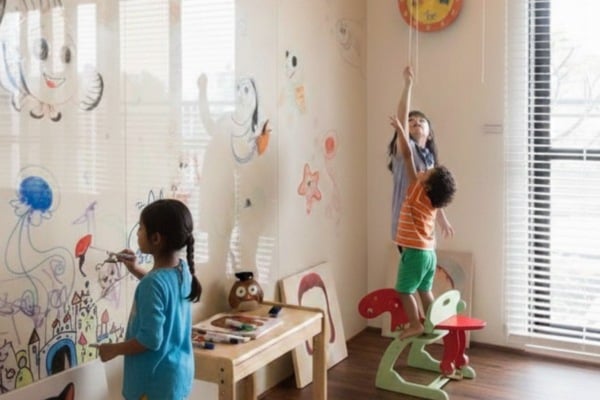
A lacquered glass wall that allows children to write, draw, and erase freely
Storage is necessary, but wall-mounted storage can quickly make a room feel crowded. Floating glass shelves help address this by reducing visual weight. Toughened or toughened laminated glass shelves with curved edges are safe and allow toys and books to remain visible without overwhelming the wall.
This visibility also helps children manage their belongings more independently. Glass helps keep the room feeling open. These shelves can be reused over time, adapting from toy storage to books or display as needs change.
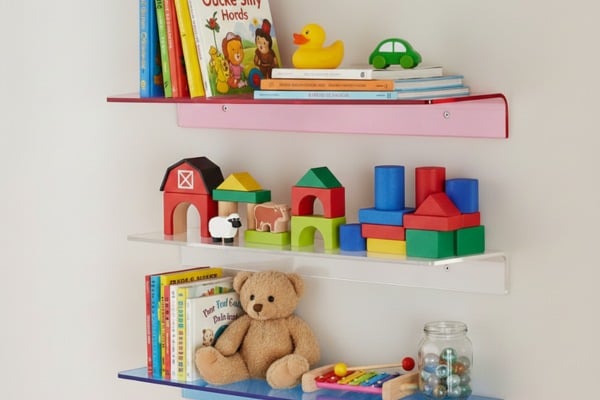
Floating glass shelves that hold books and toys while keeping the wall visually light and uncluttered
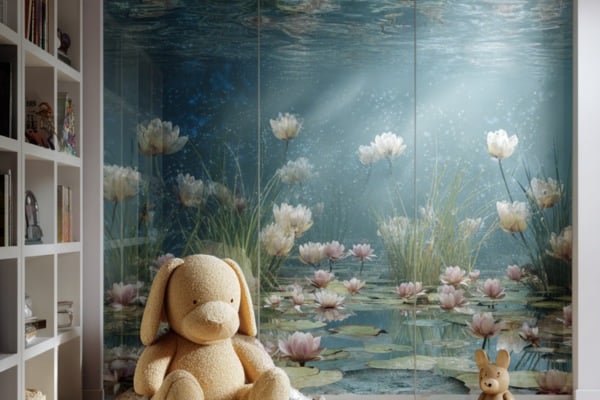
Digitally printed glass offers a flexible wall decor solution that combines personalisation with durability
Permanent murals can feel limiting as children’s interests change. Printed glass panels offer a more flexible option. Digitally printed glass allows images or patterns to be introduced without affecting the wall beneath. The glass surface is durable, easy to maintain, and visually controlled.
If the kids' interests change, it’s easy to replace panels without structural changes. Used as accent elements, printed glass adds character without dominating the space. SGG Colormaxx Canvas, UV-printed glass adds depth and character to the kids’ room.
Also Read Mind-blowing Digital Prints on Colored Glass for Beautiful Interior Designs
Backlit glass elements work best when treated as part of the room’s lighting strategy rather than as decoration. Soft, warm backlighting can highlight a child’s name or a short quote without becoming visually intrusive. During the day, these neutral coloured glass panels remain understated. At night, they provide gentle illumination similar to a night light.
LED lighting keeps heat output low, and toughened glass ensures safety. Flush- or recessed-mounting prevents protruding edges, making this option suitable even for younger children.
Also read Brighten Up Your Kids Bedroom with Different Types of Glass

Glass signage with soft LED backlighting adds gentle ambient light without overwhelming the room
Magnetic walls allow children to display and engage with the surfaces without damaging them. Drawings, letters, schedules, or schoolwork can be added and removed easily using a magnet. Unlike pinboards, magnetic systems avoid sharp components. A layer of magnet can be concealed beneath the glass, keeping the wall visually clean.
Because displays change frequently, the wall avoids becoming cluttered. This flexibility supports creativity while maintaining visual order, which is particularly important in bedrooms.
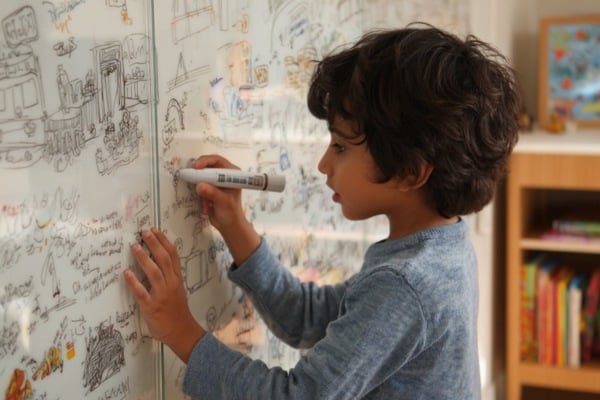
Magnetic Glass DIY wall that allows children to display, rearrange, and personalise their space
Not every wall needs to serve an active purpose. A mix of interactive walls, functional storage, and visually quiet surfaces helps the room support different activities without feeling overwhelming.
When a children's bedroom wall décor is planned with safety, flexibility, and daily use in mind, it becomes part of how the room functions rather than an added layer. These walls support change quietly, without needing constant redesign.
What is the best wall décor for a children’s bedroom?
The best wall decor for a children’s bedroom is one that balances safety, flexibility, and everyday usability. Surfaces that allow interaction, such as writing walls, magnetic panels, or lightweight shelving, support play and learning, while visually calm walls help create a restful environment.
Is glass wall decor safe for children’s bedrooms?
Yes, glass wall decor can be safe for children’s bedrooms. Toughened or laminated glass is impact-resistant and designed to break safely if damaged. Smooth edges, secure mounting, and appropriate placement make glass a practical and durable choice for walls, shelves, and interactive surfaces.
What are interactive wall decor ideas for kids’ bedrooms?
Interactive wall decor ideas include writable surfaces, magnetic walls, and display areas that children can change themselves. Lacquered glass writing walls allow drawing and erasing without staining, while magnetic walls let children display artwork or schedules without damaging surfaces.
What colours work best for children’s bedroom wall décor?
Soft, neutral base colours create a calm backdrop, while brighter colours can be introduced through wall decor rather than permanent finishes. This approach supports visual comfort and makes it easier to update the room as preferences evolve.
Shivanie Khanka is a passionate and versatile architect with a flair for writing, design, and photography. She is a curious soul and is always looking to learn from her experiences. Read More