As we know, glass is irreplaceable in architecture for its clarity, elegance, and ability to connect spaces visually. But full transparency may not always be ideal. What we often need is diffused visibility—spaces that feel open and light-filled, yet offer a sense of privacy.
Ceramic fritting offers just that. It’s a technique where glass enamel is fused onto glass before it's tempered, creating a permanent design that’s resistant to wear, cleaning, or UV damage.
Think of it as functional art—a subtle visual layer that adds both character and performance to the glass.
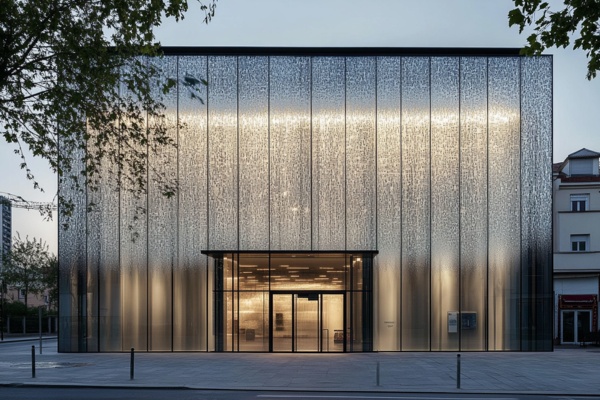
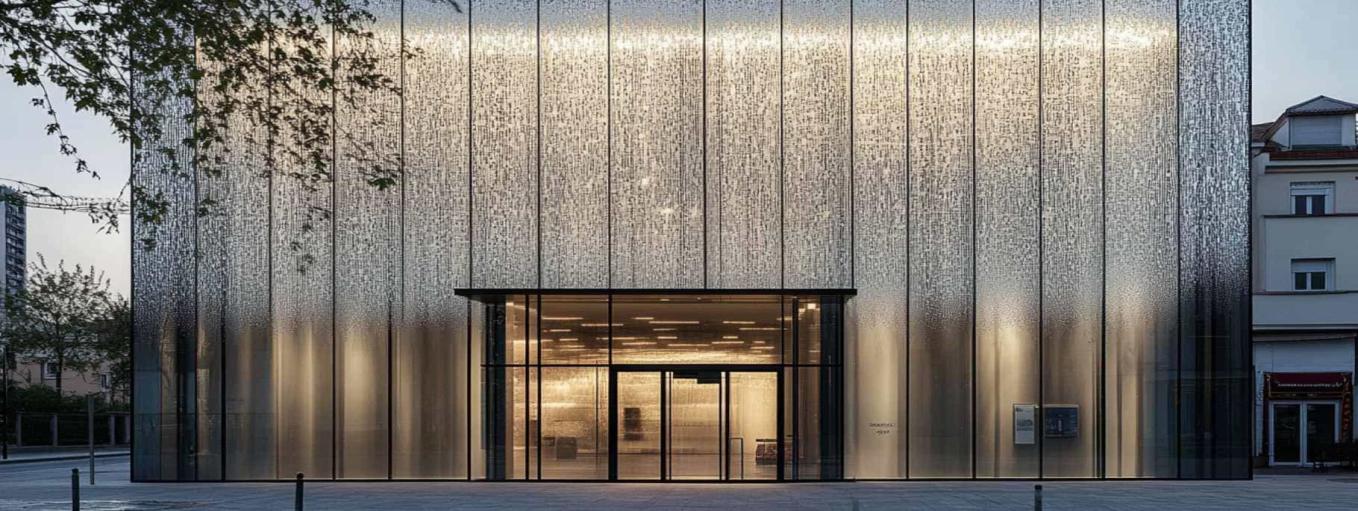
Ceramic Fritting Adds Visual Interest to the Glass Facades.
Since ceramic fritting can be applied to virtually any type of glass, it unlocks a wide spectrum of creative and functional possibilities across both architecture and interior design.
1. Facades – Ceramic fritting is fully compatible with high-performance glass types like solar control glass and low-e glass, making it ideal for energy-efficient facades. Given this glass can be tempered as well as laminated, it does not in any way compromise the safety of the built envelope.
2. Railings – In applications like balconies or staircases, ceramic fritting allows us to play with transparency and translucency, ensuring safety while adding a layer of aesthetic subtlety. These railings are typically made of toughened glass and can be further laminated for enhanced safety, especially in high-traffic zones.
3. Partitions – Glass partitions in offices or homes can benefit from fritting to demarcate space without erecting a solid barrier, offering visual privacy and acoustic buffering when used in laminated form.
4. Shower Cubicles – In bathrooms, ceramic fritted glass cubicles serve the dual purpose of creating a slim, modern look while offering discreet privacy. Fritting is a preferable solution in such spaces as it not only resists moisture and soap stains but also adds a design element that elevates small spaces.
5. Ventilators & Small Windows – Expectations from ventilators and smaller windows are often to create privacy while allowing ample light to pass through; ceramic fritted glass offers just that.
6. Doors – Whether it’s for conference rooms, balconies, or kitchen access, fritted glass doors offer a clean, modern aesthetic, allowing free passage of light while offering privacy or concealing clutter.
Also Read: Stylish Glass Partitions: The New Age Room Dividers
This is where ceramic fritting truly shines, offering creative opportunities to make glass do more.
Full-surface Fritting for a Milky, Opal Effect
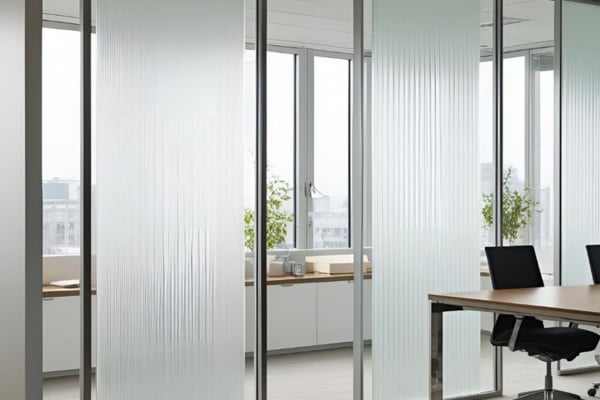
Maintain Privacy While Still Allowing Soft, Natural Light.
Perfect for office or kitchen/dining partitions where visual separation is required, yet natural light flow must be maintained. It softens the space without making it feel boxed in.
Eye-level Fritting for Strategic Privacy
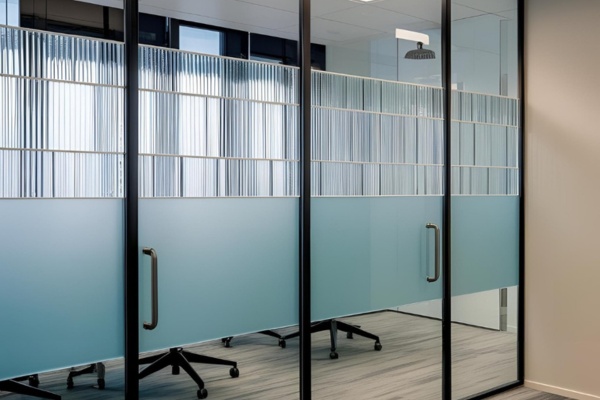
Creates Subtle Privacy at Eye-Level Without Closing Off the Space.
Applying bands of fritting only at eye level is ideal for office cabins, boardrooms, or even shower partitions, offering subtle privacy without compromising on openness. In many cases, ceramic fritting also serves a practical purpose, clearly marking glass partitions to prevent accidental collisions with overly transparent surfaces.
Also read The Ultimate Guide to Toughened Glass Partitions for Workspaces
Geometric Patterns for Visual Rhythm
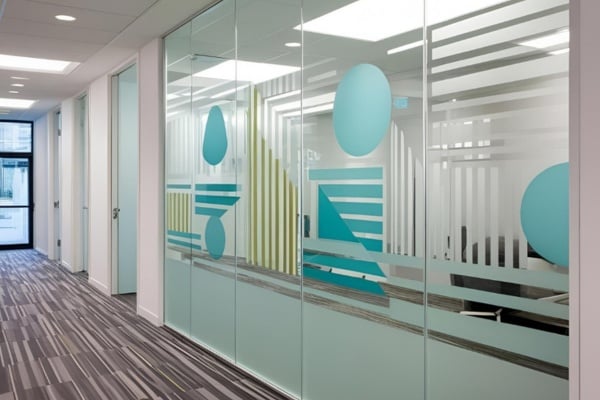
Adds a Contemporary Touch with Fritted Glass to Otherwise Plain Surfaces.
Timeless shapes like circles, stripes, and triangles can be used to craft dynamic, modern patterns that infuse both interiors and exteriors with energy and rhythm, often adding a playful touch to otherwise monotonous spaces like office corridors and transition zones with multiple partitions.
Custom Art on Glass
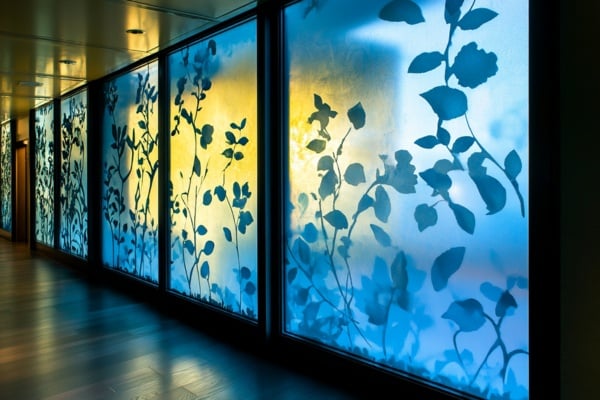
Bring Personalised Designs or Themes into any Space.
With ceramic fritting, almost any custom design or artwork can be translated onto glass, making it a unique medium for site-specific installations. Designs inspired by nature, photographs or any other pattern can be recreated on glass for thematic interiors.
Also Read: A Weekend Home Framed in Lacquered Glass and Modern Luxury
Branding and Signage Integration
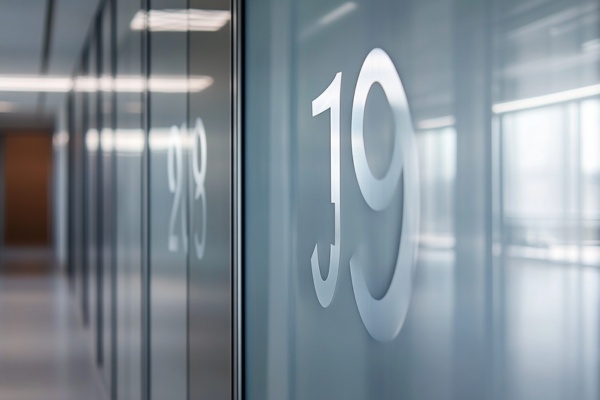
Incorporates Brand Identity and Functional Signage Directly onto Glass
From company logos to room numbers and directional signs, ceramic fritting is a smart and subtle way to integrate branding directly onto glass surfaces in offices or public buildings.
Also Read: Why are Modern Architects in Love with Architectural Glass?
Lighting and Ceramic Fritting in Combination
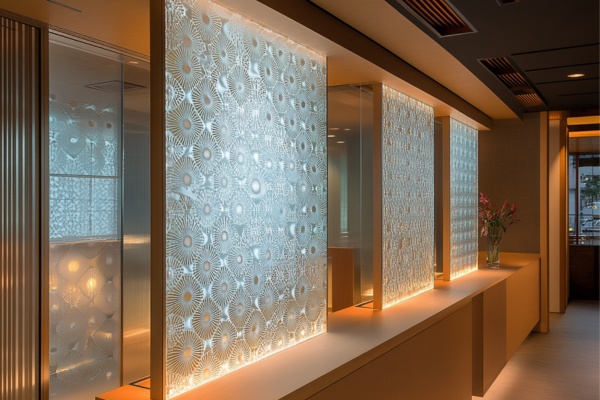
Combining Fritting with Lighting Enhances the Design.
Explore washing fritted glass with LED lighting to make patterns glow. This technique is increasingly being used in wall panelling, bed headboards, and even to create interactive or mood-enhancing elements in retail, hospitality, and workspace design. It’s a trend that’s here to stay.
Ceramic fritted glass is more than just a decorative layer, it is a design strategy that allows us to subtly shape experience through light, form, and function. Whether you’re looking to manage light, control heat, enhance privacy, or simply infuse your project with design language, it allows you to do so with subtlety and style. It gives us the freedom to dream on glass, blending creativity and performance in every square foot.
What is ceramic fritted glass, and how is it made?
Ceramic fritted glass is created by fusing ceramic enamel onto glass at high temperatures, resulting in a permanent, durable pattern that won't fade, peel, or wear off.
Where can ceramic fritted glass be used in architecture or interiors?
It can be incorporated in facades, railings, partitions, shower cubicles, doors, small windows, and even ventilators, offering privacy, safety, and aesthetic appeal.
Does ceramic fritting affect the strength or safety of the glass?
No, it doesn't. Ceramic fritting is typically applied before the tempering or laminating process, meaning the glass retains its safety and performance properties.
Can ceramic fritted glass be customised with specific designs or artwork?
Yes, it supports custom patterns, logos, text, or artwork, suited for branding or thematic interiors in offices, hotels, or homes.
Rasya is an architect and sustainability consultant based in Delhi. With over 10 years of experience in core architecture, and exposure to working in diverse contexts including India, Belgium and Ethiopia, she brings a multi-disciplinary approach to her work. Founder of the design practice Southern Studio and partner at Ethos, an organisation working towards creating multiple avenues for exchange and sharing between the various stakeholders in the AEC community, Rasya stays up-to-date with the latest advancements in the construction industry and is always interested in experimenting with new materials and techniques. Read More