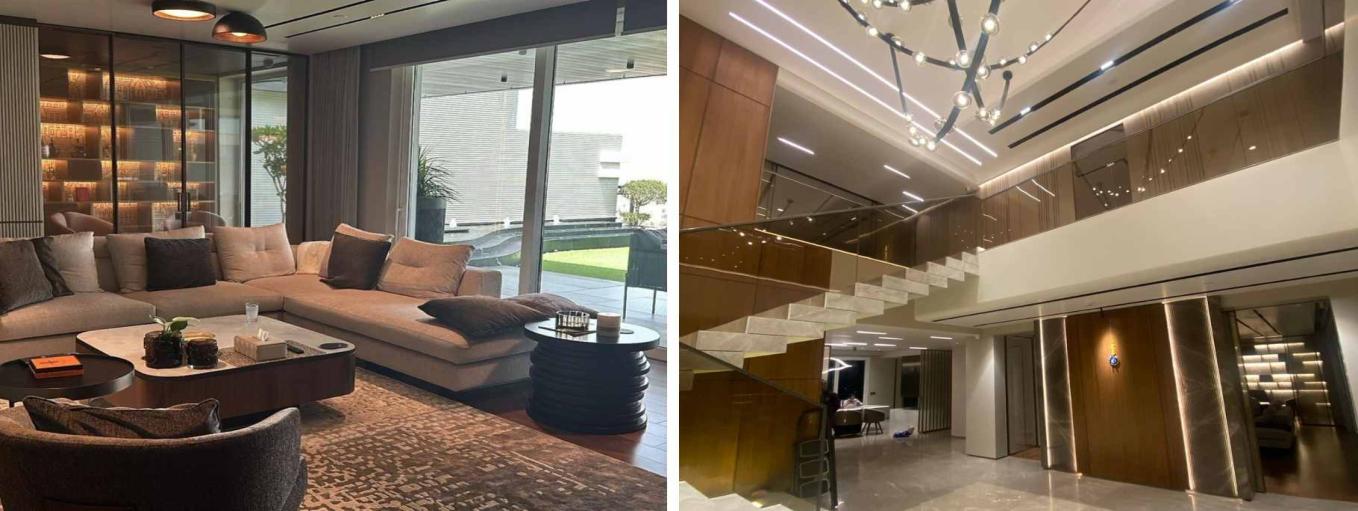
Delhi is a city where the old and new coexist, a layered story of art and architecture that spans different eras. From colonial styles and Mughal arches to global trends and glass façades, this cultural contrast shapes its architectural vocabulary and design while inspiring designers to balance timeless tradition with contemporary clarity.
One such architect leading this evolution is Ar. Rudraksh Charan, Co-founder of 42mm Architecture Studio. With over two decades of experience, he is redefining modern home design in Delhi.
In this blog from our coveted Glass in Session series, we explore how architectural glass can elevate interior design aesthetics, function, and lifestyle, thereby creating luminous, elegant, and low-maintenance living spaces.
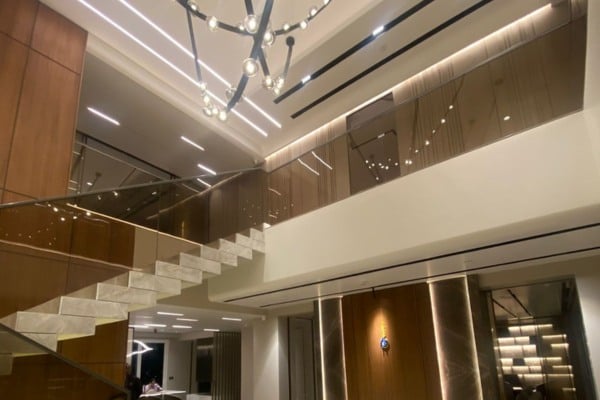
Double-Height Living Area with Tinted Glass Railings
When Ar. Charan first walked into this bare-shell property, what struck him was its beautiful scale: double-height ceilings, natural light streaming in, and two distinct vistas: one facing the landscaped greens, the other opening to the urban skyline.
The apartment’s L-shaped plan naturally framed an outdoor terrace, becoming the focal point that connects the inside to the outdoors.
To amplify this spatial experience, glass became a design ally, defining spaces with visual continuity.
Also read Tinted Glass for Home Interiors
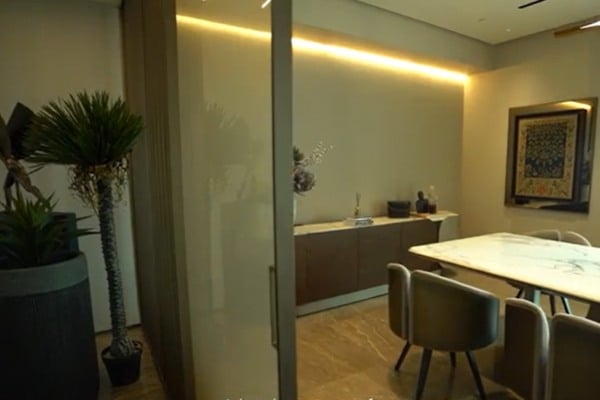
Low-Maintenance Mesh Glass Partitions Enhance Privacy and Light
In Delhi, dust and maintenance are constant challenges. Instead of conventional screens, the architect used mesh glass partitions, two sheets of toughened glass fused with a fine metal mesh in between.
This design achieves a dust-free, low-maintenance profile while maintaining visual depth. The mesh adds a tactile layer that subtly enhances privacy without losing the openness.
“Glass has the ability to mimic the materiality around it while remaining light and timeless”, explains Ar.Charan, a principle that drives his approach towards employing architectural glass in interiors.
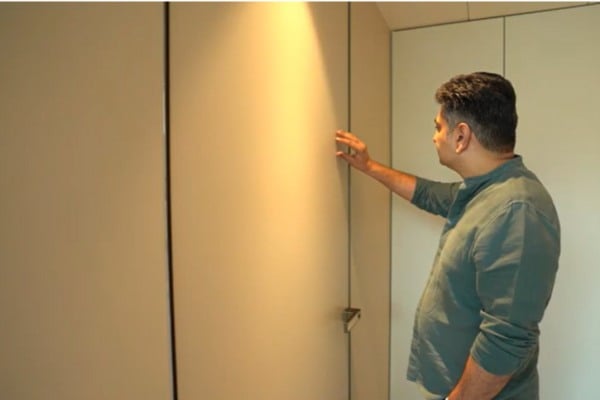
Lacquered Glass Doors for a Seamless Appeal
The door design became another critical choice in the project, aiming to achieve functionality and quiet sophistication. The designers opted for lacquered glass — seamless, scratch-resistant, and beautifully matte in appearance through the process of surface etching.
When this coloured glass is etched on the front surface, it transforms into a soft, matte version of itself, which is easy to clean, elegant to look at, and perfect for introducing a sense of understated luxury.
Saint-Gobain’s Colormaxx range offers a rich palette of consistent tones. Through surface etching, this high-gloss finish product evolves into a velvety matte expression of colour, making it ideal for earthy palettes and minimal, modern interiors.
With its ability to mimic or blend with any wall tone, these glass doors almost disappear into their surroundings, complementing the apartment’s neutral palette and structured, contemporary design.
Also read 5 Reasons Why Lacquered Glass is the Best Fit for Home Decor
Bedroom Design with Walk-In Wardrobe Unit
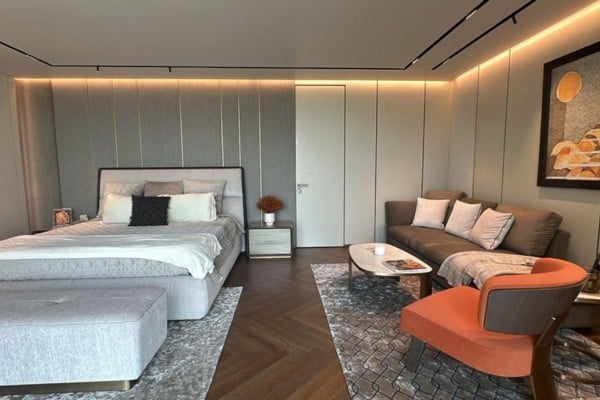
A bedroom with a walk-in wardrobe that makes the most of the space and keeps the room organised is everyone's dream. In this home, private zones reflect a distinct mood, curated around the end user's lifestyle.
The bedroom design revolves around a freestanding wall, which conceals a walk-in dresser behind it. The dresser itself becomes a functional yet intimate space, lined with tinted glass wardrobes and layered lighting.
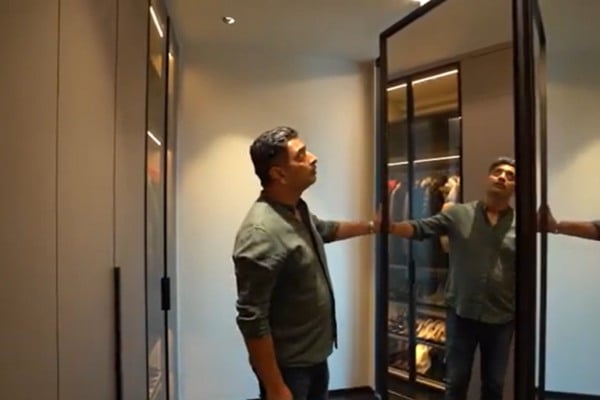
Glass Wardrobe Shutters for an Elegant, Contemporary Interior
In Delhi's dust-prone climate, glass shutters are ideal for wardrobes as they maintain hygiene while lending a streamlined, reflective finish that visually enlarges space. This approach aligns with the architect's vision of uncluttered, intelligent, and contemporary interiors.
Also read Clear the Clutter: Glass for your Wardrobes
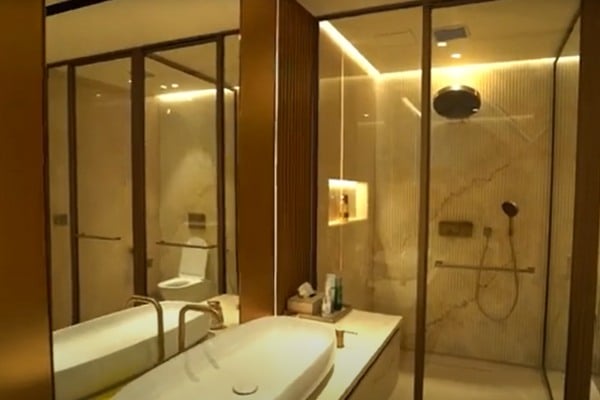
Glass Shower Enclosures for Bathrooms for a Spa-like Ambience
Nowadays, bathrooms are being transitioned into personal sanctuaries. As wellness becomes central to modern living, these private zones are increasing in scale and style, especially in urban homes where thoughtful design can make all the difference.
The bathrooms in this project blend natural textures and warm lighting, creating a spa-like atmosphere. The seamless transition from bedroom to dresser to bathroom underscores how glass accents can enhance spatial flow and maximise space.
Also read 8 Reasons Glass Shower Enclosures Are Better Than Curtains
Timeless designs are in; Ar.Charan adds that the essence of good design lies in clarity, structure, and intent, all of which glass captures effortlessly.
Today, innovations such as solar-control glass and high-performance glazing are redefining the possibilities of modern architectural facades.
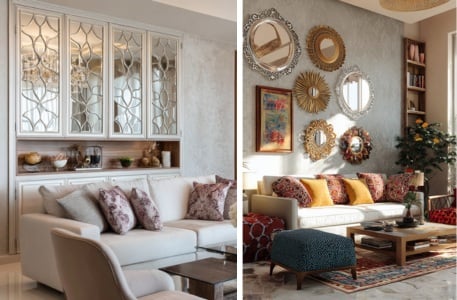
Similarly, within interiors, glass is a dynamic design tool. Toughened glass brings strength and safety to railings, partitions, and enclosures while maintaining visual openness. Lacquered glass introduces colour and sophistication to space. And mirrors, when thoughtfully placed, amplify space, light, and lifestyle; turning everyday rituals into tactile experiences of elegance.
Why is glass an important material in modern interior design?
Glass is a multifaceted element that enhances natural light, adds visual depth, and gives a sense of openness. It balances beauty and practicality, making spaces feel larger, brighter, and refined.
What type of glass is best for interior partitions?
Toughened or laminated glass is best for partitions as it’s durable, safe, and resistant to breakage. For added privacy, options like frosted, tinted, or mesh laminated glass work beautifully.
How does lacquered glass improve interior aesthetics?
Lacquered glass adds colour, depth, and a polished finish to doors, wardrobes, and wall panels. It’s scratch-resistant, easy to maintain, and offers the elegance of paint with higher durability.
Can glass be used safely in staircases or railings?
Yes. Toughened laminated glass is perfect for railings; it’s strong, shatterproof, and visually light, providing safety without interrupting the view.
Jahanavi Arora is an architect by profession and a writer by choice, with over 7 years of experience in architecture and design writing. She graduated from Chandigarh and believes that writing and architecture are similar as both are forms of art. Read More